29 Cool Grim Reaper Tattoo Designs
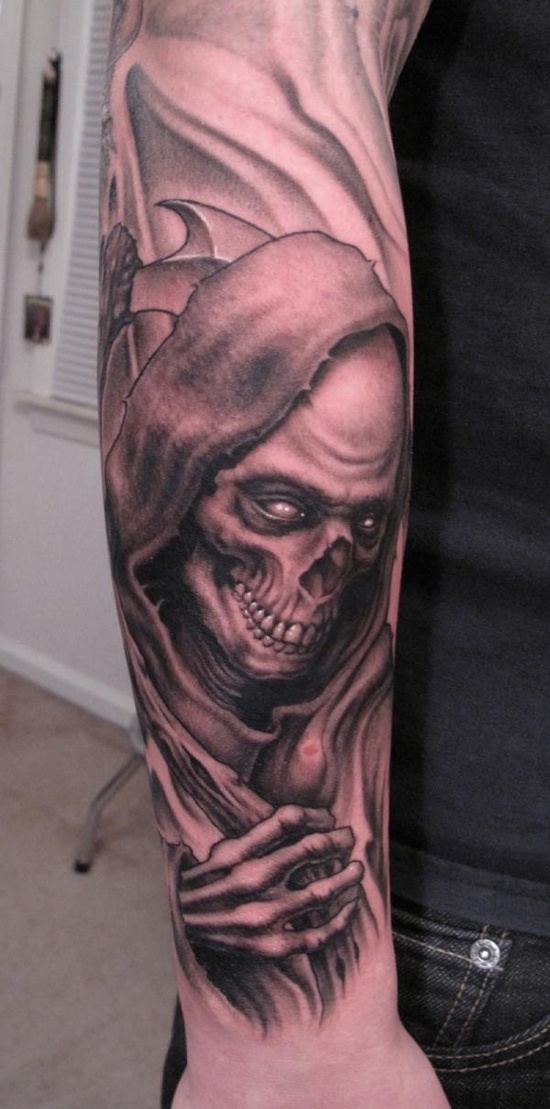
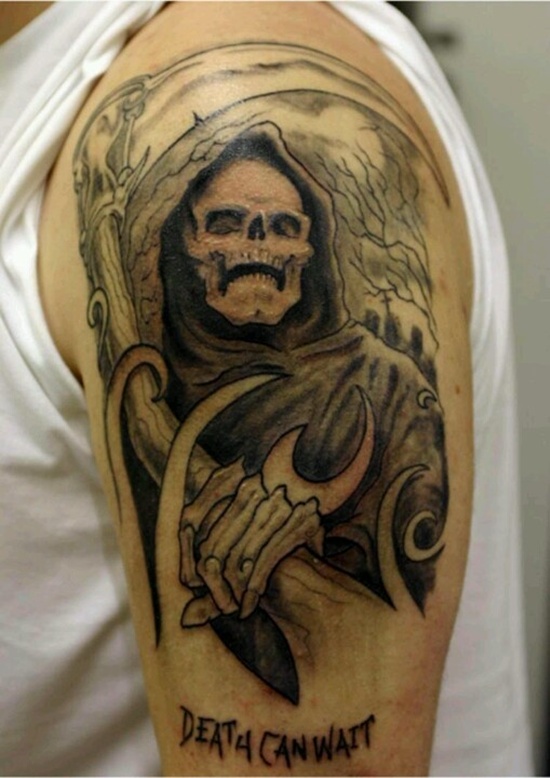
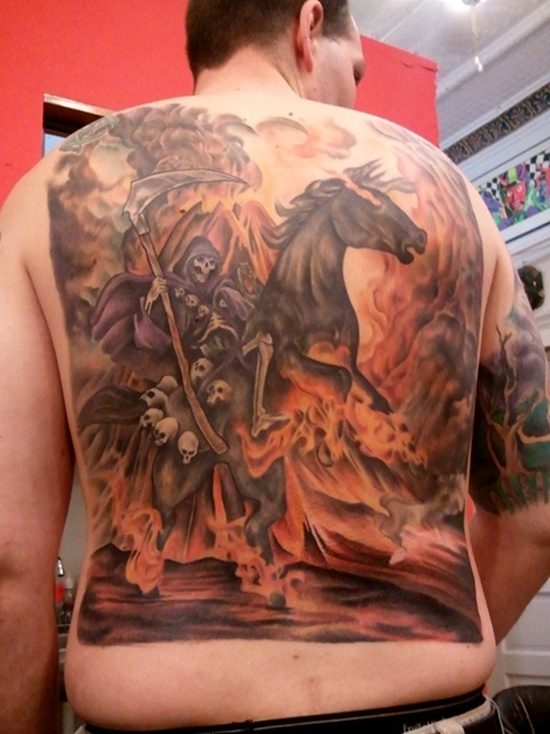
The reaper is a big tattoo pretending to be a medium one. Almost every version that fails does so for the same reason: it was made too small. The figure is a hooded silhouette with a skull inside the hood and a scythe crossing the composition, and all three of those need room.
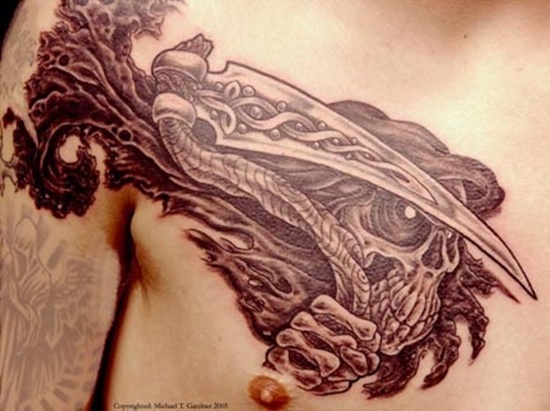
Get the size right and it is one of the strongest subjects in black and grey. There is a reason the best examples are chest pieces, backs and full sleeves rather than four-inch forearm tattoos.
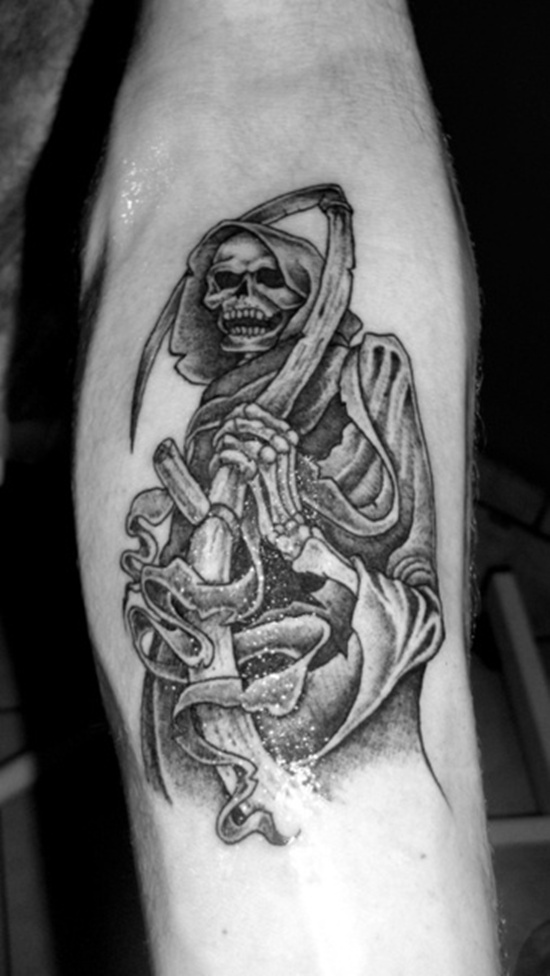
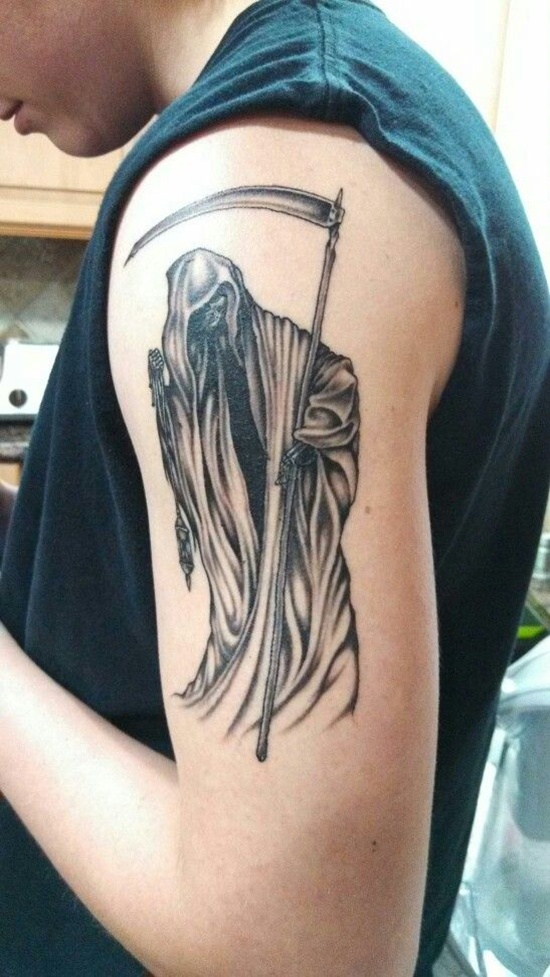
Where the figure comes from
Death as a skeletal figure with a scythe is medieval European, and it hardened into its familiar form during and after the Black Death. The scythe is the harvest metaphor made literal - lives cut like wheat, without malice and without exception. The hourglass that often appears alongside is time running out. The black robe came later, from the danse macabre tradition in art.
The important point is that the reaper is not the devil and is not evil in the original conception. He is impartial. He arrives for everyone, he takes no pleasure in it, and he cannot be bargained with. That neutrality is what makes the figure interesting, and it is why the tattoo often means something quite different from what people assume.
The common readings: memento mori, a reminder to use the time; survival, worn by people who have come close; a memorial; and an acceptance of mortality rather than a celebration of it. Plenty of people also simply like how it looks, which is fine.
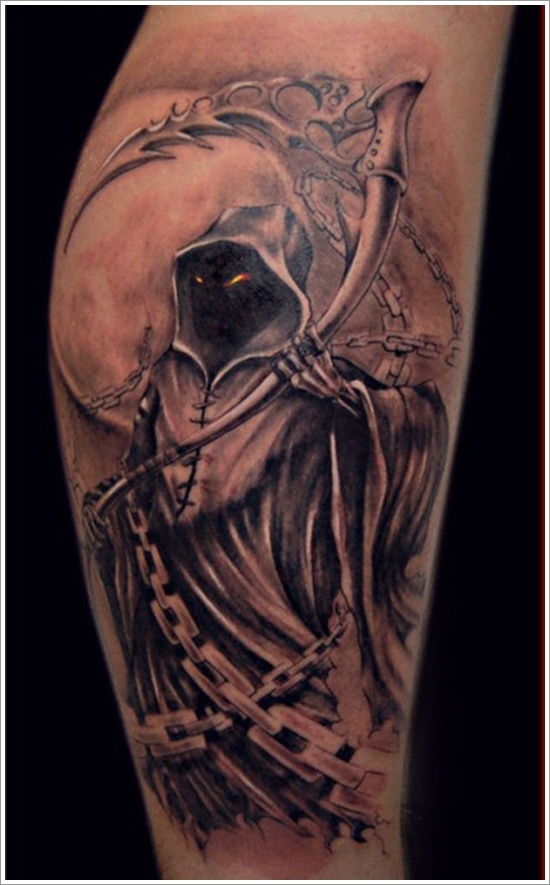
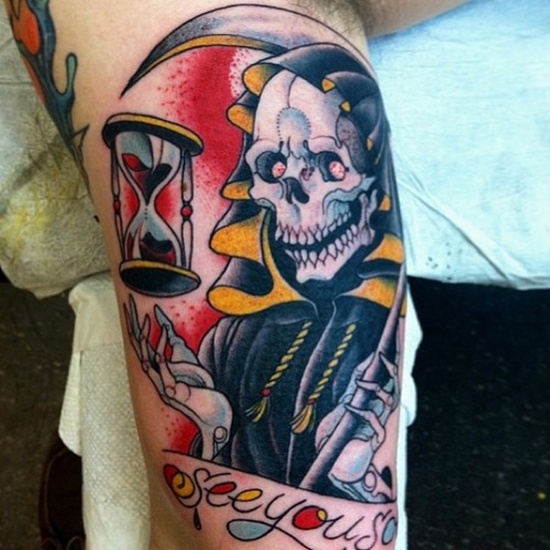
What makes a good one
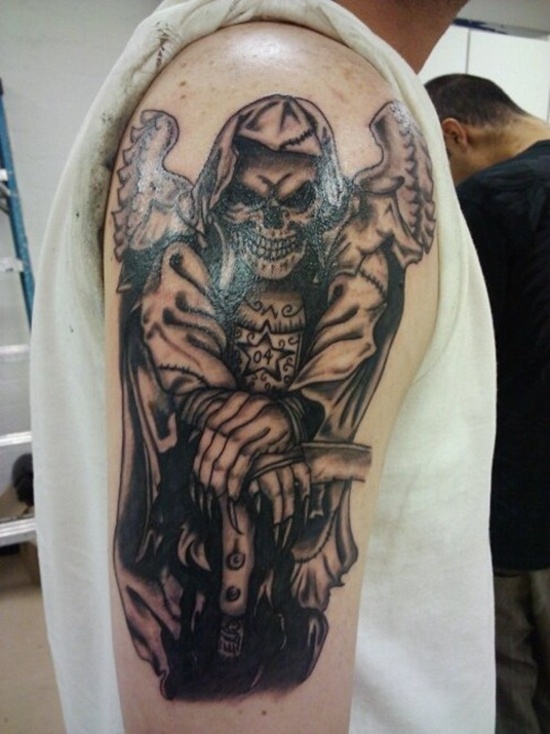
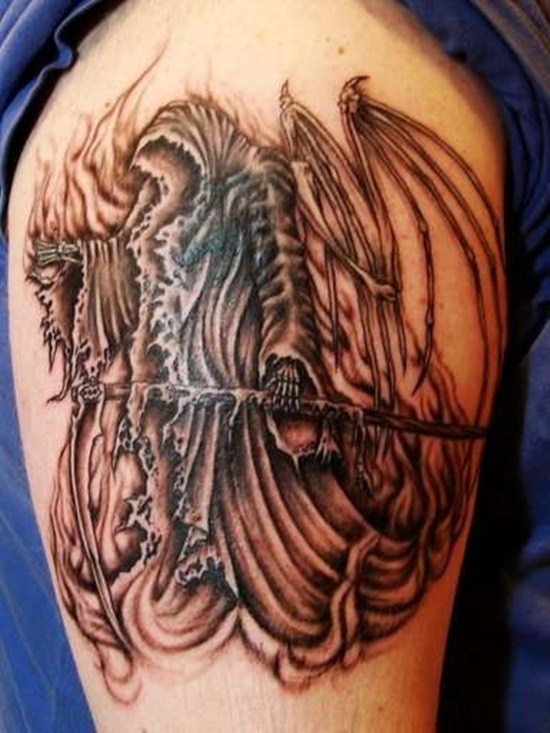
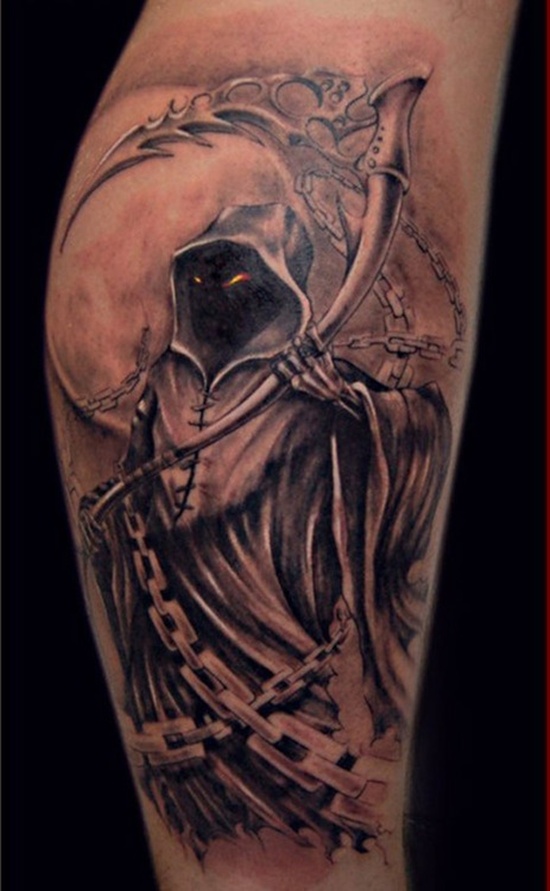
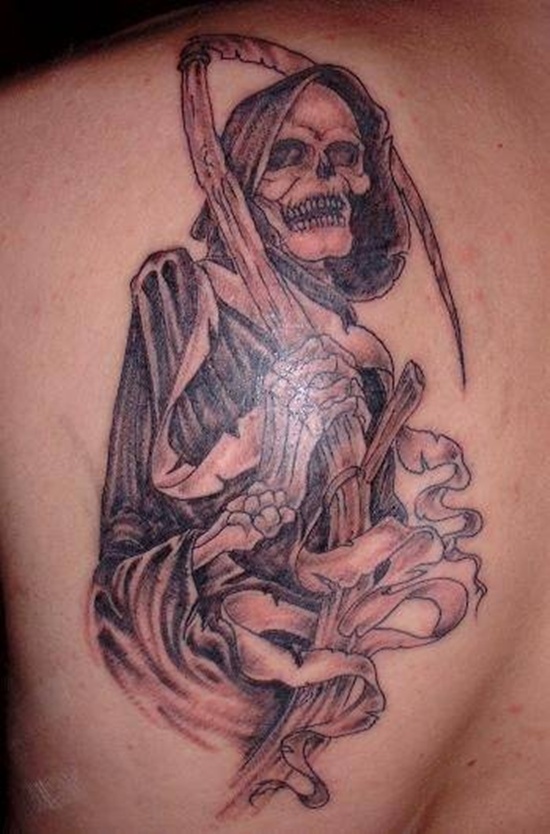
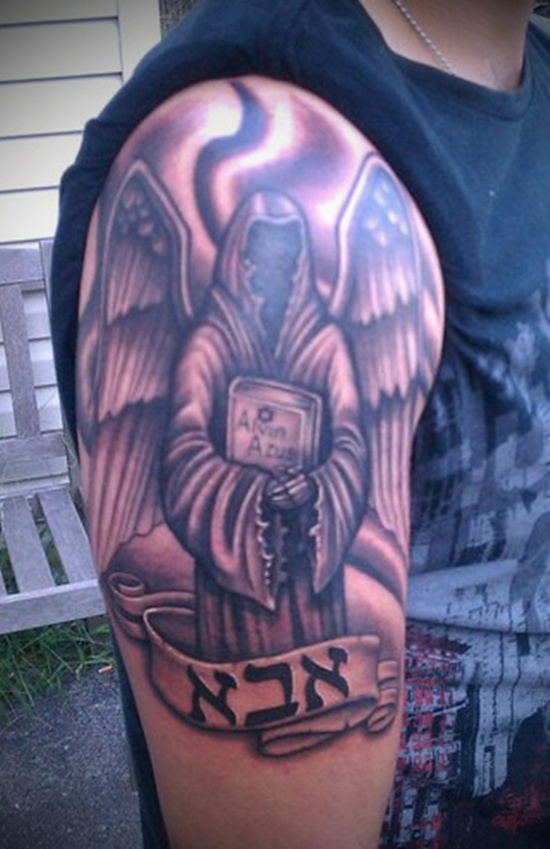
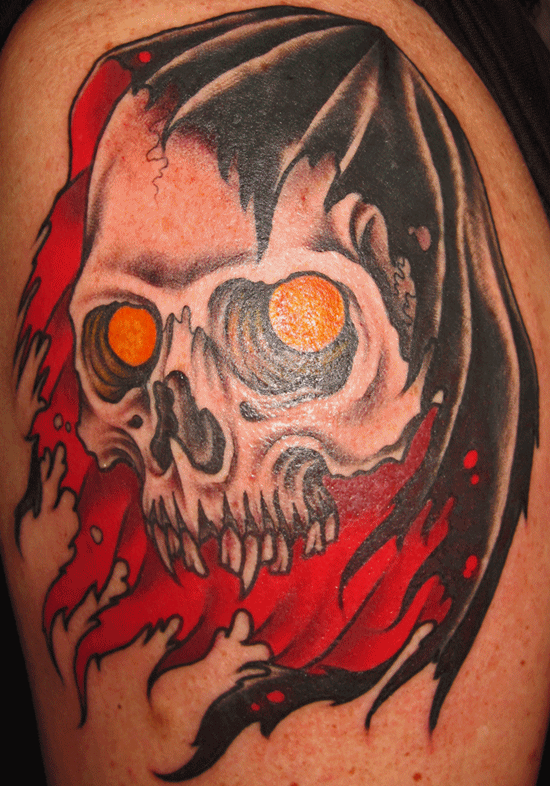
The hood, not the skull. The best reapers are mostly shadow. A skull rendered in full detail under a token hood looks like a costume. A hood with darkness inside it and the suggestion of a skull is far more effective, and it ages better because it is built from solid black.
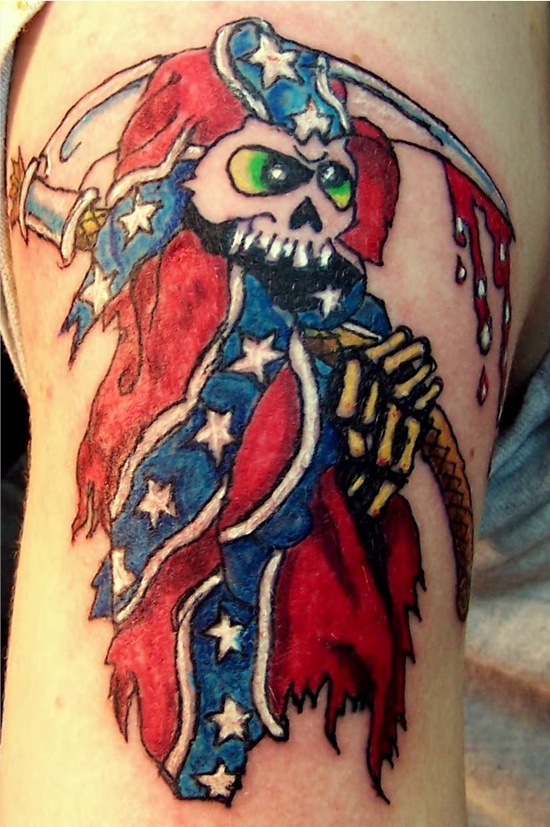
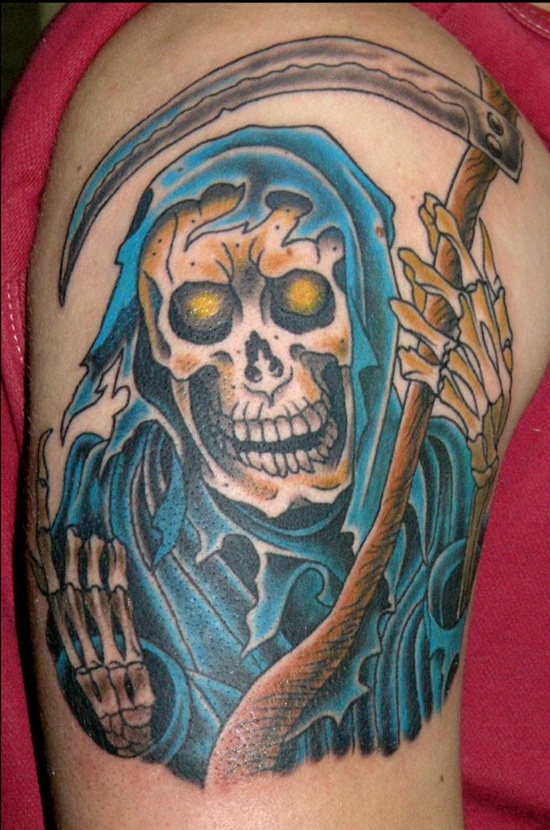
The scythe sets the composition. It is a long diagonal, and it is what gives the piece its shape on the body. It wants a limb or a torso to run along. Squeezed into a square, it stops working.
Cloth is the craft. The folds of the robe are where an artist shows what they can do. Look at a portfolio specifically for fabric before booking.
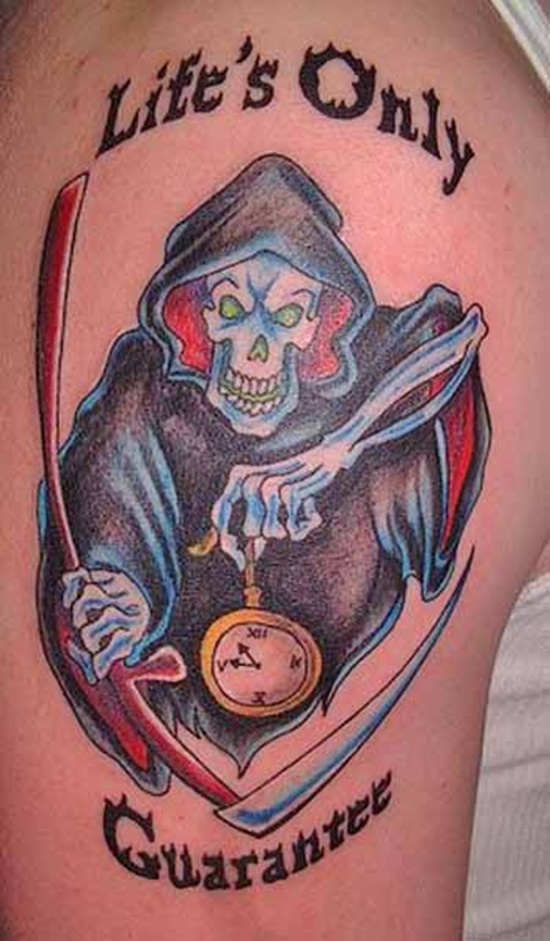
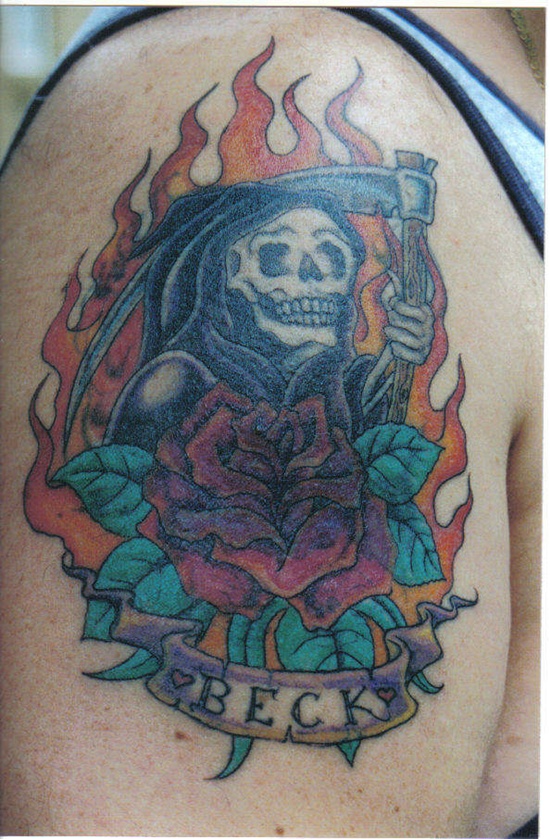
Restraint. A reaper plus an hourglass plus a raven plus a clock plus roses plus a banner is a common request and a crowded tattoo. Choose one companion element at most.
Placement, size and cost
| Design | Typical size | Sittings | Pain, 1-10 | Rough cost |
|---|---|---|---|---|
| Small hooded figure, forearm | 4-6 in | 1 | 5-6 | $300-$700 |
| Outer arm or calf | 6-9 in | 1-2 | 3-4 | $500-$1,200 |
| Chest panel | 8-12 in | 2-3 | 7-8 | $1,000-$2,500 |
| Ribs | 8-12 in | 2-3 | 8-9 | $1,000-$2,800 |
| Half sleeve | - | 3-5 | 4-6 | $1,500-$4,000 |
| Back piece | - | 8-20 | 4-6 | $4,000-$12,000 |
Rates vary widely by city and artist demand. Heavy black is slower than it looks: packing large areas to a solid, even black takes multiple passes and is one of the more tiring things to sit through.
Styles that hold up
Black and grey realism. The default for this subject and the right one. Tonal range does the work, there is no colour to fade, and the drama comes from contrast.
Heavy blackwork. Silhouette and negative space, very little grey. Extremely durable and often the most striking version.
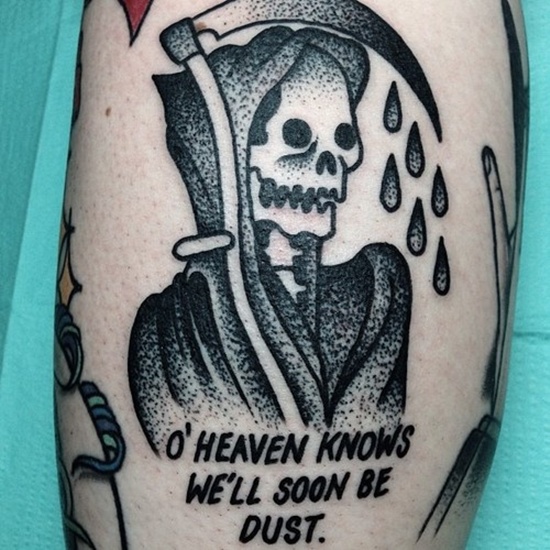
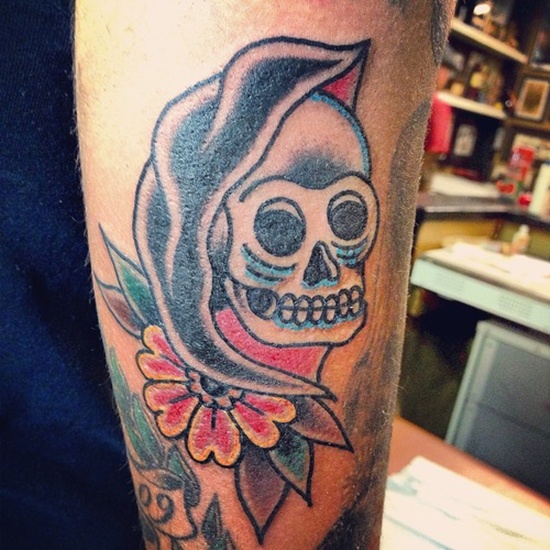
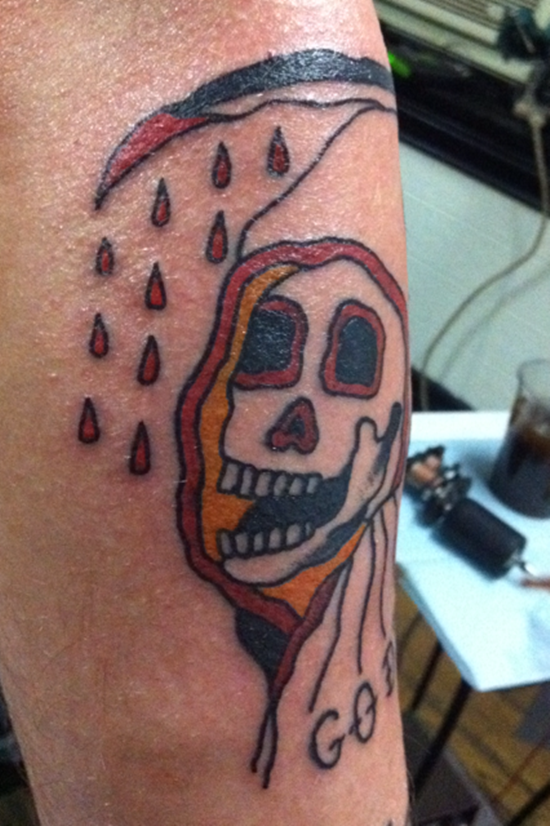
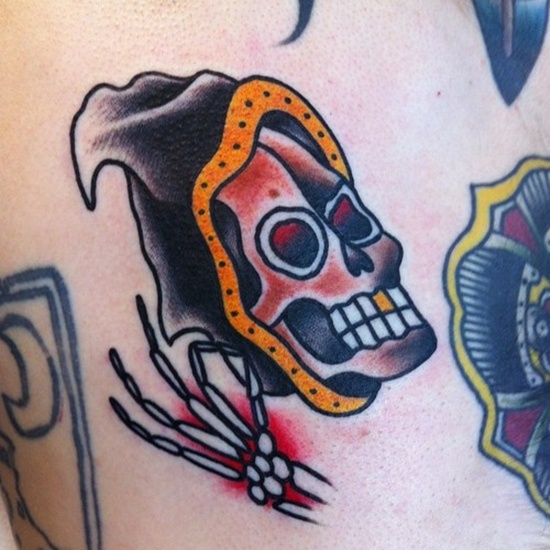
Traditional. Bold outline, limited palette, the reaper as an emblem rather than a scene. Ages indefinitely.
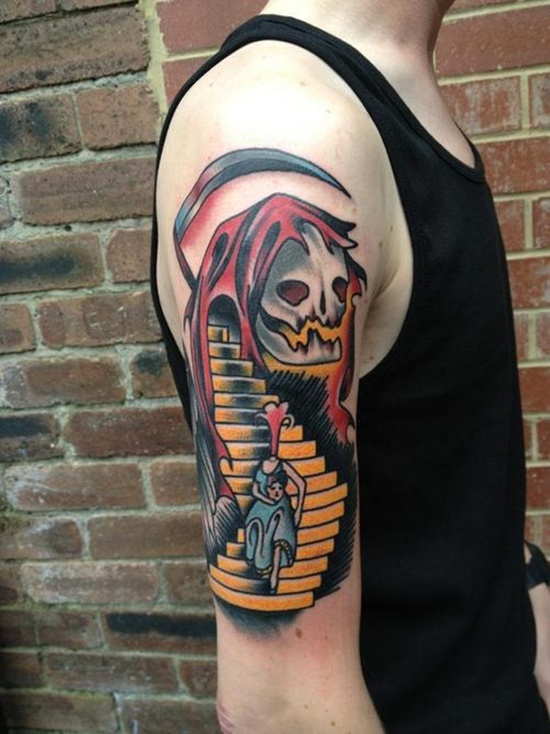
Neo-traditional. More decorative, some colour, strong structure. Good when you want the robe to carry pattern.
Etching and engraving style. Cross-hatched linework in the manner of an old woodcut, which suits the medieval origin exactly. Beautiful, and see the ageing note.
Worth thinking twice about: photorealistic skull detail at small sizes, and colour-heavy versions, where the palette rarely adds anything.
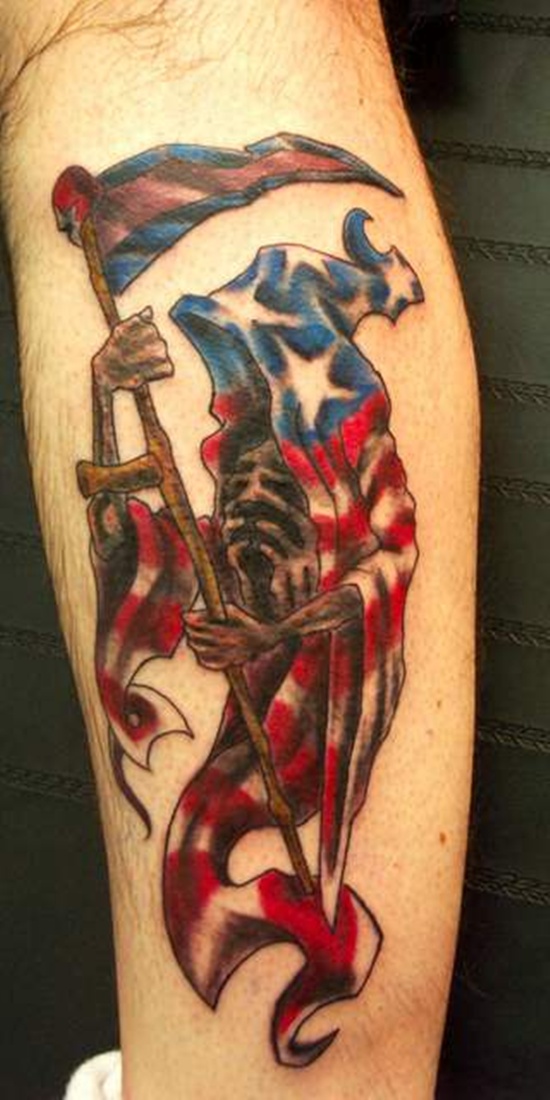
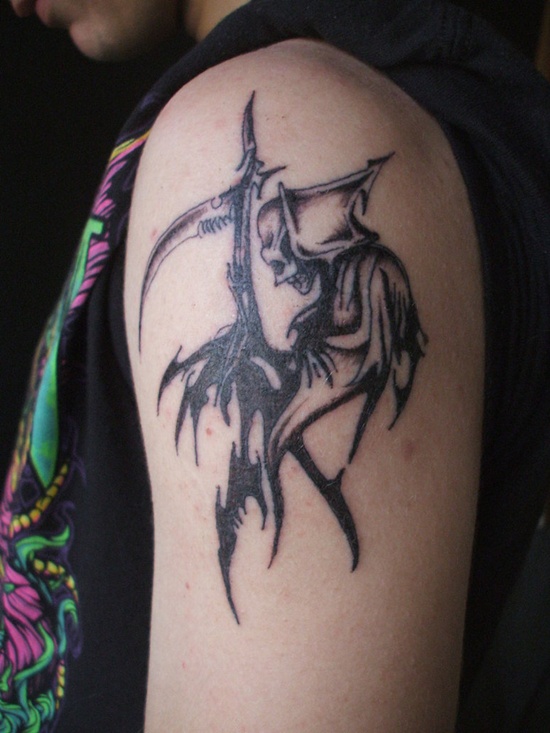
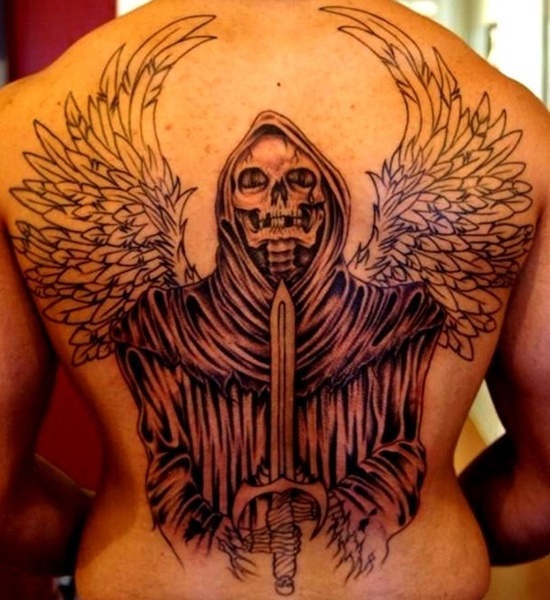
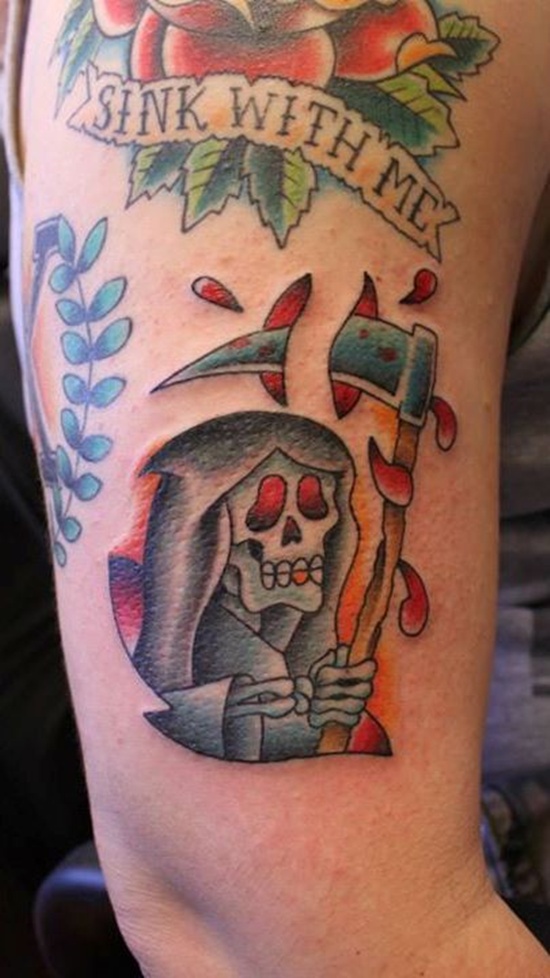
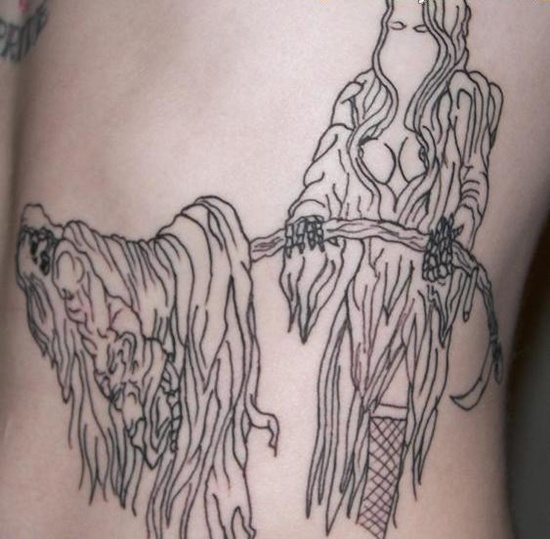
How it will age
This is a subject that ages unusually well, because most of it is solid black and solid black is the most permanent thing in tattooing. A well-built reaper at twenty years is still a reaper.
Two things do soften. Light greys lift over time, so a piece that relies on very pale tone for the shape of the robe will lose some of its depth - ask for a wider tonal range than the reference, with genuine darks. And fine cross-hatching, in the etching styles, merges into flat grey as the lines spread. Wider hatching than looks right on paper is the answer.
UV is the main driver of both. Sunscreen once healed. On a large black piece, expect a black touch-up somewhere around year eight to ten to bring the darks back, which is routine maintenance rather than a fault.
What to bring your artist
A posture, and a decision about the face. Fully skeletal, hidden in shadow, or partly visible - it changes the whole tone of the piece. Bring reference for cloth you like, since the robe is most of the drawing.
Say where it goes and how it should sit on the limb, because the scythe needs to run somewhere. And be realistic about size: if the space you have in mind is four inches, ask your artist whether a skull alone might serve you better.
A good artist will push back on cramming, on too many companion elements, and on a size that will not hold the detail.
Aftercare, briefly
Follow your artist's instructions. Generally: covering on as long as they said, then gentle washing twice a day with clean hands and fragrance-free soap, and a very thin layer of the recommended aftercare.
Heavily packed black is more of a wound than fine linework. Expect more swelling, more weeping in the first day, and heavier peeling. All normal. No soaking for two to three weeks, no sun while healing, and no picking - lifted ink out of solid black leaves a pale patch that is very visible.