25 Edgy Orange Clockwork Tattoos Designs
A Clockwork Orange tattoo is one of the few where the meaning is genuinely contested, and where a stranger's reading may be very different from yours. That is worth deciding about before you sit down, not afterwards.
Anthony Burgess took the title from an old London expression - something that looks natural and organic but is wound up and mechanical inside. The book, and Kubrick's film, are about a state that takes a violent young man and removes his ability to choose. The horror is the conditioning, not the violence.
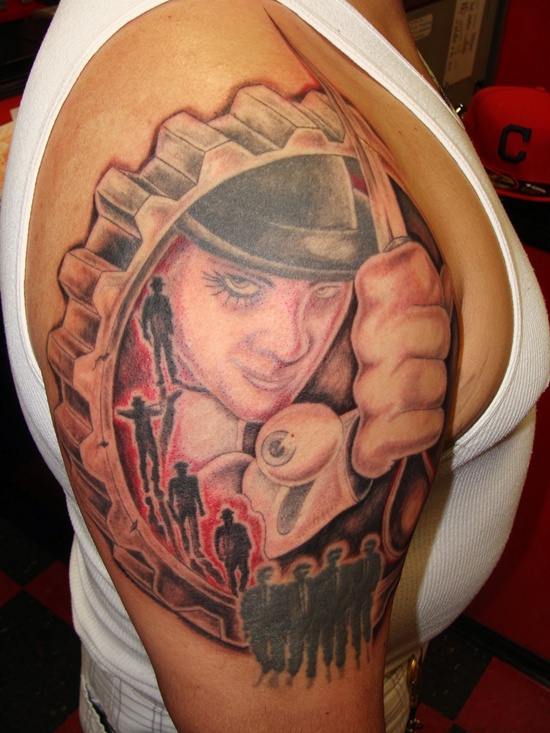
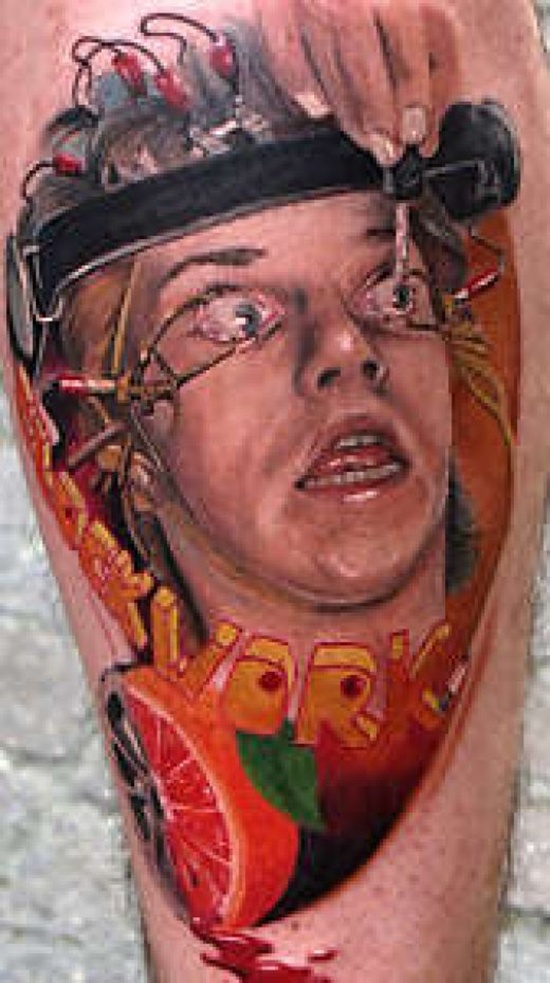
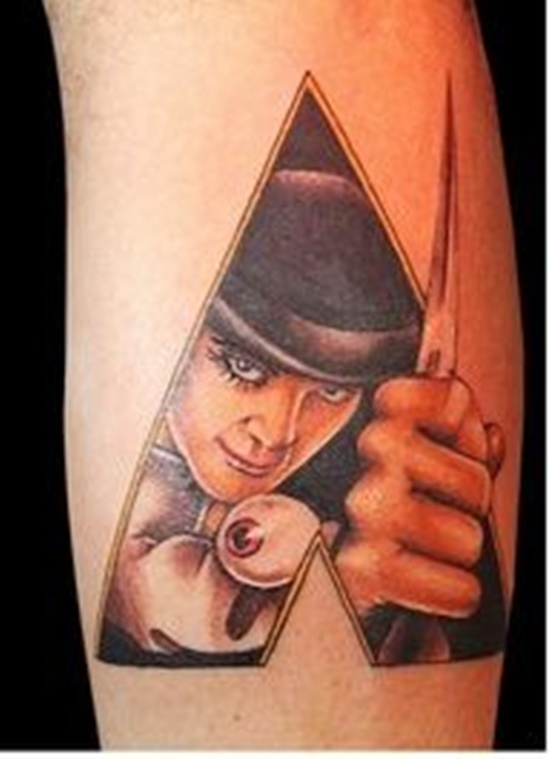
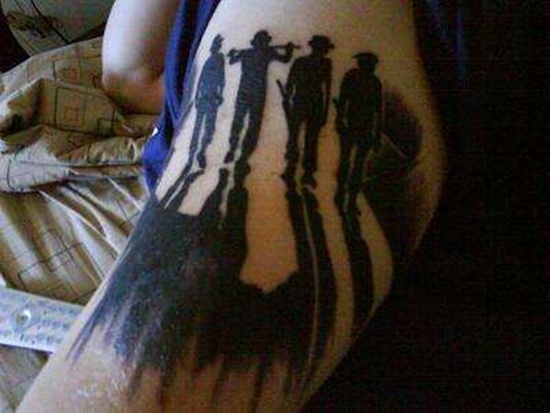
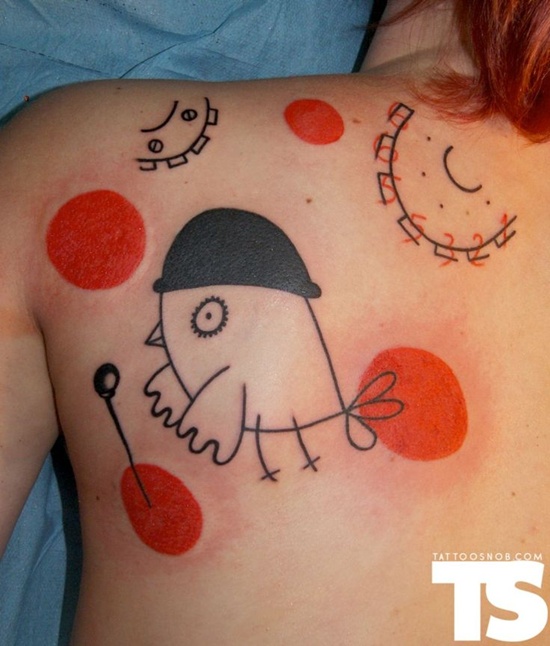
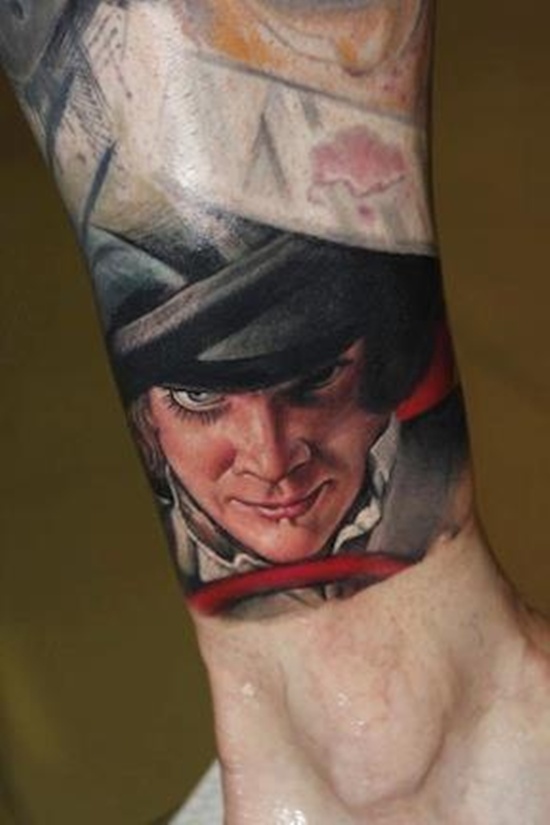
The imagery, and what each version says
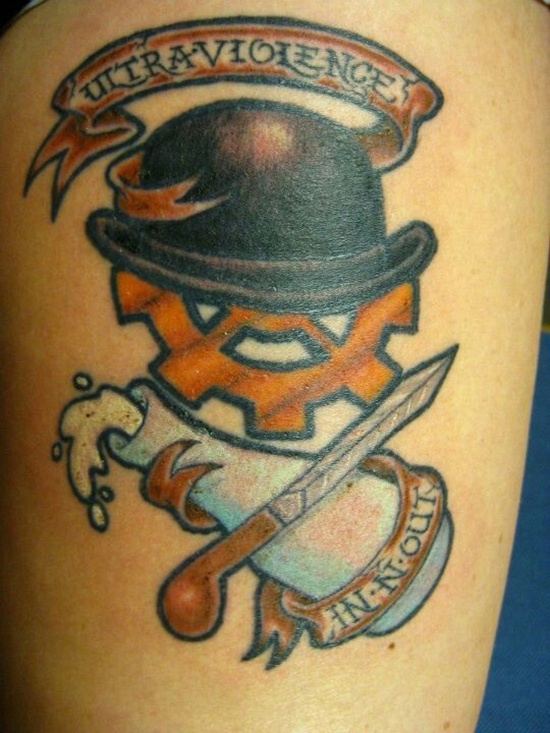
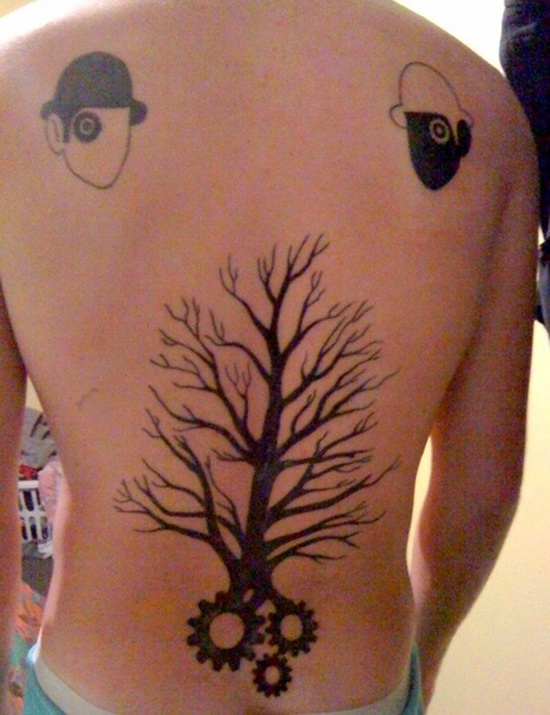
The cog orange. The fruit with clockwork inside, or a mechanism where the segments should be. This is the title made literal and it is the version that carries Burgess's actual idea: free will removed, a living thing made into a machine. It reads as philosophical rather than aggressive, and it is the version most people who have read the book choose.
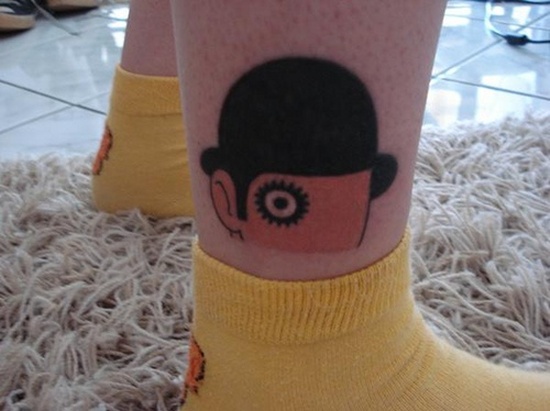
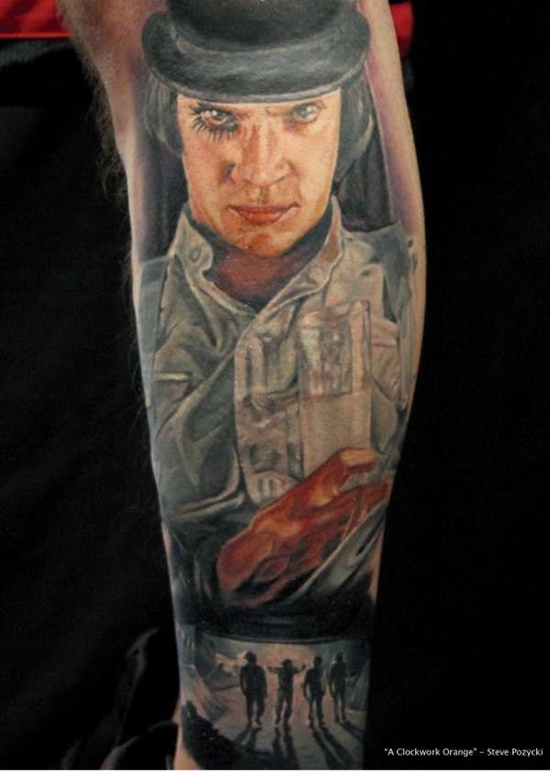
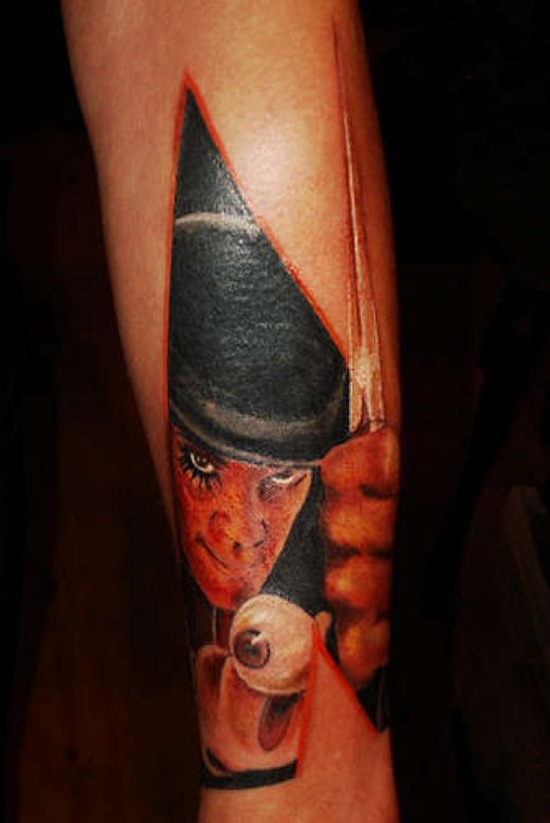
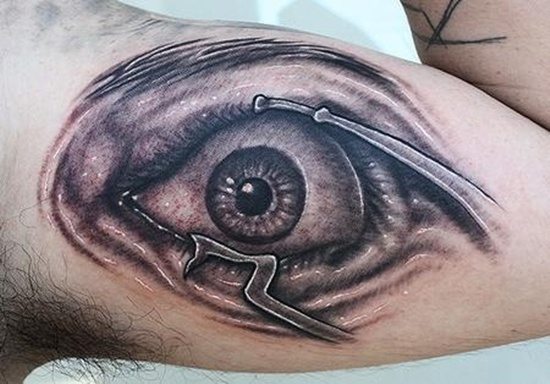
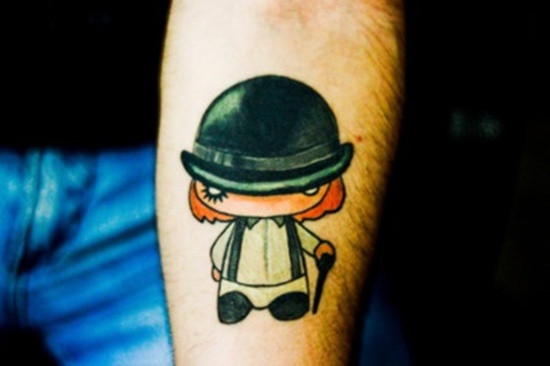
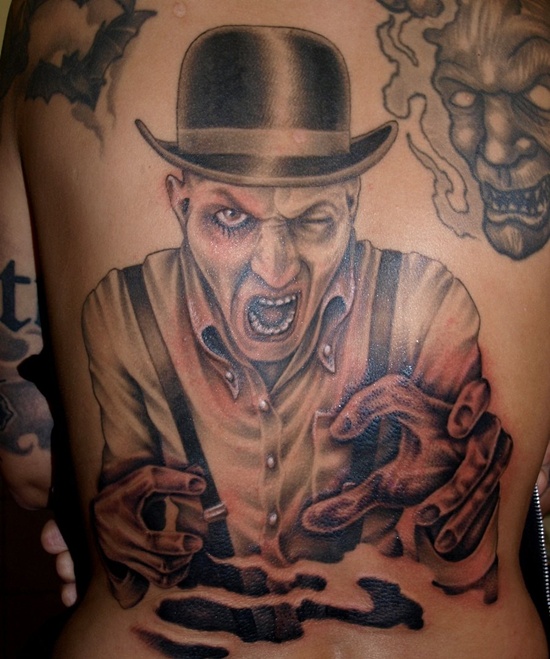
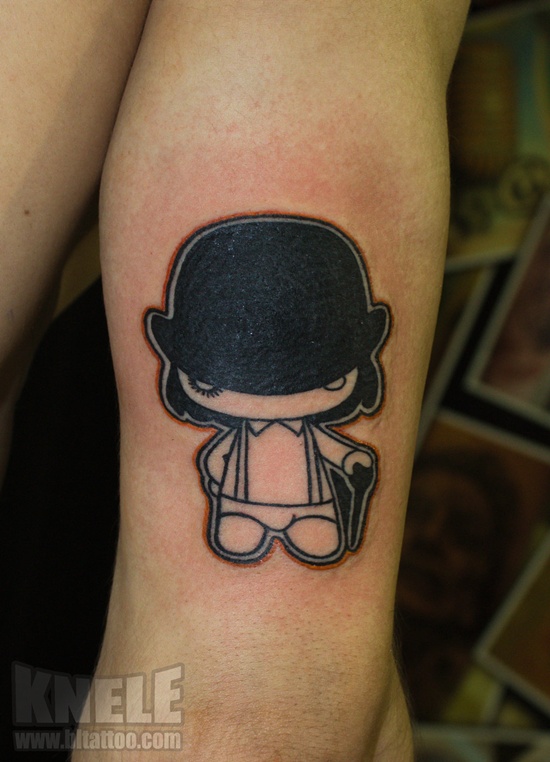
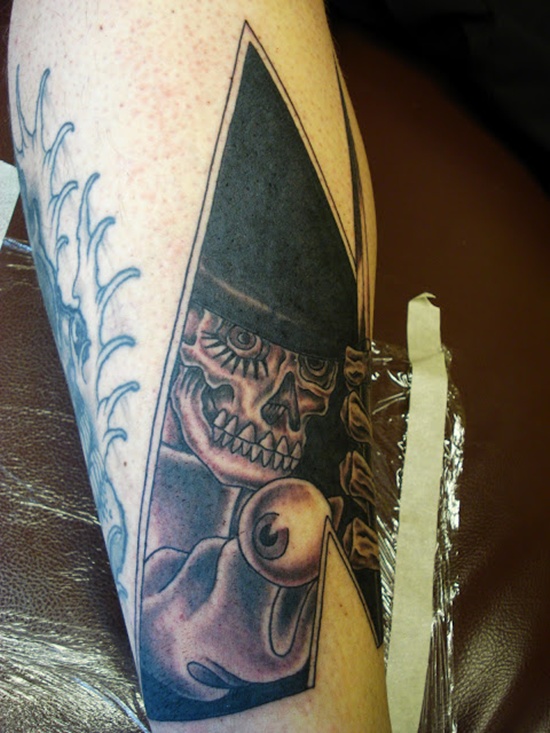
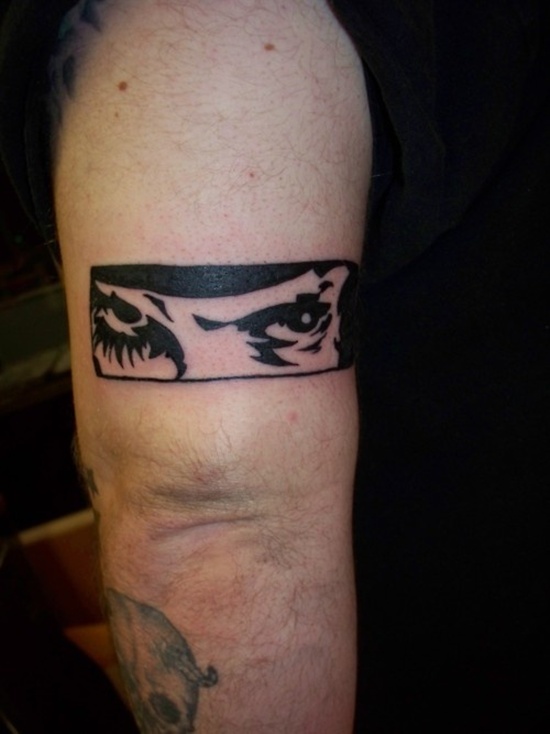
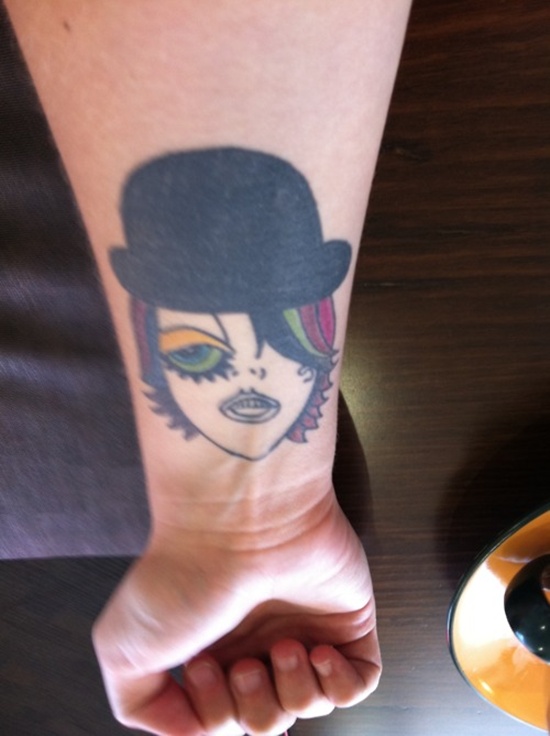
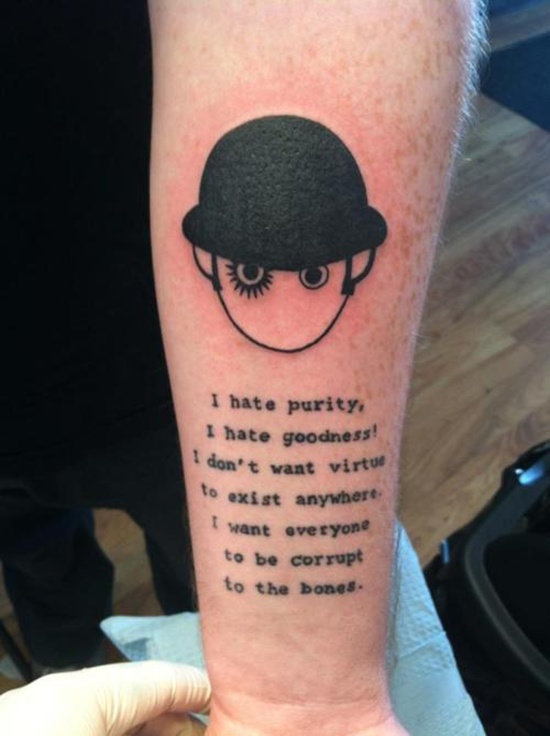
The Droog eye. The single false eyelash, the bowler hat, the stare. Taken directly from the film's poster and from Malcolm McDowell's Alex. It is a brilliant piece of design and instantly recognisable - and it is a portrait of a rapist and a murderer. Some people wear it as film iconography, which is a real and defensible reading. Others will not read it that way.
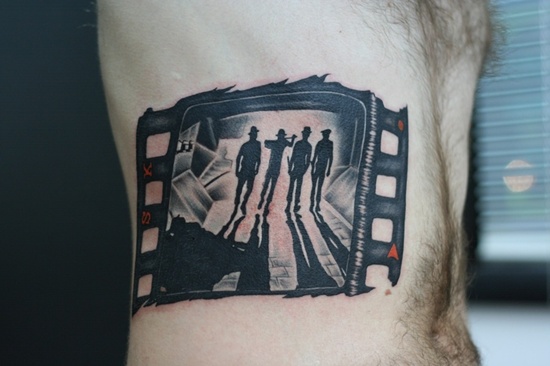
The milk bar. The Korova, the tables, the milk-plus. Stylised, striking, and more ambiguous than the eye.
Text. "Viddy well", "horrorshow", or a line from the Nadsat slang. Works well for people who came to it through the book.
Be clear with yourself which of these you want and why. The cog orange and the Droog eye look equally good on skin and say almost opposite things.
Placement, size and cost
The subjects here are mostly compact and high-contrast, which suits medium placements: forearm, calf, outer arm, thigh.
| Design | Typical size | Sittings | Pain, 1-10 | Rough cost |
|---|---|---|---|---|
| Small cog orange, forearm | 3-4 in | 1 | 5-6 | $200-$450 |
| Droog eye, forearm or calf | 4-6 in | 1-2 | 4-6 | $350-$800 |
| Detailed orange with mechanism, thigh | 6-9 in | 2 | 3-5 | $700-$1,600 |
| Milk bar scene, outer arm | 8-12 in | 2-3 | 3-4 | $1,000-$2,500 |
| Half sleeve composition | - | 3-5 | 4-6 | $1,500-$4,000 |
Rates vary by city and artist. The mechanism is where the hours go: cogs are repeated geometry and every tooth has to be right or the eye notices.
Styles that hold up
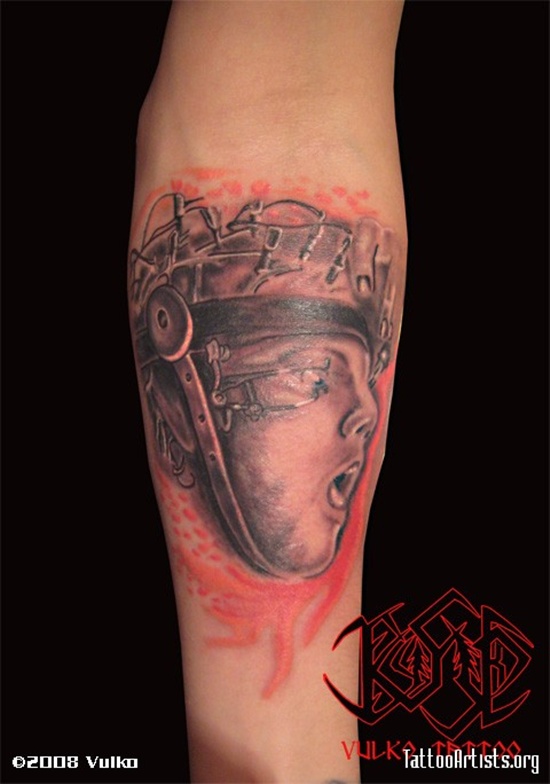
Black and grey realism. The film is famously stylised but its imagery renders beautifully in tone, and this is the most durable route.
Neo-traditional. Bold outline, controlled palette, decorative mechanism. Suits the cog orange particularly well and it is built to last.
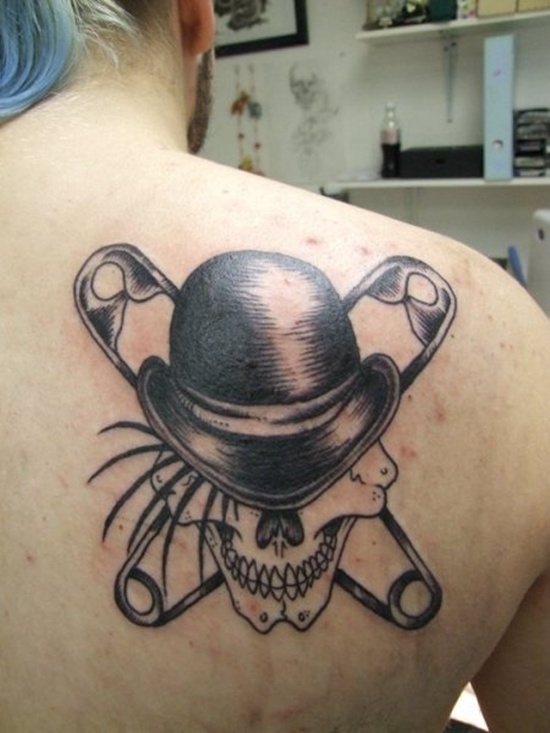
Blackwork and engraving style. Cross-hatched clockwork in the manner of an old technical illustration. Genuinely appropriate to the subject, and see the ageing note below.
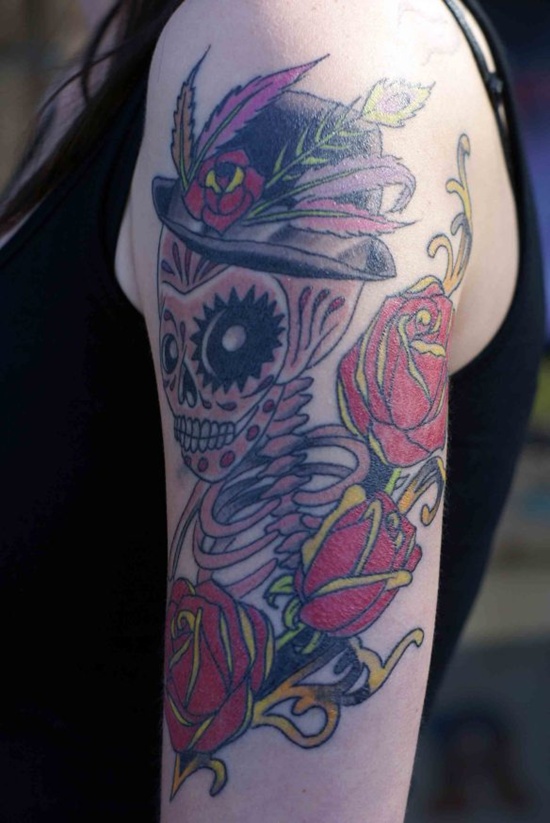
Traditional. Heavy black and flat colour. Ages indefinitely and gives the orange a poster-like quality that suits the source.
Full colour realism. The orange of the film is a specific, saturated orange, and it is one of the faster-fading pigments. If the colour is the point, size it up and expect maintenance.
How it will age
Two specific risks in this subject.
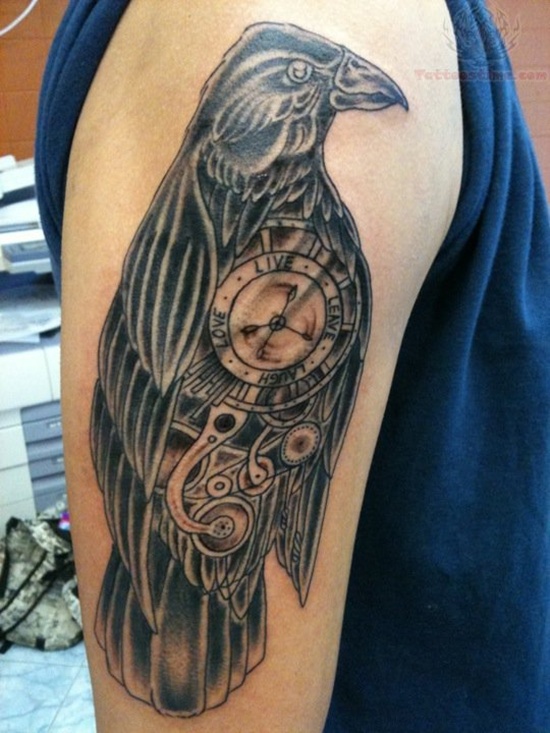
Clockwork detail. Gear teeth, escapements and fine mechanism lines are closely spaced repeated geometry, and they merge as ink spreads. A mechanism drawn with real black between the parts stays legible for decades; one drawn in hairlines becomes a grey texture within ten years. Ask for fewer, bolder cogs than the reference.
The orange itself. Orange pigment sits between yellow and red in durability, closer to the yellow end. A bright orange fruit will warm and soften over the years. Deeper, more saturated orange holds better than a bright one, and a strong black outline means the drawing survives even when the colour has moved.
Solid black is permanent. Sunscreen once healed. Plan a touch-up around year five if the colour matters, and treat that as normal on any orange-heavy piece.
What to bring your artist
A decision between the cog orange and the Droog eye, and a reason. Reference for the mechanism you want, since real watch movements look very different from generic gears and are far more interesting. And a placement with enough room for the mechanism to breathe.
A good artist will push back on hairline gear detail at small sizes, and may well ask what the tattoo means to you - which, with this subject, is a fair question rather than an intrusion.
Aftercare, briefly
Your artist's instructions come first. Generally: covering on as long as they said, then gentle washing twice a day with clean hands and fragrance-free soap, and a very thin layer of the recommended aftercare.
Colour work weeps slightly more on day one and peels more visibly. Normal. No soaking for two to three weeks, no sun while healing, and no picking - lifted ink from inside a mechanism is exactly where it shows.