50 Sunflower Tattoos for Women
There is one thing to get straight about sunflower tattoos before anything else, because it decides how happy you will be with yours in ten years: yellow is the least permanent colour in tattooing.
Yellow pigment particles are among the most vulnerable to UV, and yellow ink sits lightest in the skin. A bright sunflower at three months and the same tattoo at eight years can be noticeably different. This is manageable, and the ways to manage it are below - but nobody should find it out afterwards.
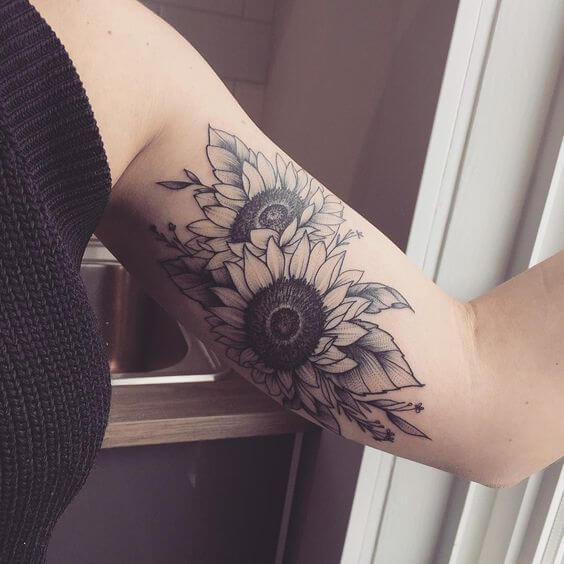
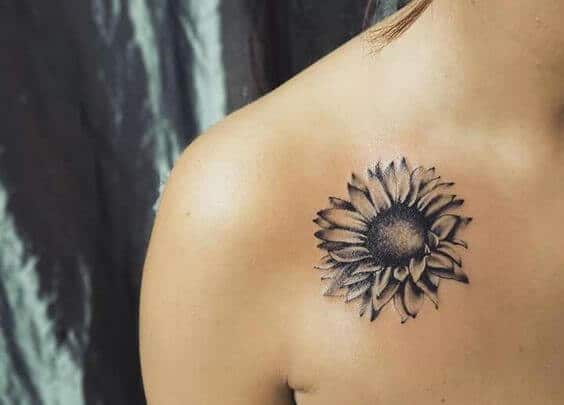
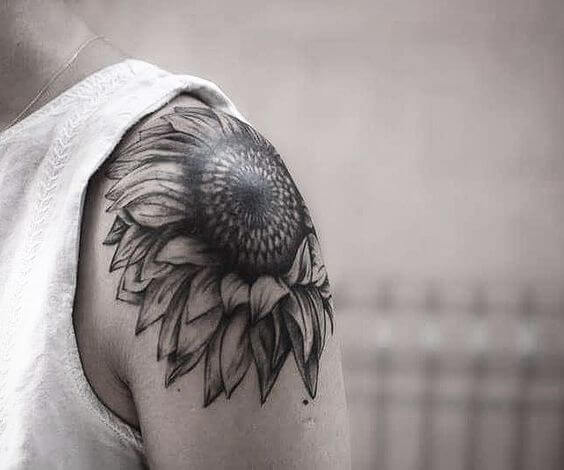
What the flower carries
The obvious reading is the true one. Sunflowers turn to follow the sun, and the tattoo generally means loyalty, warmth, and choosing to face toward the light. It is one of the most common tattoos in memorial work for someone whose company felt like that, and one of the most common for people coming out of a dark stretch.
Two specifics worth knowing. The heliotropism that gives the flower its reputation actually stops once the plant matures - mature sunflowers face east permanently. Whether that ruins the metaphor or improves it is up to you.
And the sunflower is Ukraine's national flower, which since 2022 has given it an additional and widely understood meaning. If that is not what you intend to signal, it is worth knowing that some people will read it that way.
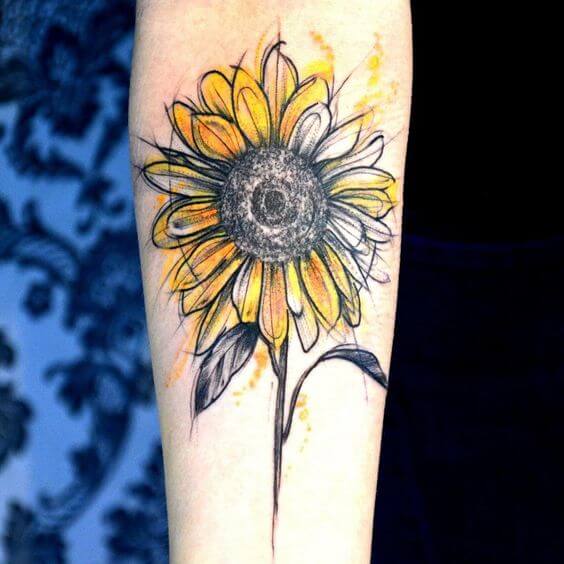
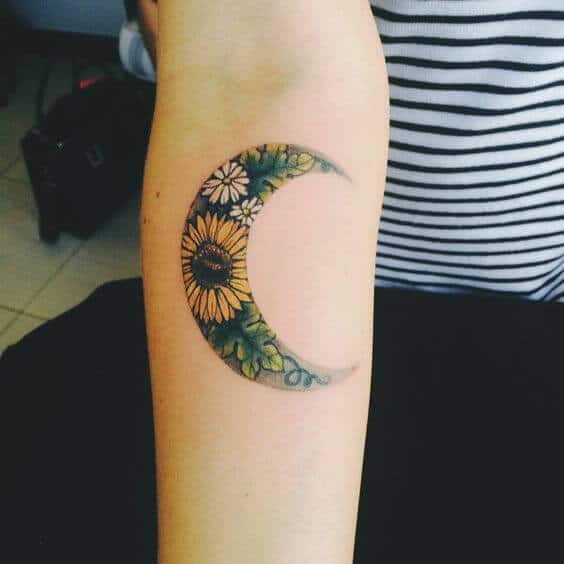
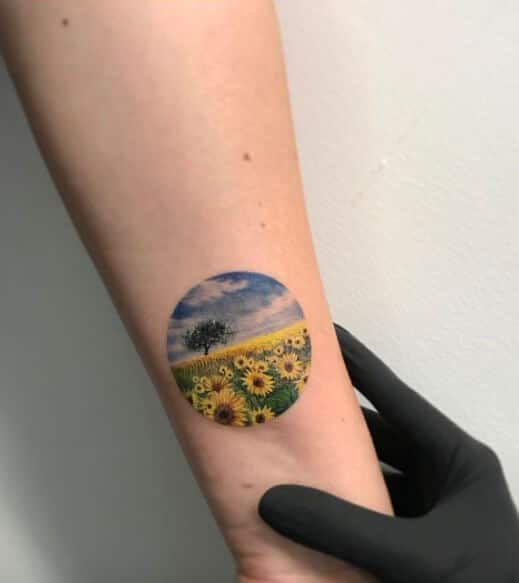
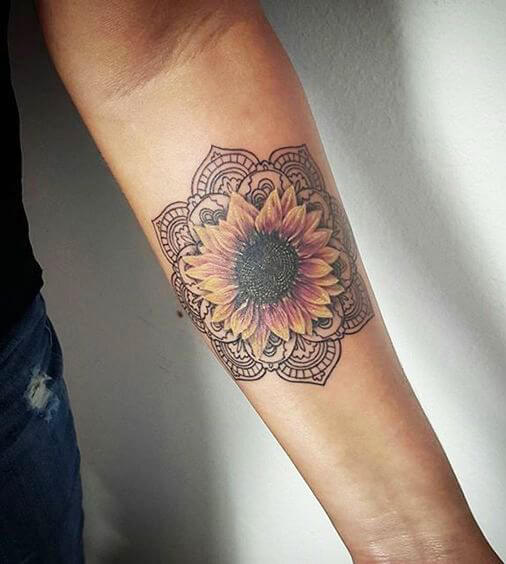
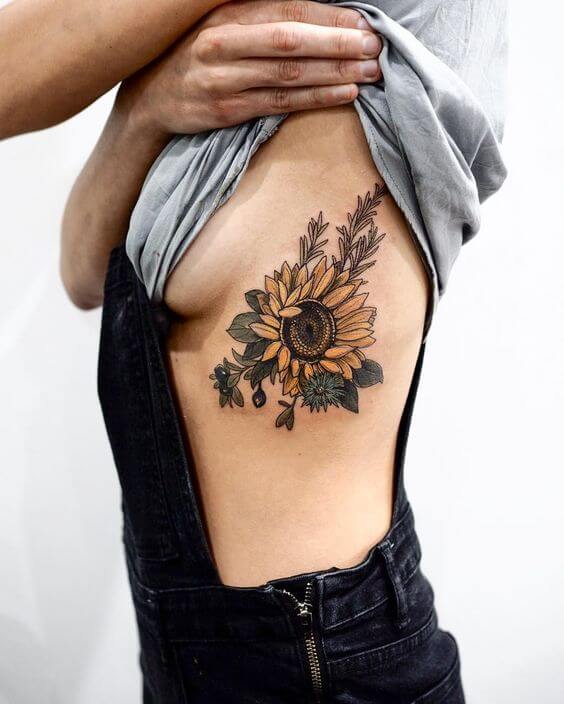
Making the yellow last
Real options, in rough order of how well they work.
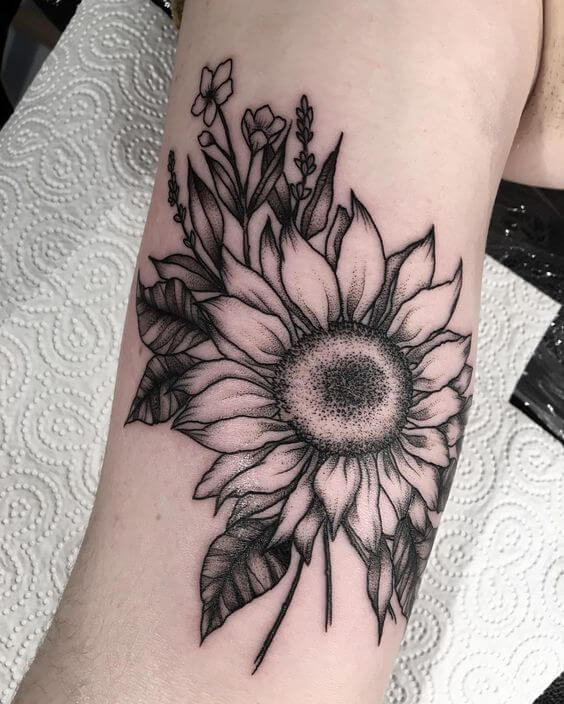
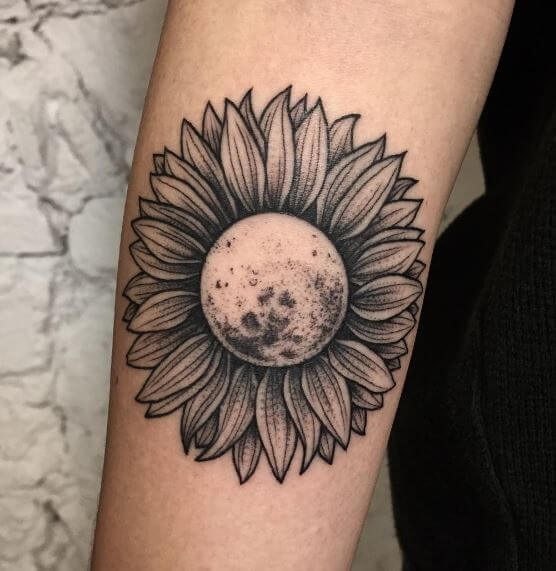
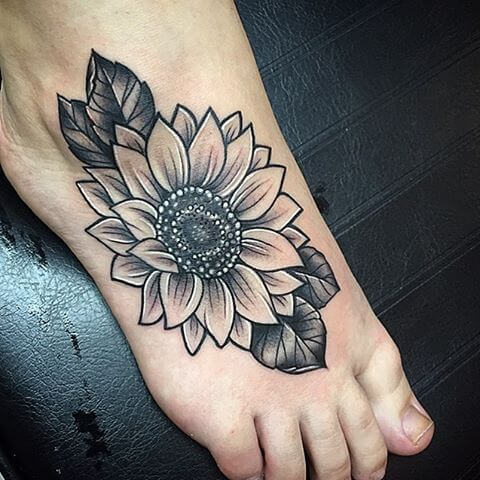
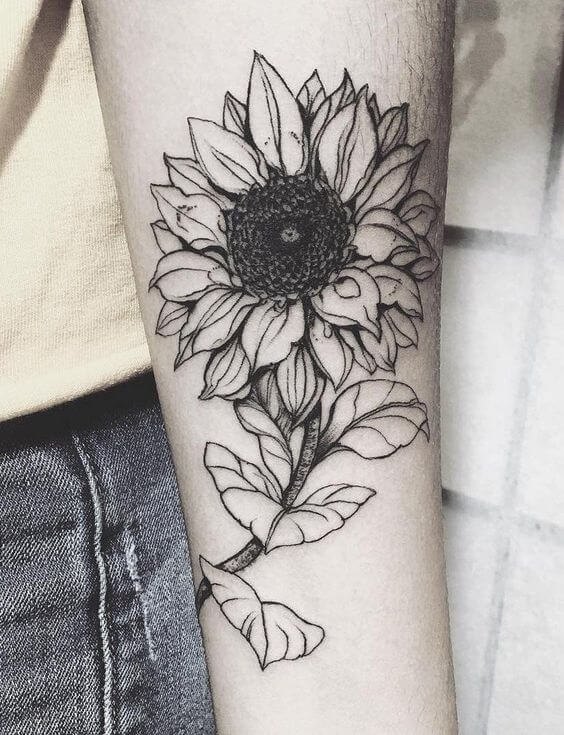
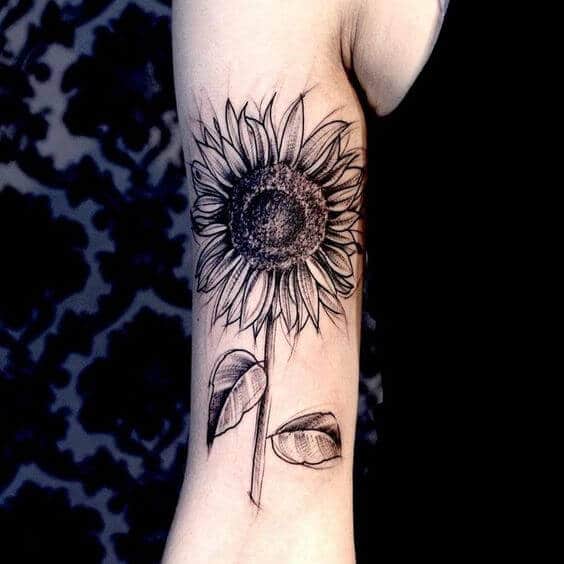
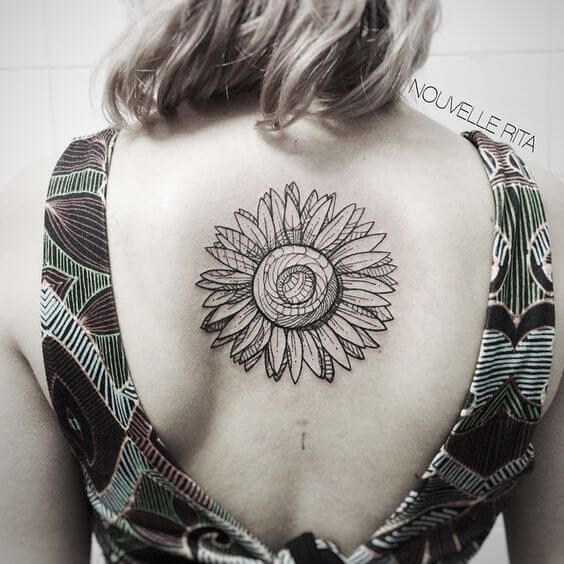
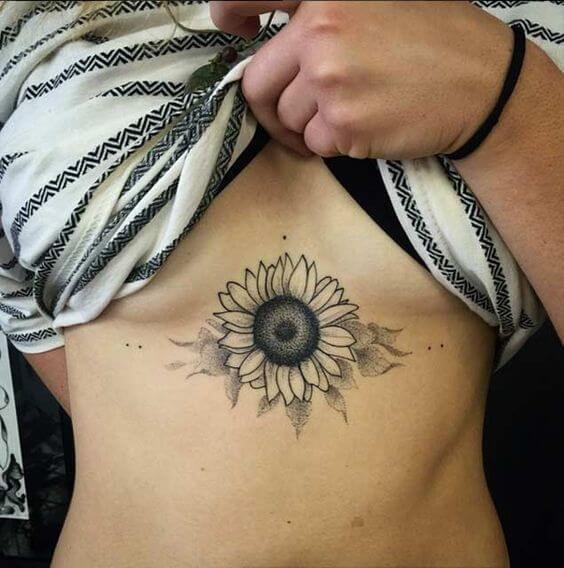
Black and grey. A sunflower rendered entirely in tone is a genuinely beautiful tattoo, the petals read through shape and shadow, and it will look the same in thirty years. The most durable answer by a distance.
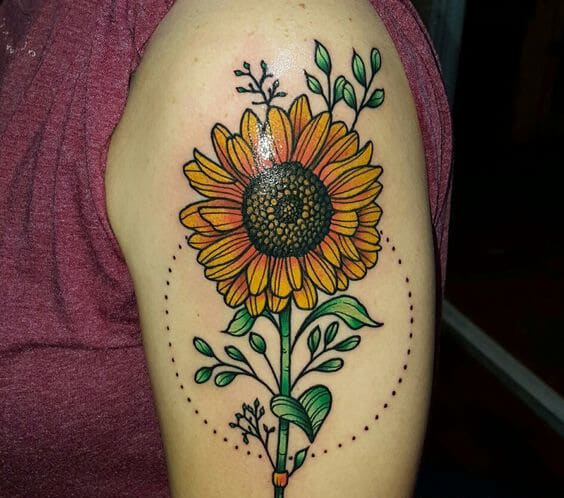
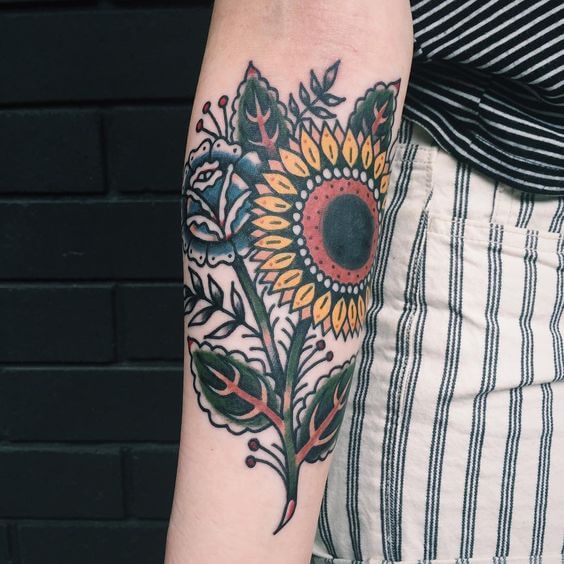
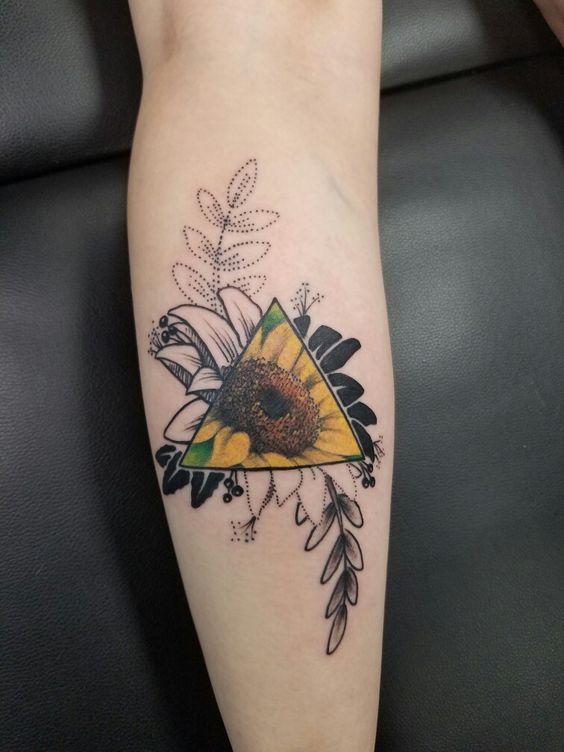
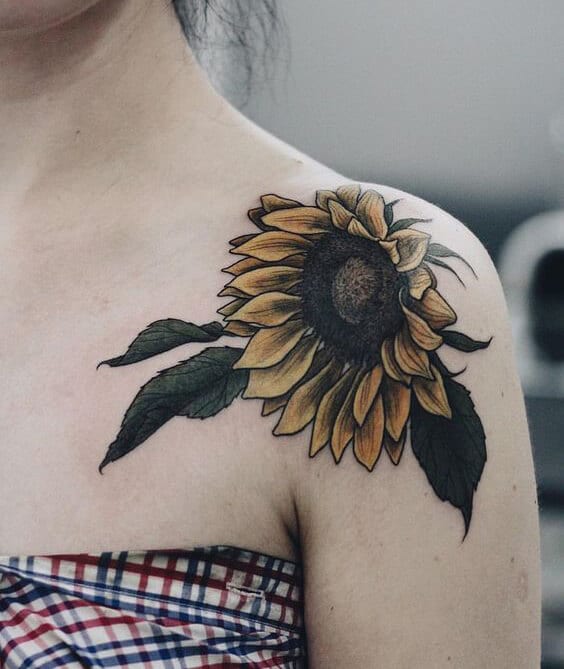
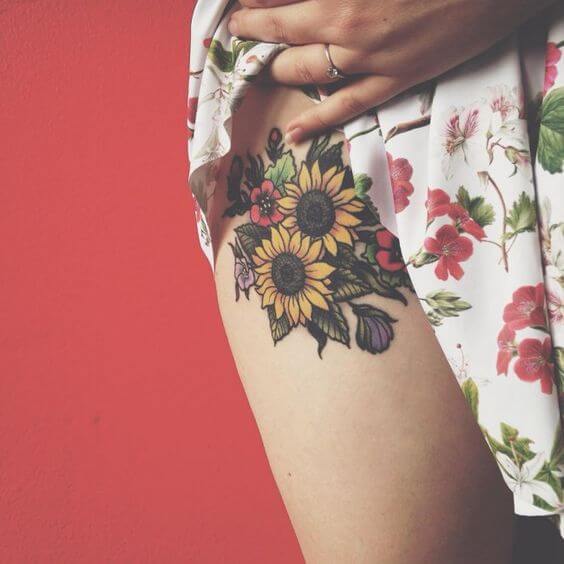
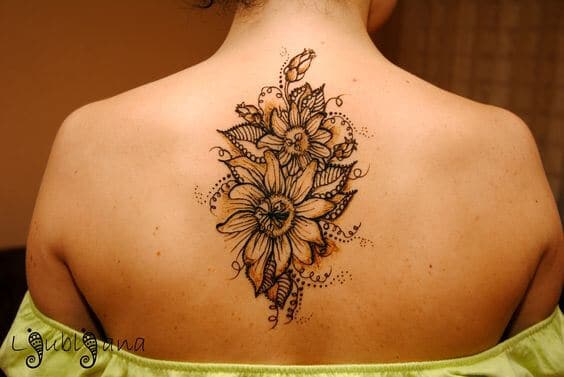
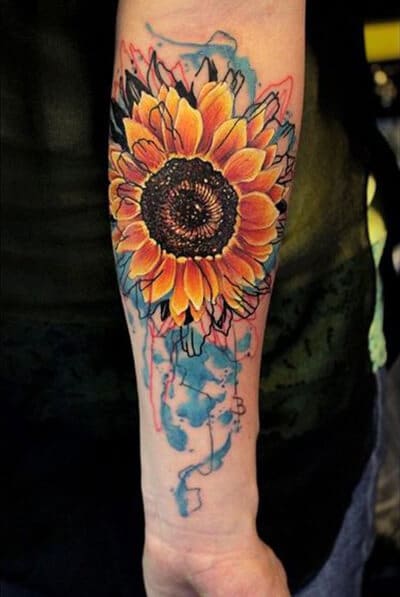
A strong black framework under the colour. Bold outlines and solid black in the centre disc, with yellow inside it. When the yellow softens, the drawing is still there. This is what neo-traditional does and why it lasts.
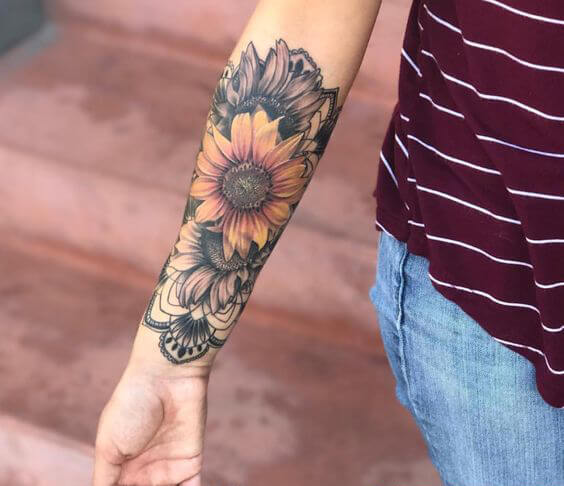
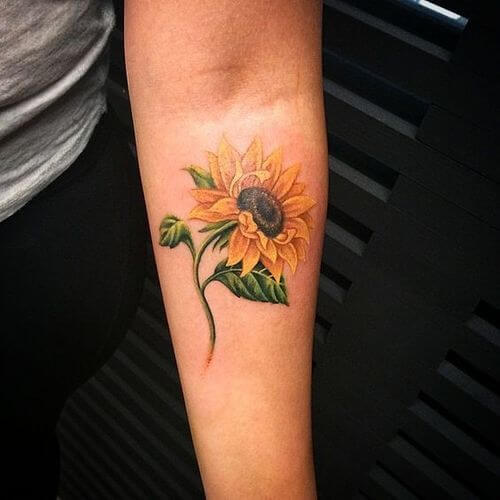
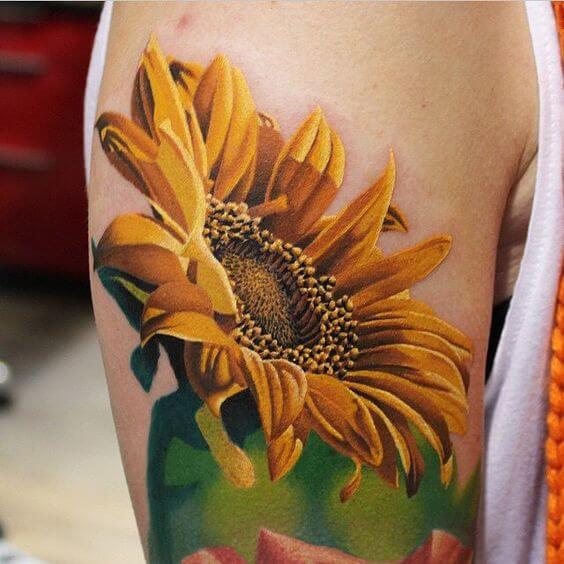
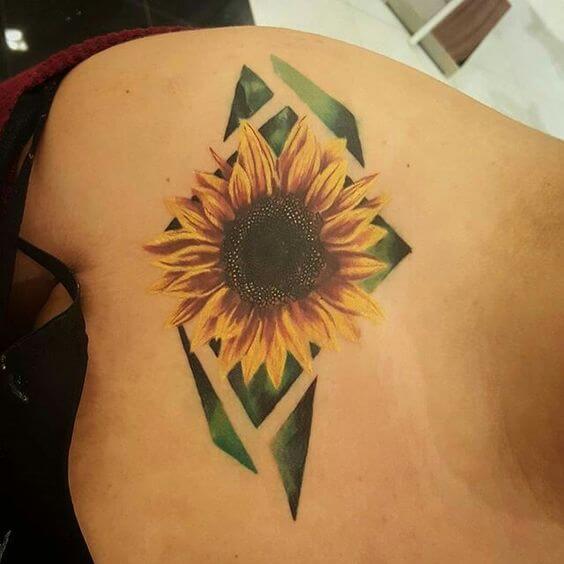
Deeper yellows and oranges. Ask for a warmer, more saturated yellow than the bright lemon in the reference photo. It reads as a sunflower just as clearly and it holds far better.
Size. A larger flower carries more pigment and shows fading more slowly.
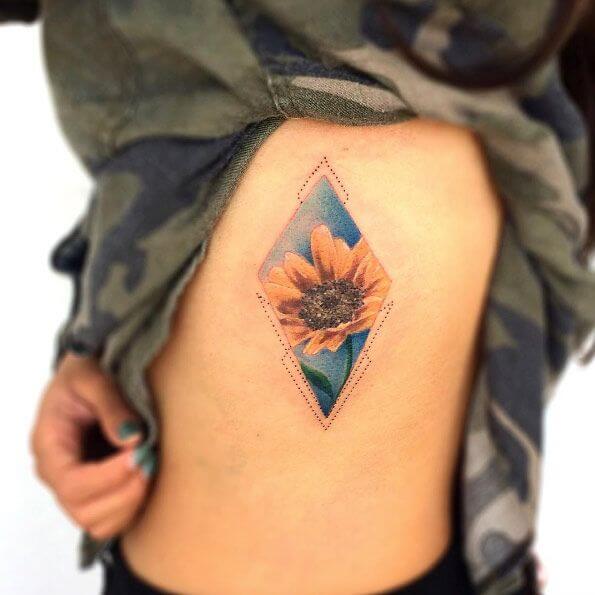
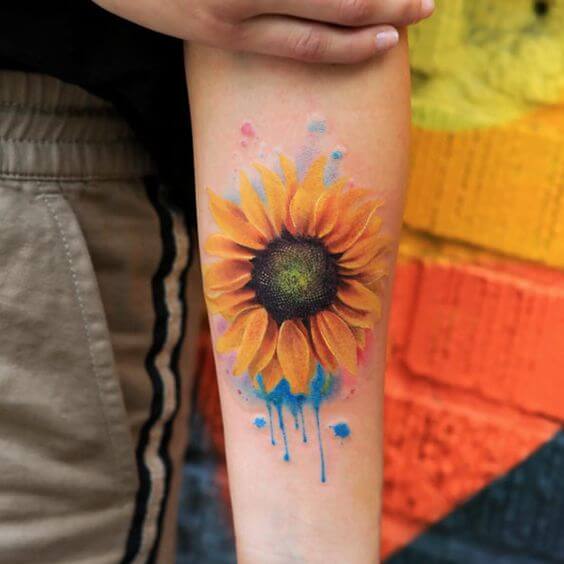
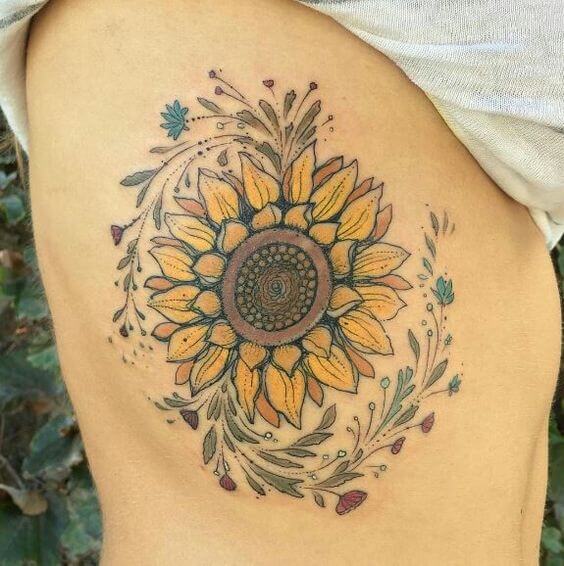
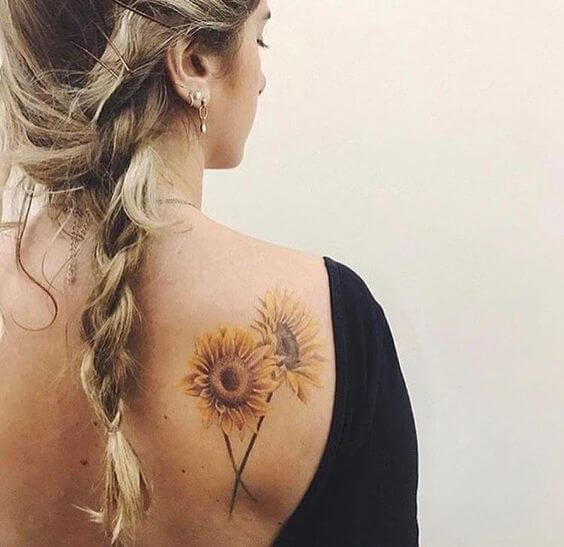
Placement out of the sun. Inner arm, thigh, ribs, back. A sunflower on a forearm or shoulder gets the most UV of anywhere on the body.
Then sunscreen, once healed, for the life of the tattoo. This is the single biggest factor within your control.
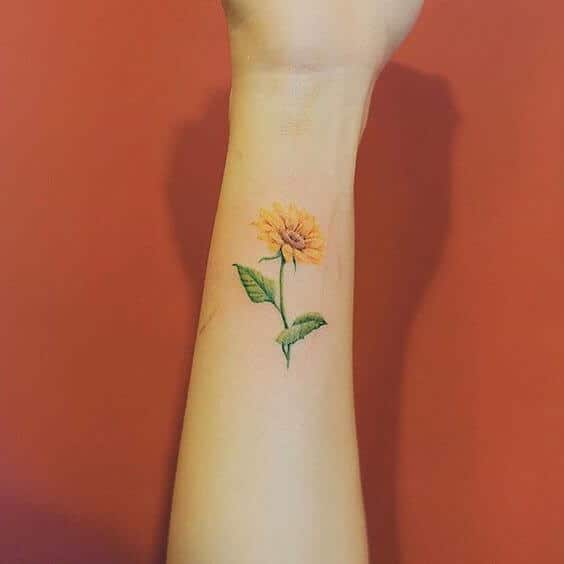
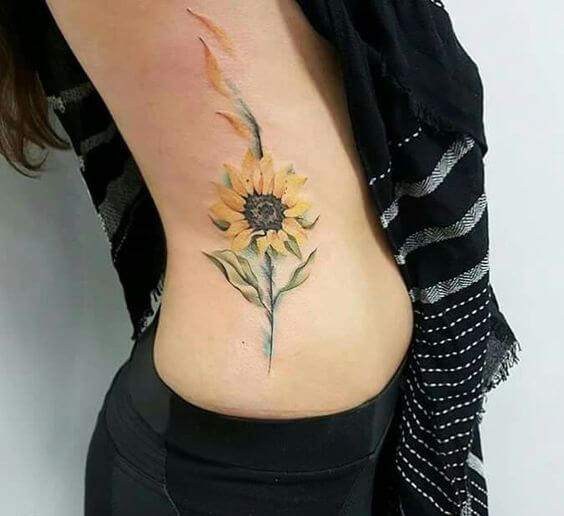
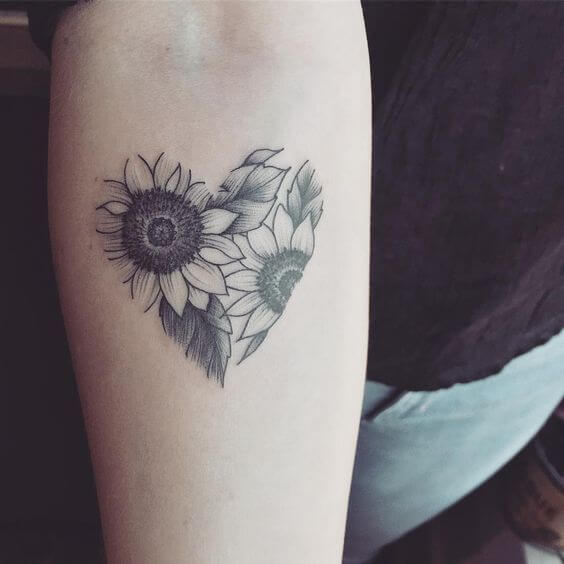
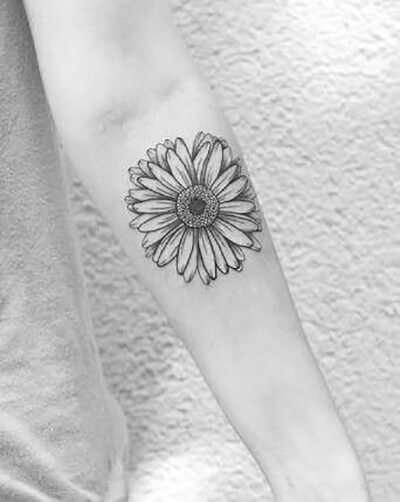
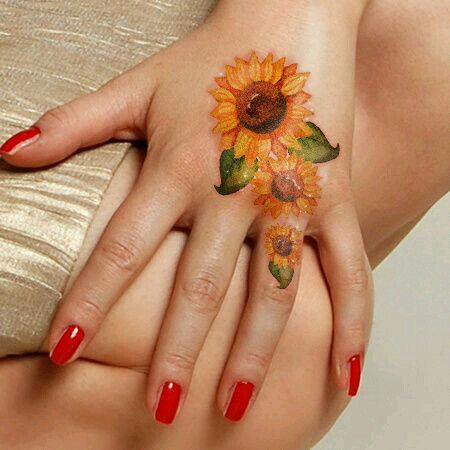
Placement, size and cost
| Design | Typical size | Sittings | Pain, 1-10 | Rough cost |
|---|---|---|---|---|
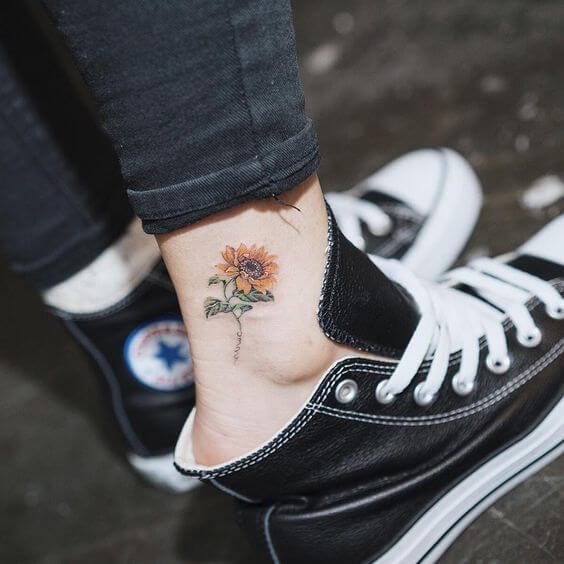
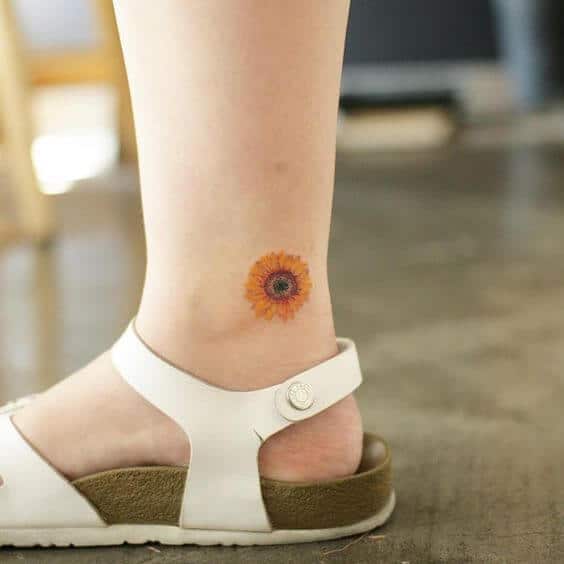
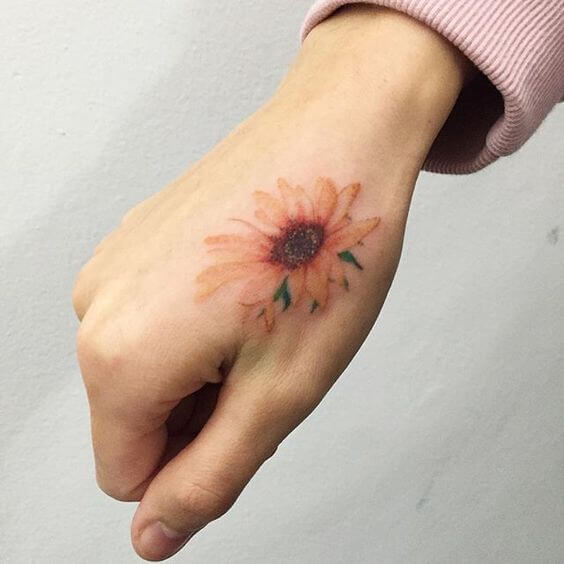
| Small single bloom, wrist or ankle | 1-2 in | 1 | 6-7 | Shop minimum |
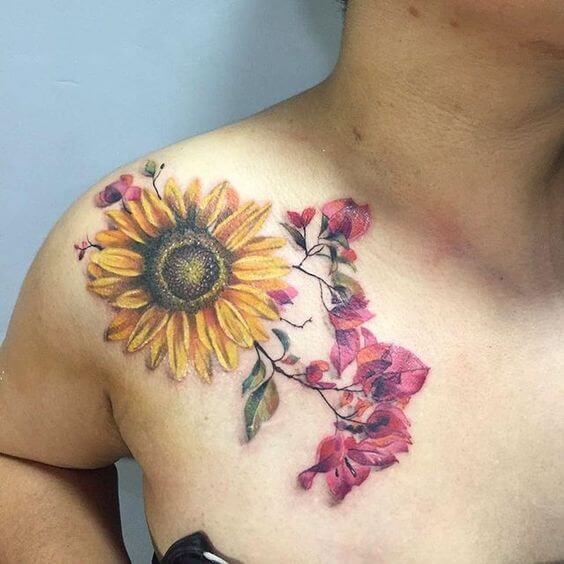
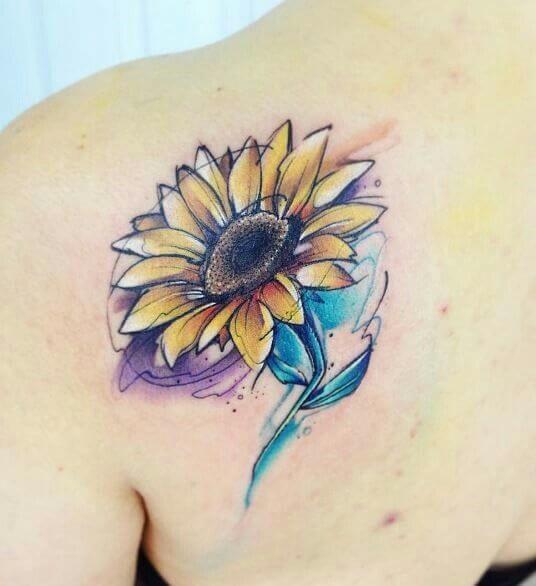
| Shoulder or shoulder blade | 3-5 in | 1 | 4-5 | $200-$450 |
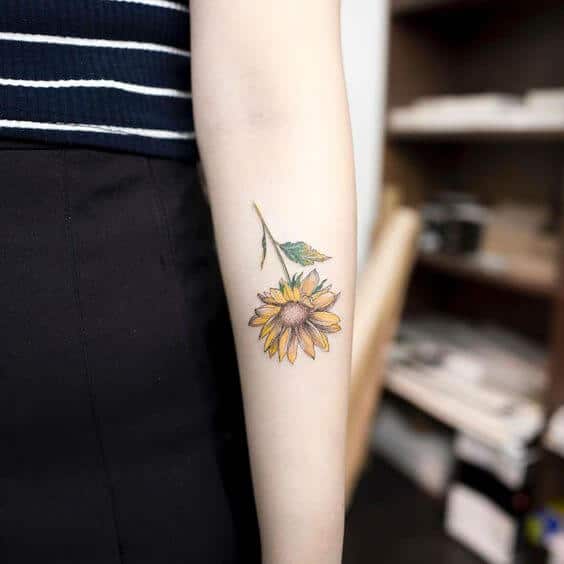
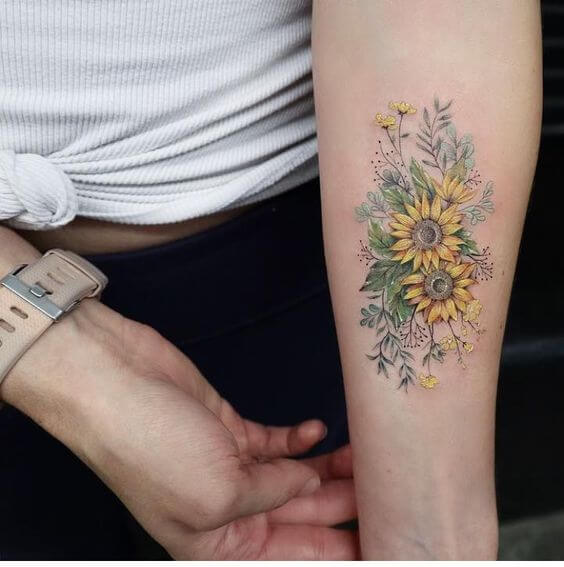
| Inner forearm | 4-6 in | 1-2 | 5-6 | $300-$700 |
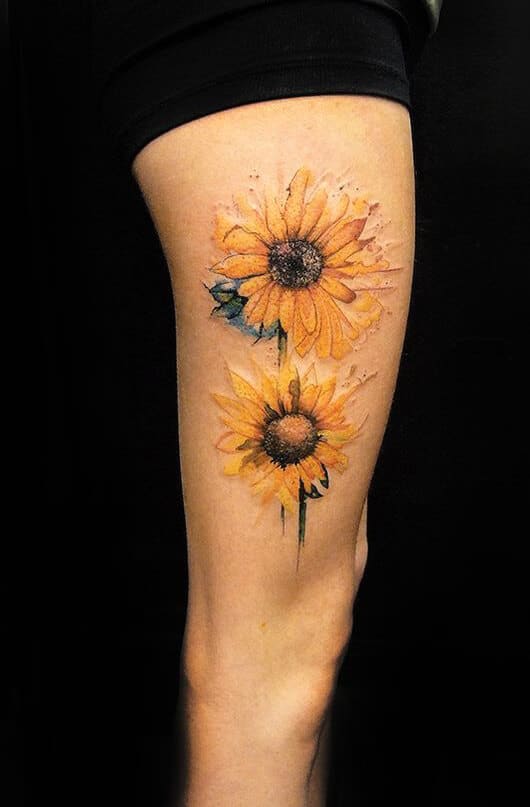
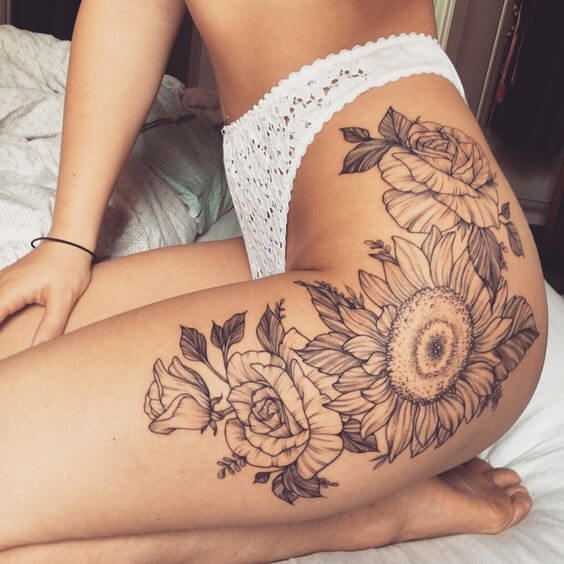
| Thigh, full colour | 6-10 in | 2 | 3-5 | $700-$1,800 |
| Ribcage | 5-8 in | 2 | 8-9 | $600-$1,500 |
| Half sleeve with foliage | - | 3-5 | 4-6 | $1,500-$4,000 |
Colour packing is what pushes the sittings up. The same design in black and grey is usually one sitting shorter and cheaper.
Styles that hold up
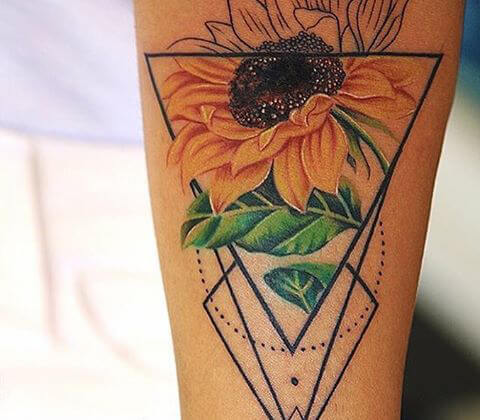
Neo-traditional. Bold black outline, controlled palette, decorative petals. Built for exactly this problem and the best coloured option.
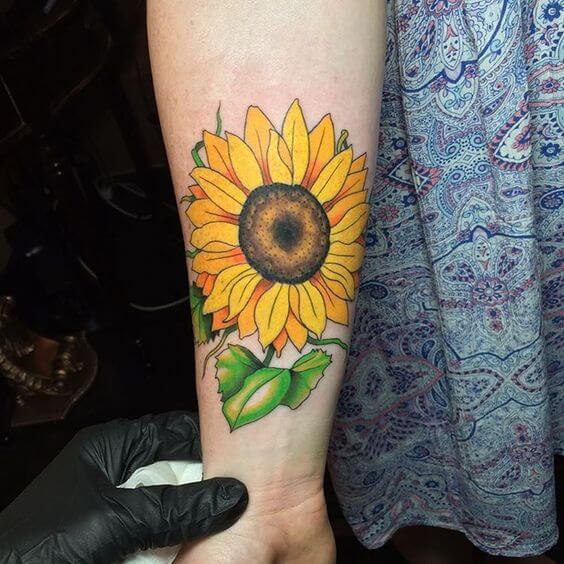
Traditional. Heavy black, simple shapes, classic colour. Nothing ages better, and a traditional sunflower is a lovely thing.
Black and grey realism. Petal structure in tone. Durable and often more striking than the coloured version.
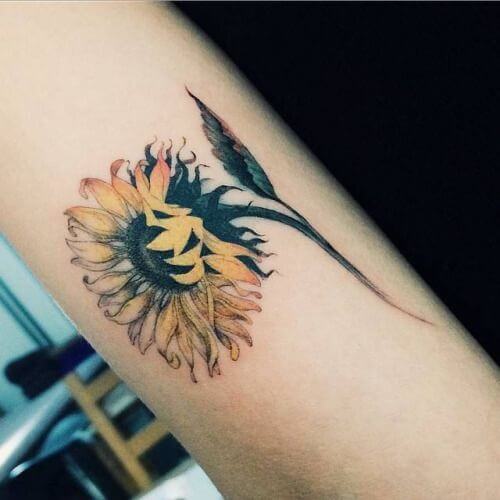
Illustrative with linework. Fine botanical style with a clear line structure and colour laid inside it.
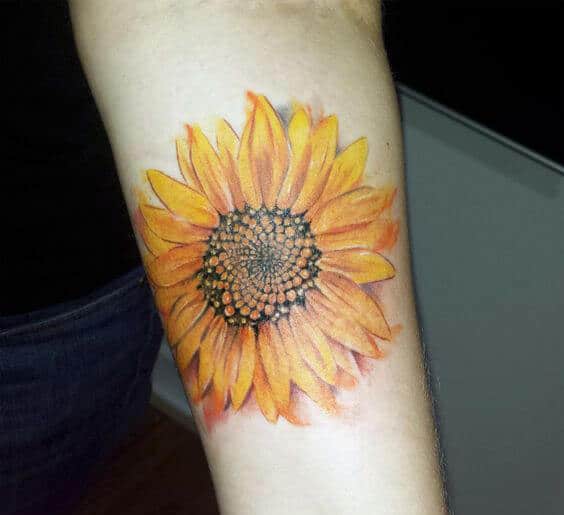
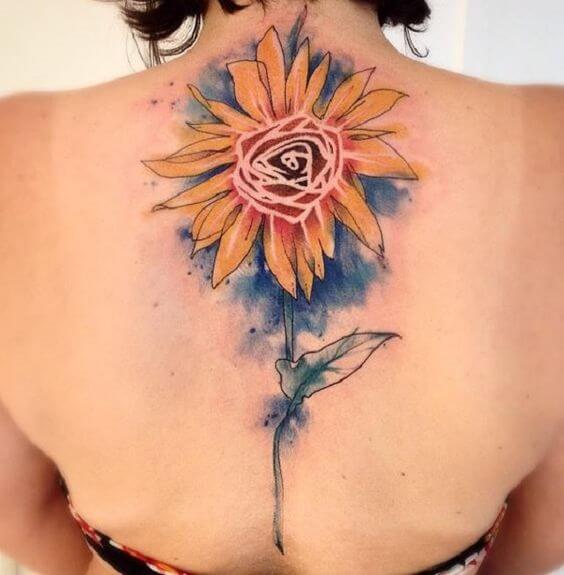
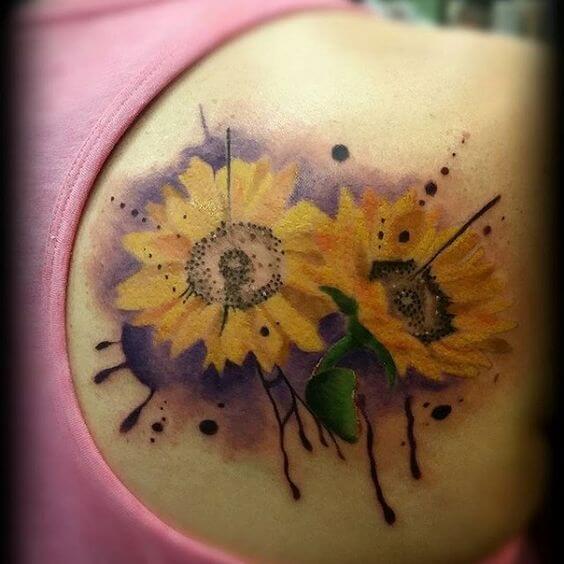
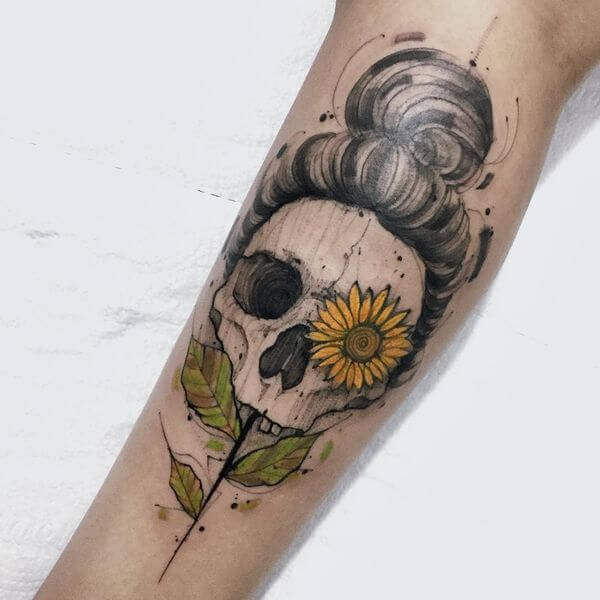
Watercolour. The most requested and the weakest here, because it combines the least durable colour with the least durable technique. If you love it, ask for black-and-grey bones underneath.
Fine-line micro. A one-inch sunflower has petals a millimetre apart. They will merge.
How it will age
The centre disc holds well - it is usually dark and heavily textured. The petals are where it shows: yellow lifting, and the narrow gaps between petals closing as ink spreads.
A well-built sunflower at ten years looks softer and slightly warmer, with the drawing intact. A watercolour one can look like a pale smudge. The difference is almost entirely whether there was black structure underneath.
Expect a colour refresh at some point - yellow is the one colour where a top-up every seven to ten years is normal rather than a sign something went wrong. Budget for it and it is not a problem.
What to bring your artist
Bring a reference and then ask two questions: can we go warmer with the yellow, and can we put more black under it. Both will improve how it looks in a decade and neither will make it look worse now.
Say where it sits and how much sun that spot gets. If the answer is a lot, ask whether black and grey might serve you better - a good artist will give you an honest answer rather than an upsell.
Expect pushback on: a one-inch flower with detailed petals, pure watercolour, and pale lemon yellow on a forearm.
Aftercare, briefly
Follow your artist's instructions. In general: covering on as long as they said, then gentle washing twice a day with clean hands and fragrance-free soap, and a very thin layer of the recommended aftercare.
Heavy colour weeps a little more in the first day and peels more dramatically
- both normal. No sun at all while healing, which matters more here than on most tattoos, and no picking, because ink lifted from a petal during peeling is the fading you were trying to avoid.