75 Starfish Tattoo Designs
A starfish is a five-pointed radial shape, which makes it one of the most placement-flexible motifs there is: it works anywhere a circle works, at almost any size, and it needs no particular orientation. That flexibility is why it turns up on ankles, wrists, ribs, hips and behind ears.
The meaning is better than most people realise, and it is the reason this design recurs so often in recovery and memorial work.
What it means
Regeneration. A sea star can regrow a lost arm, and in some species a severed arm can regrow an entire animal. That is the core of it: damage is not the end, and what grows back is whole. It is a genuinely specific claim, and it is why the starfish appears so often on people marking recovery from illness, addiction or loss.
Guidance. The star shape ties it to navigation and to the Star of the Sea, Stella Maris, a title for the Virgin Mary and a long-standing protector of sailors. The starfish is a common Catholic maritime motif for that reason.
The sea, and a place. For a great many people it is simply about somewhere
- a coast, a childhood, a person associated with the water. That is a perfectly good reason and needs no elaboration.
The parable. The story about throwing stranded starfish back one at a time, and "it made a difference to that one", is modern - it comes from an essay by Loren Eiseley. It has become the meaning for a lot of people working in care and teaching, and knowing its actual origin does not diminish it.
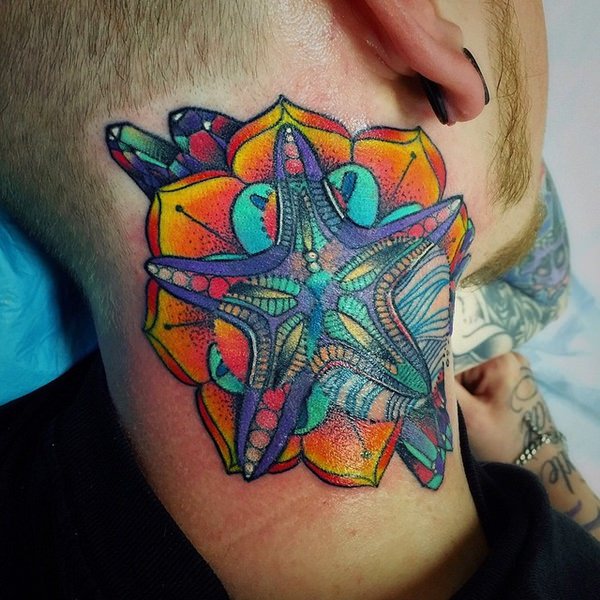
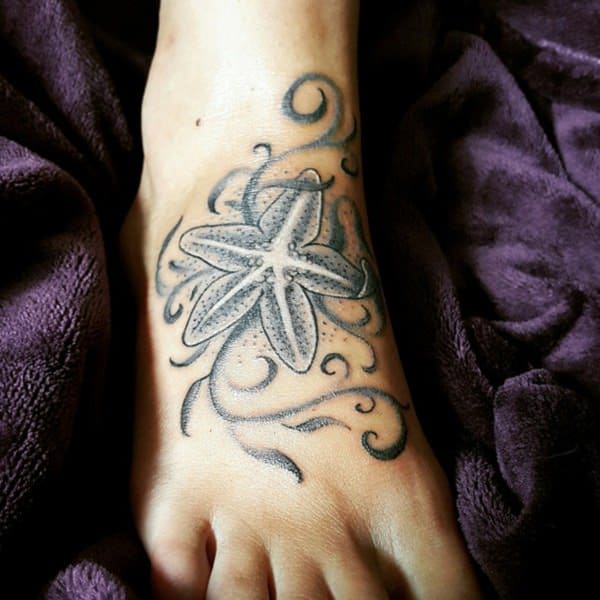
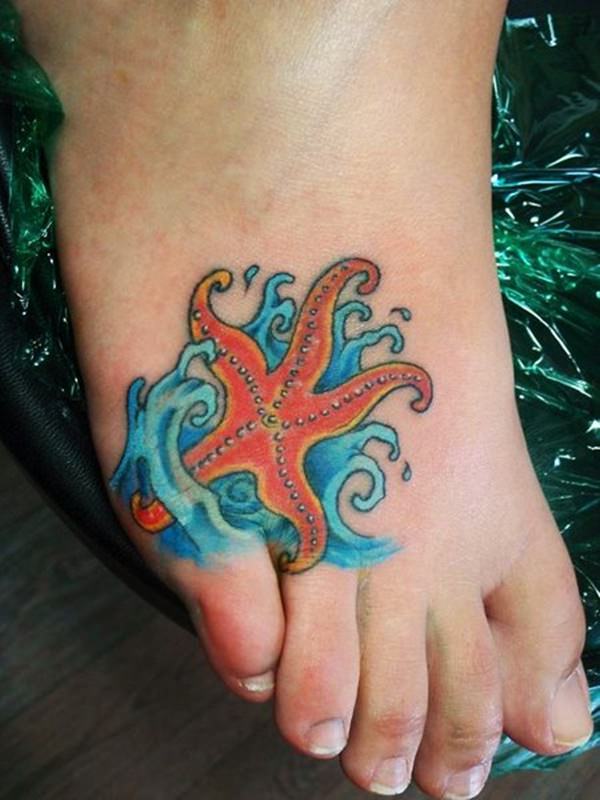
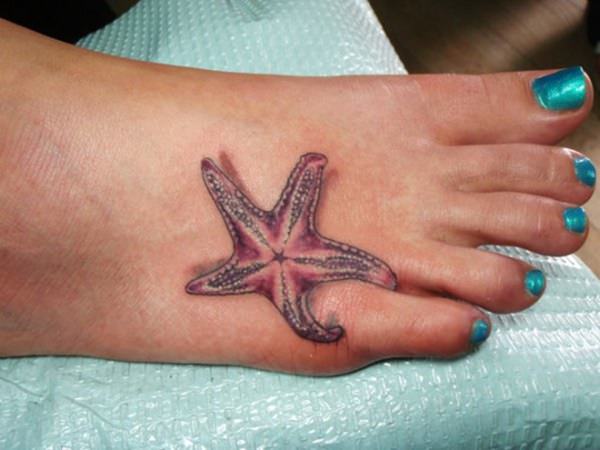
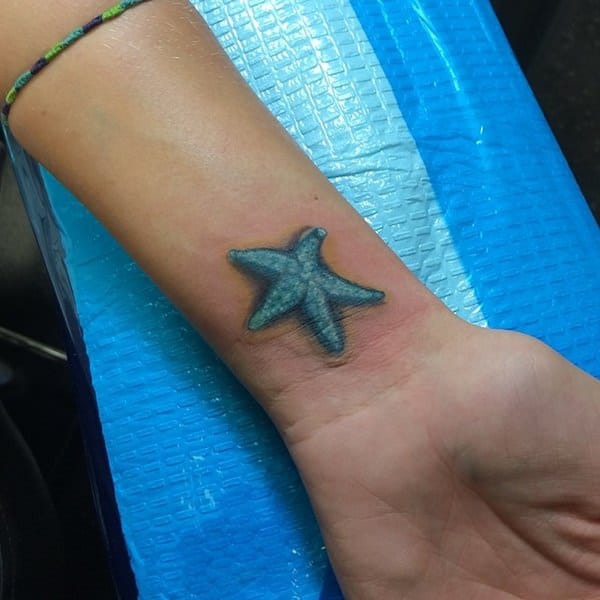
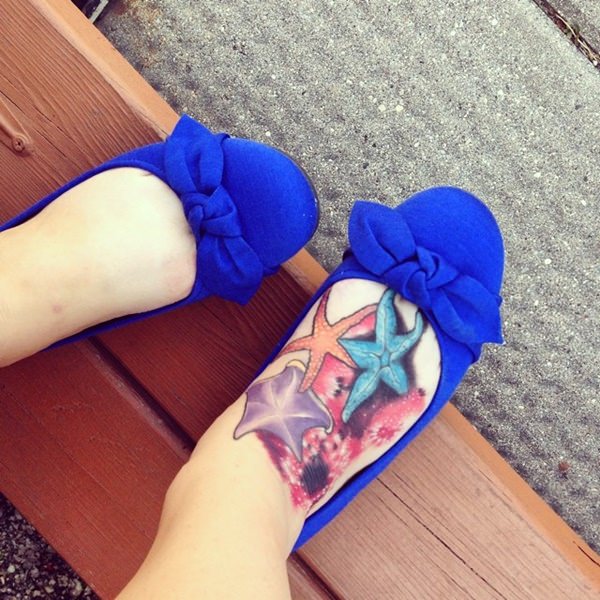
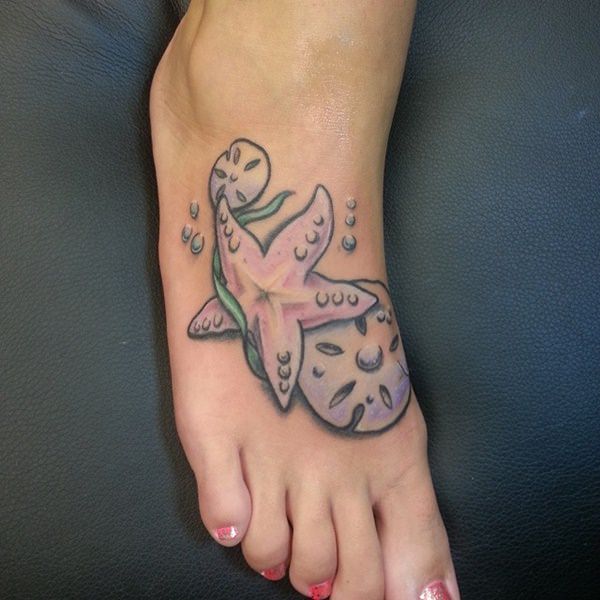
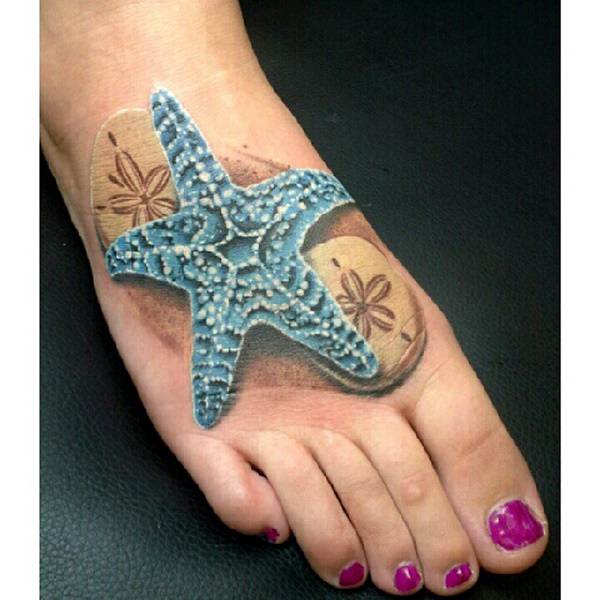
Placement, size and cost
| Design | Typical size | Sittings | Pain, 1-10 | Rough cost |
|---|---|---|---|---|
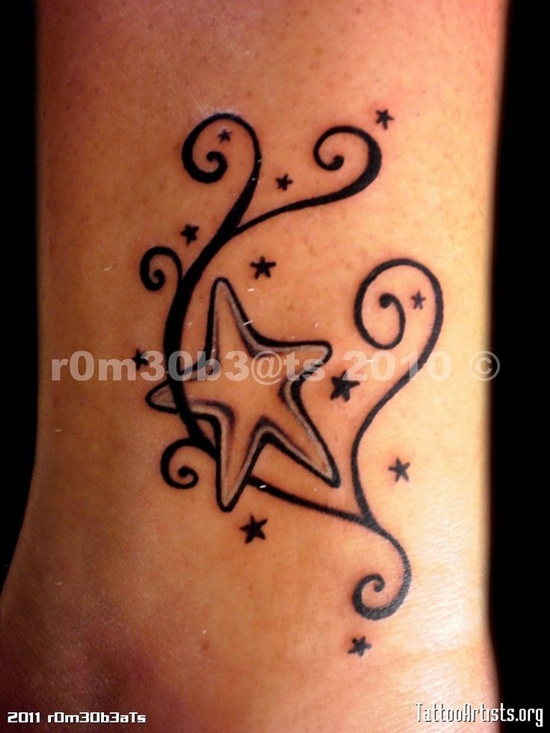
| Small, wrist, ankle or behind the ear | 1-2 in | 1 | 6-8 | Shop minimum |
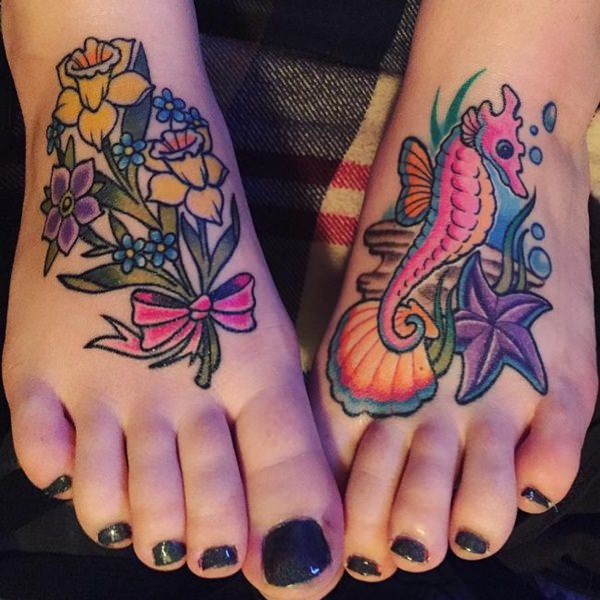
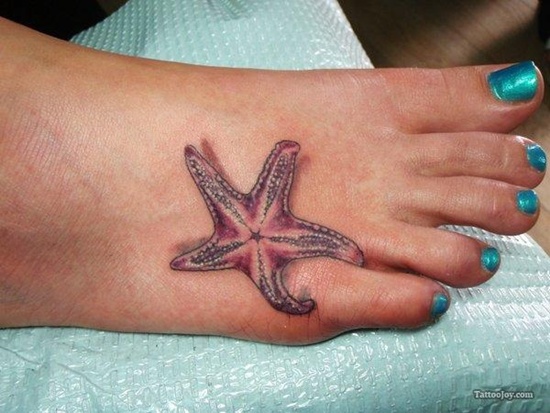
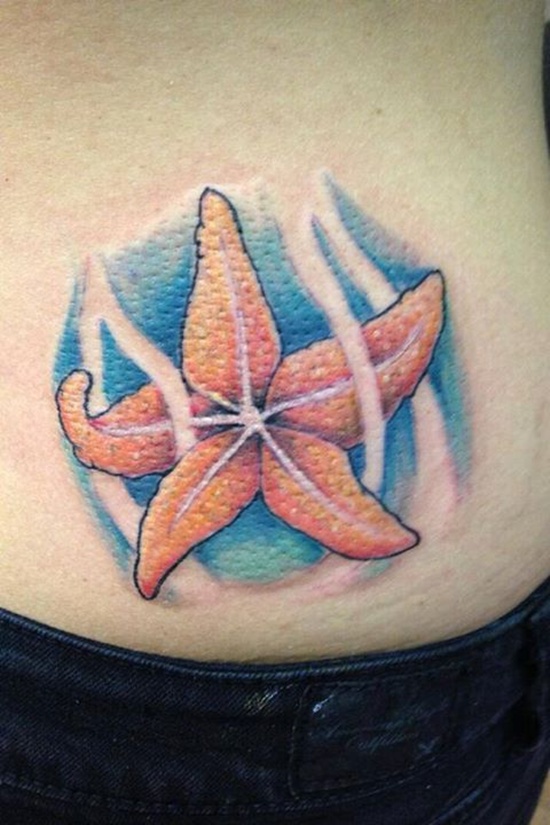
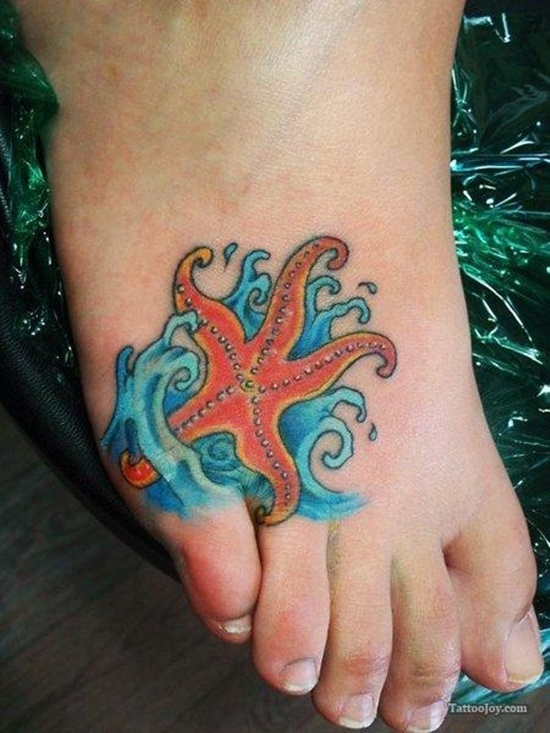
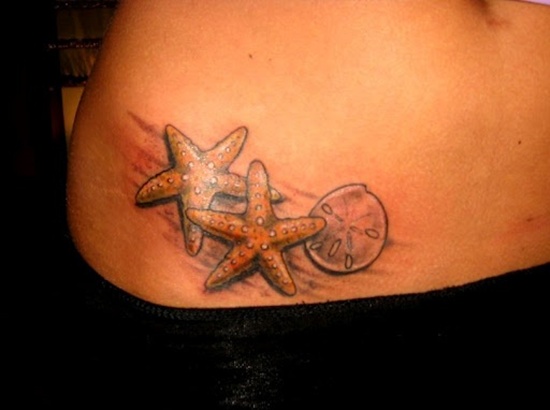
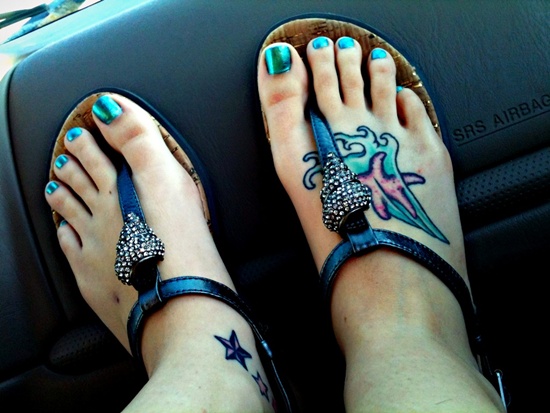
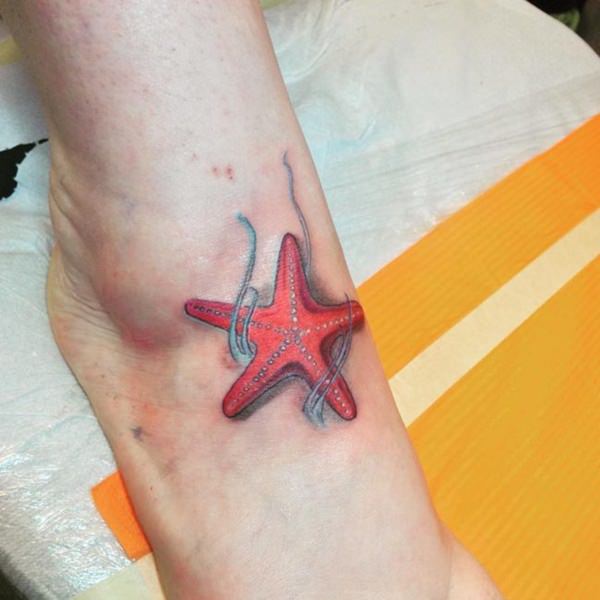
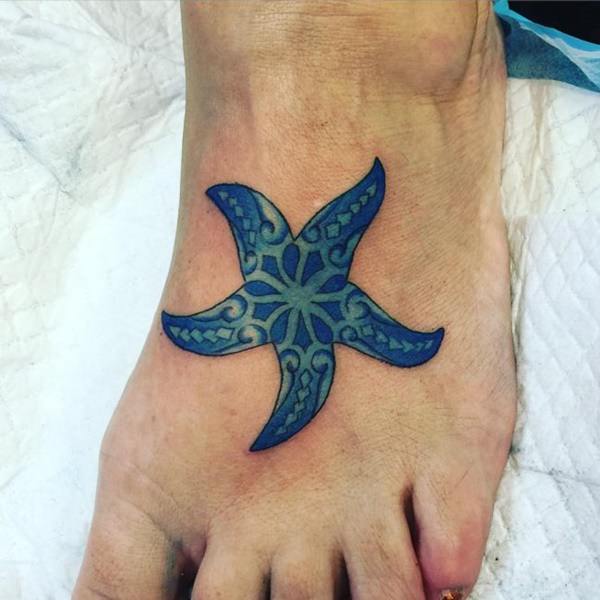
| Foot or hip | 2-4 in | 1 | 5-9 by spot | $150-$400 |
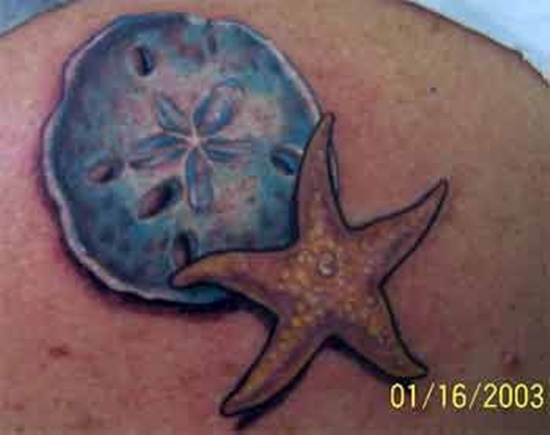
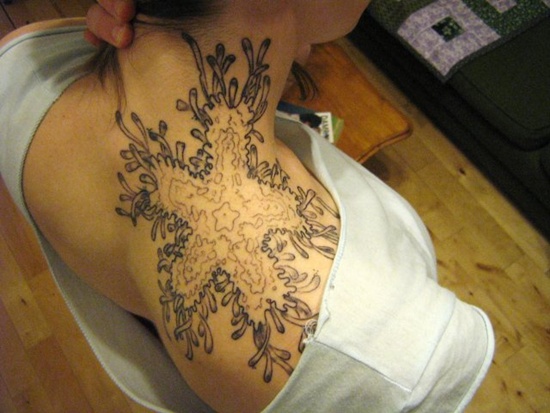
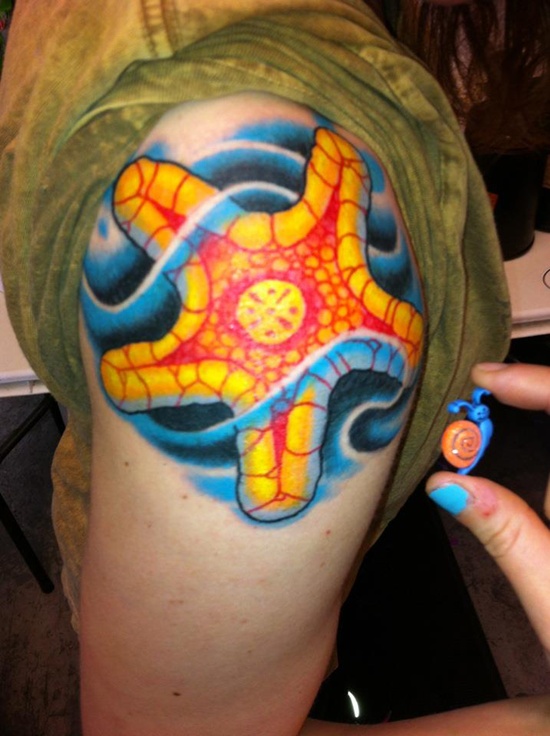
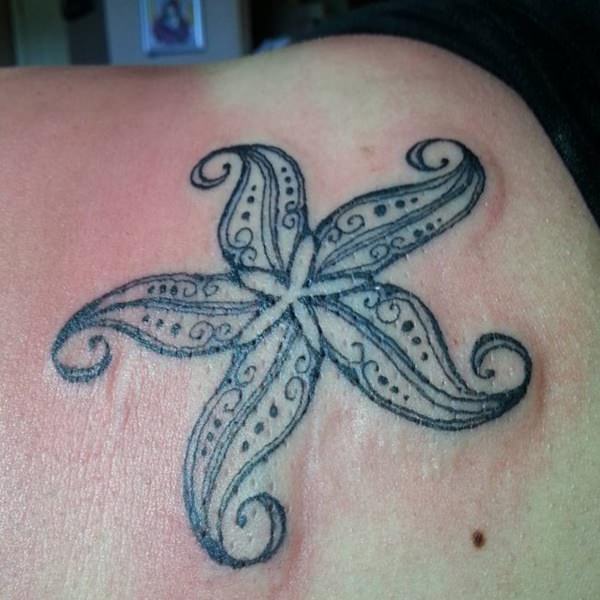
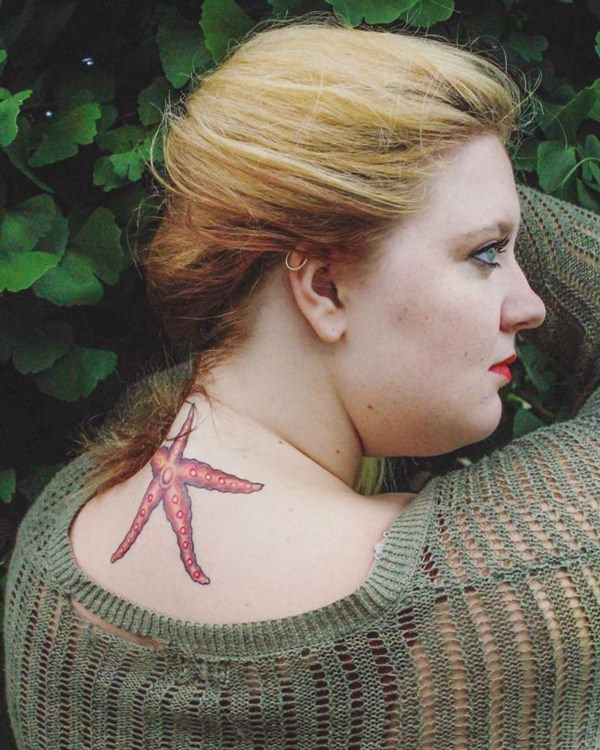
| Shoulder blade | 3-5 in | 1 | 4-5 | $200-$500 |
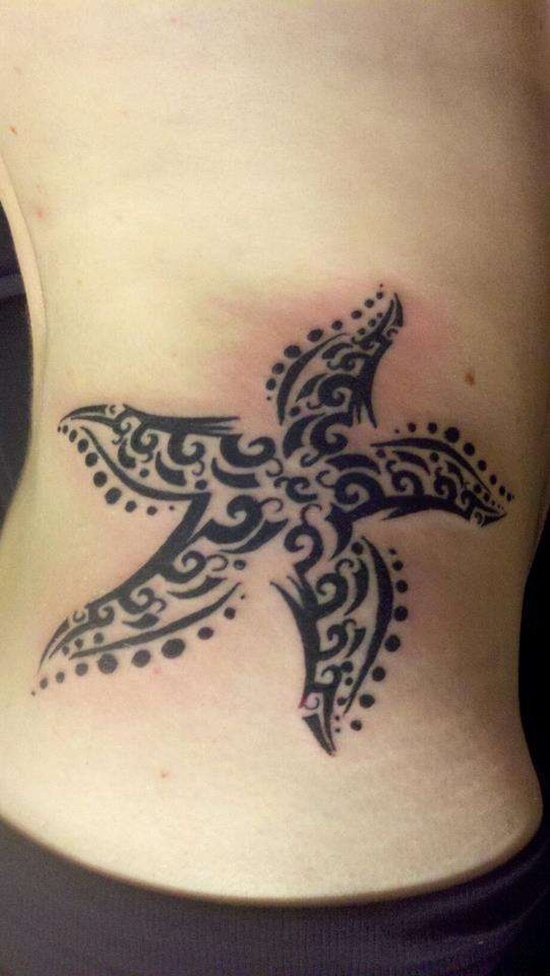
| Ribcage | 4-6 in | 1 | 8-9 | $300-$700 |
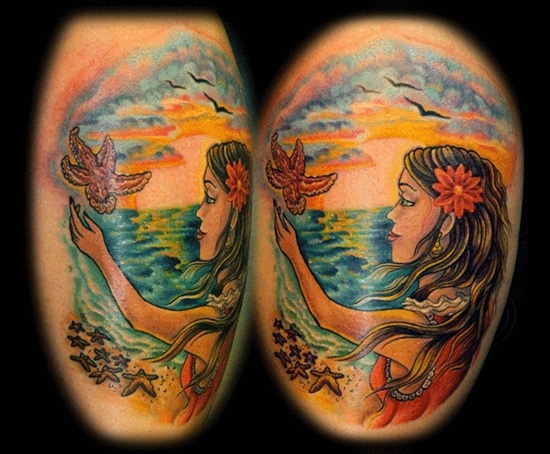
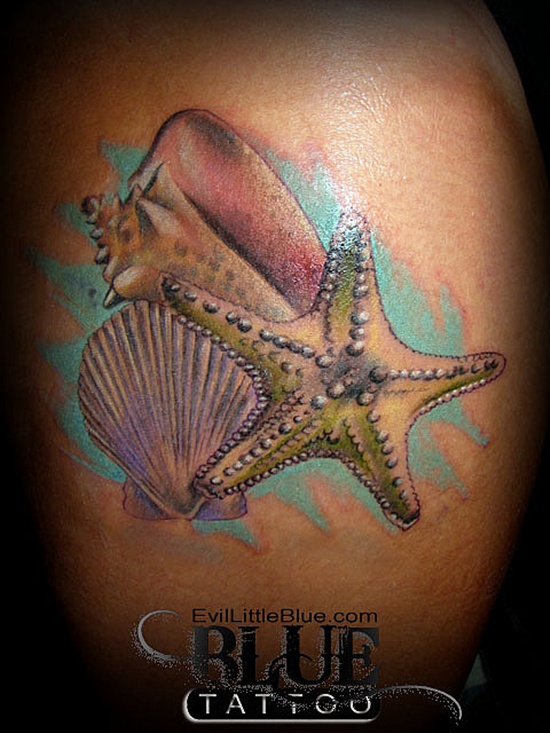
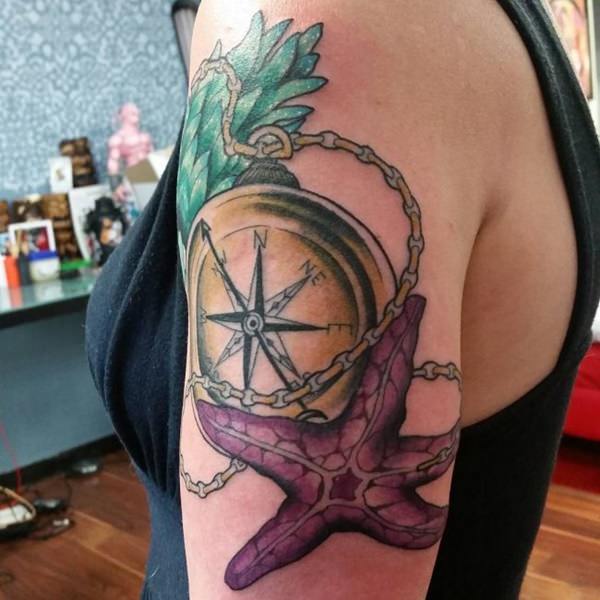
| Thigh, with coral and shells | 6-10 in | 2 | 3-5 | $700-$1,800 |
| Underwater half sleeve | - | 3-5 | 4-6 | $1,500-$4,000 |
Rates vary by city and artist. A small starfish is one of the more affordable meaningful tattoos, which is part of its appeal.
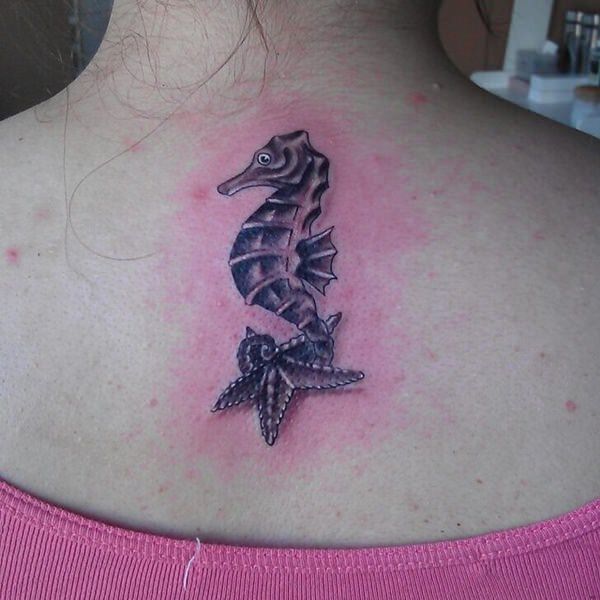
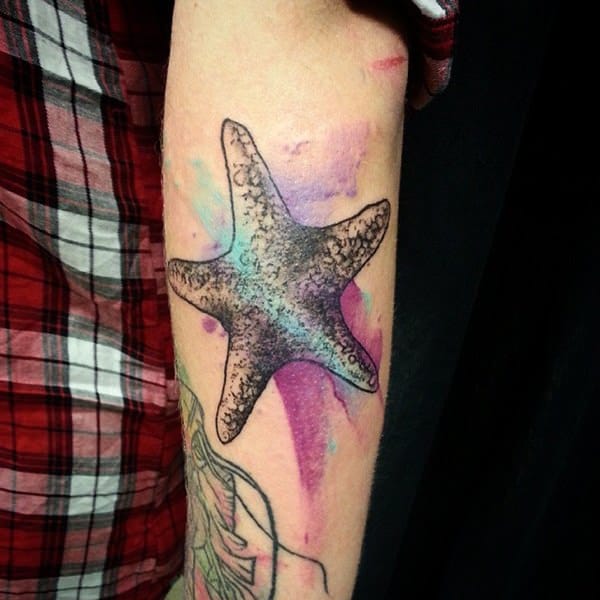
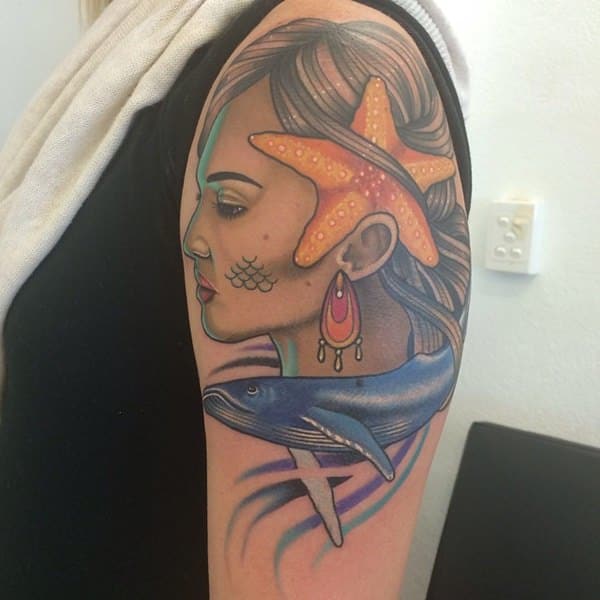
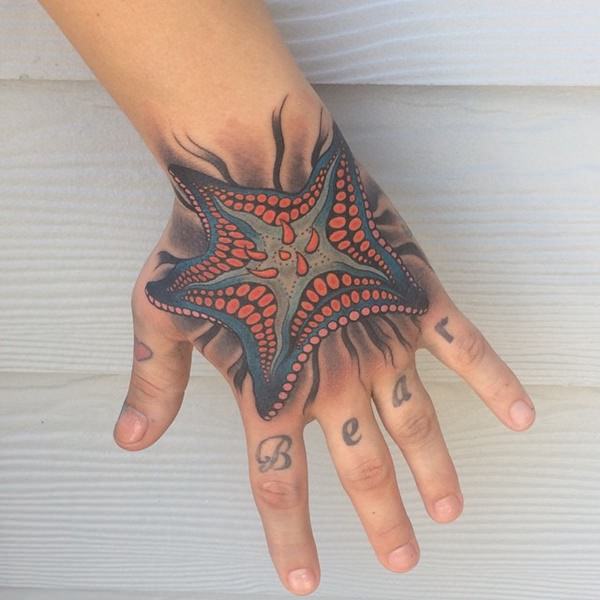
Styles that hold up
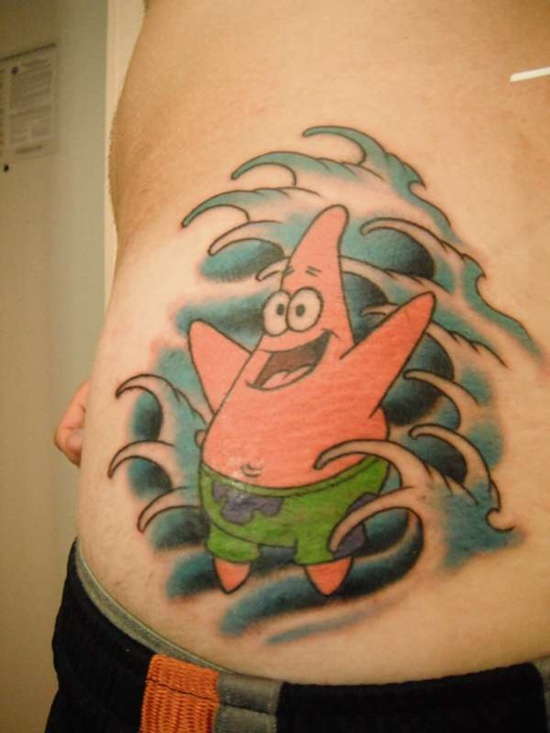
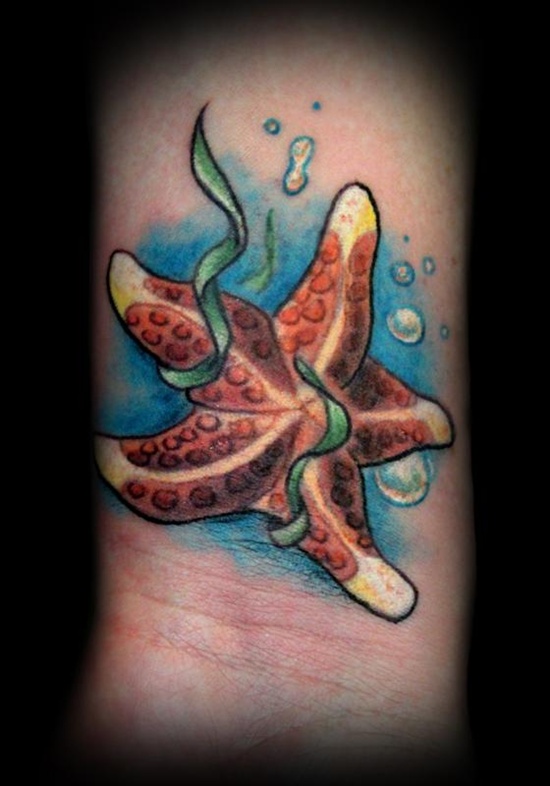
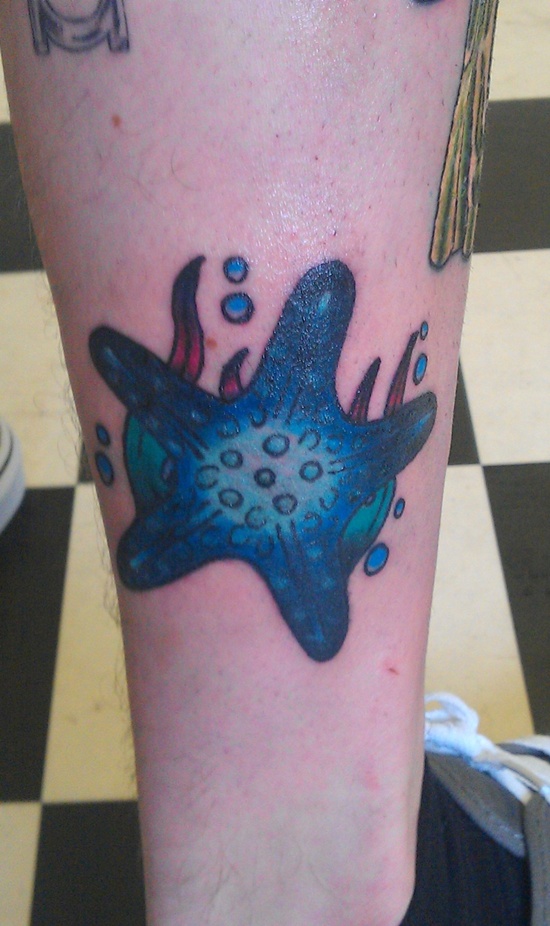
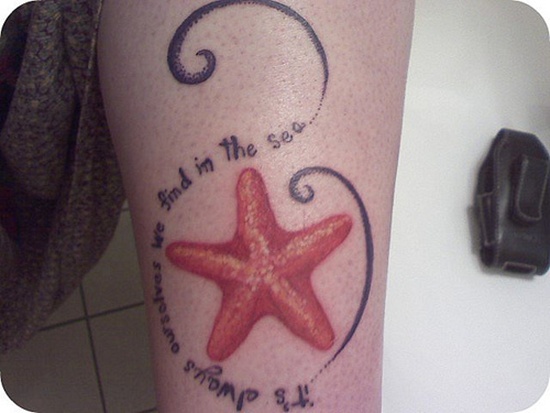
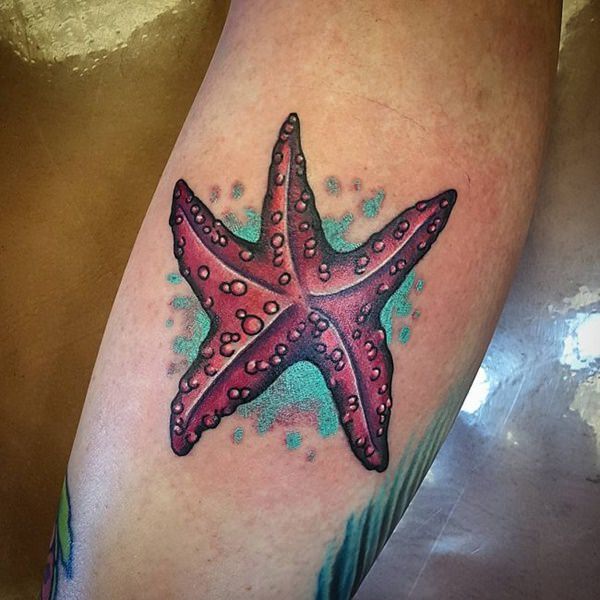
Traditional. Bold outline, heavy black, simple colour. Nautical subjects have been tattooed this way for a century because it survives, and a traditional starfish is a genuinely handsome thing.
Neo-traditional. More decorative rendering, still with real structure. The best coloured option for longevity.
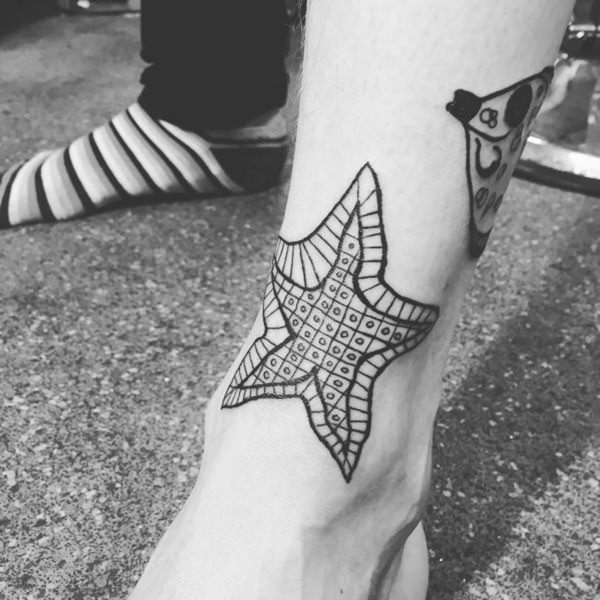
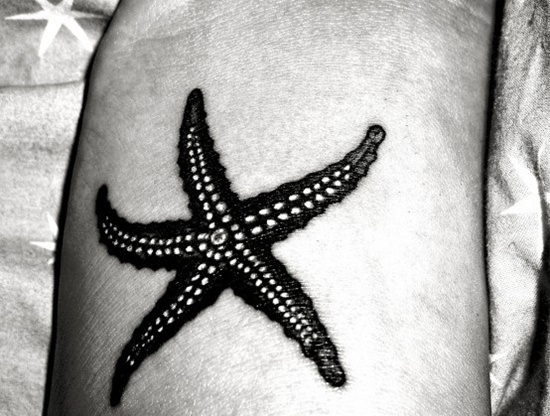
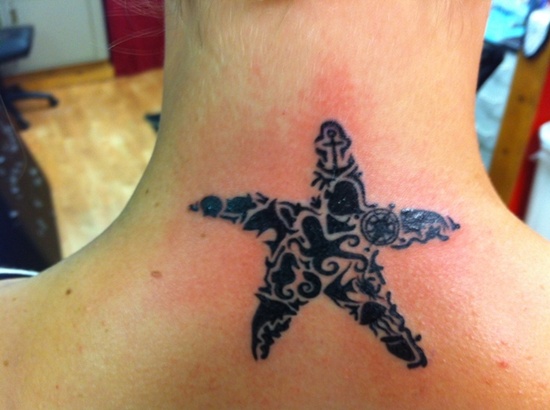
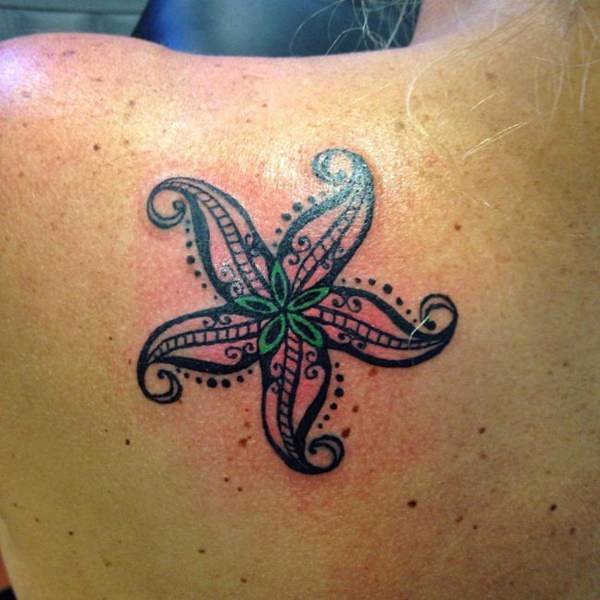
Blackwork and dotwork. The texture of the skin is what makes a starfish read as a starfish, and stippling suits it exactly. Dots hold their shape better than hairlines.
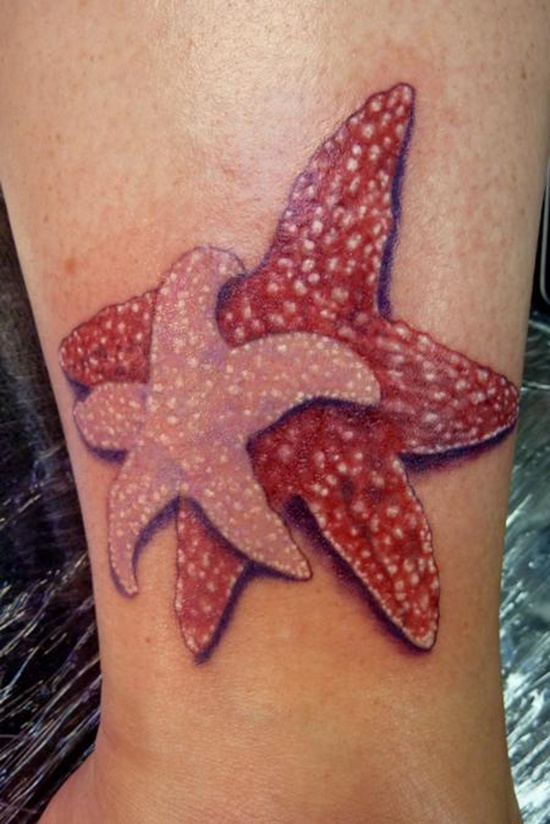
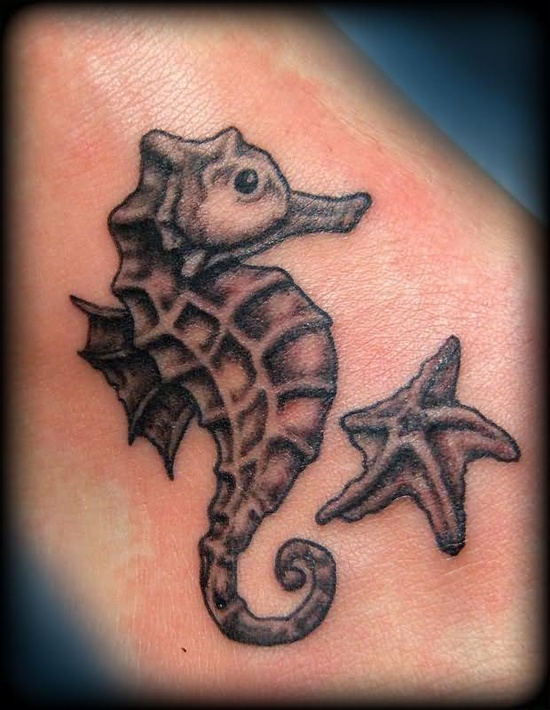
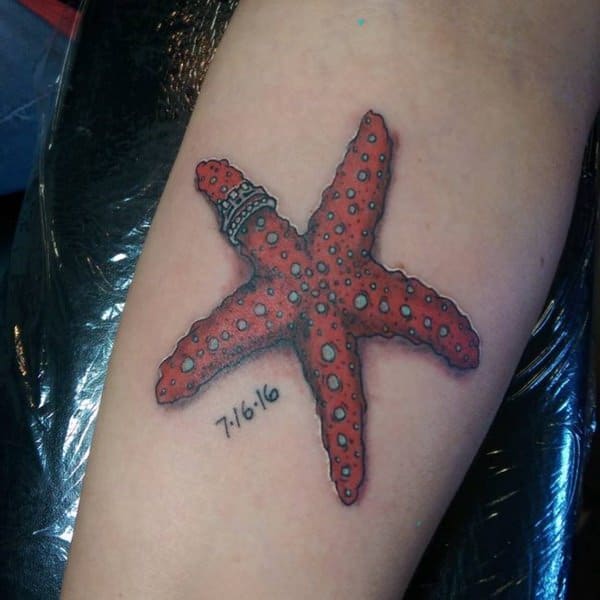
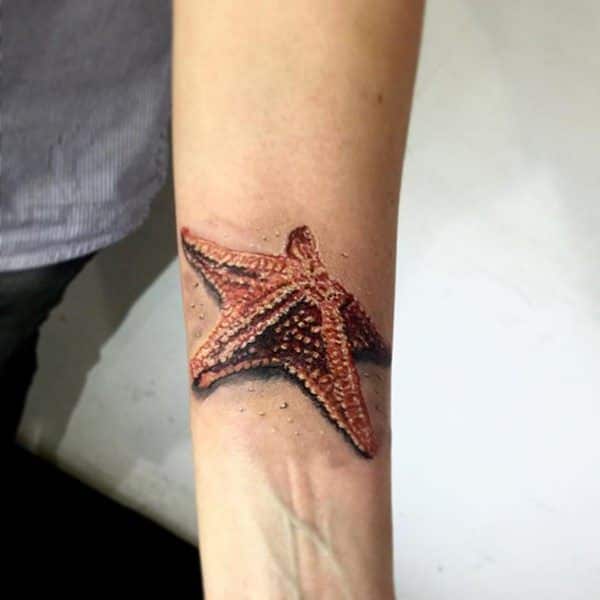
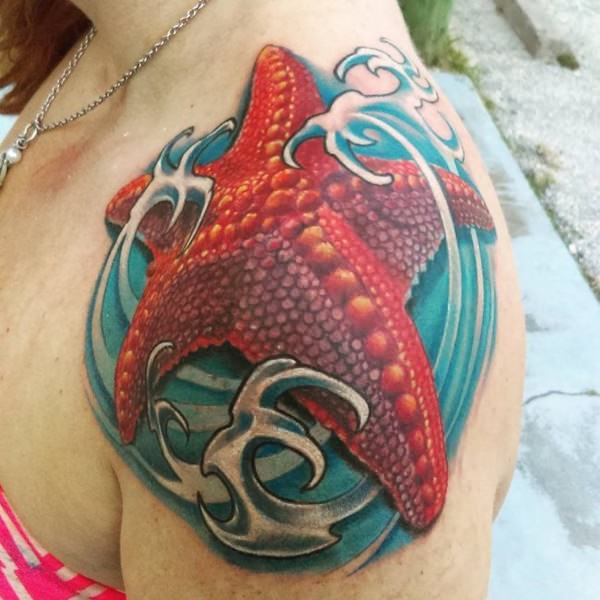
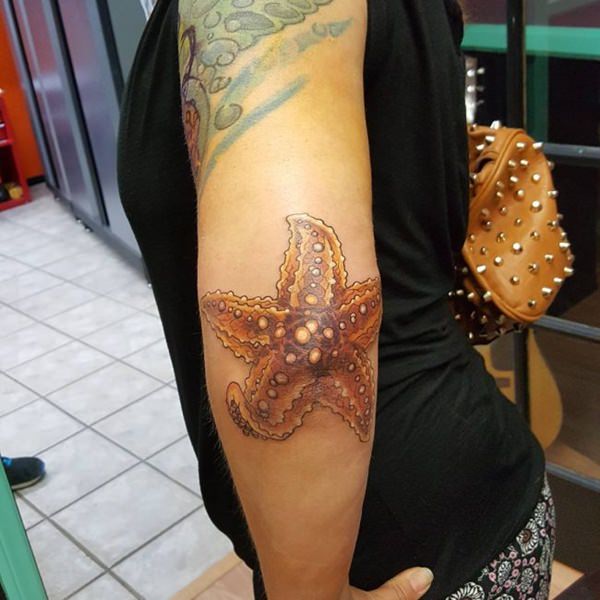
Black and grey realism. A real sea star, with real surface texture and tube feet. Demanding at small sizes and excellent at large ones.
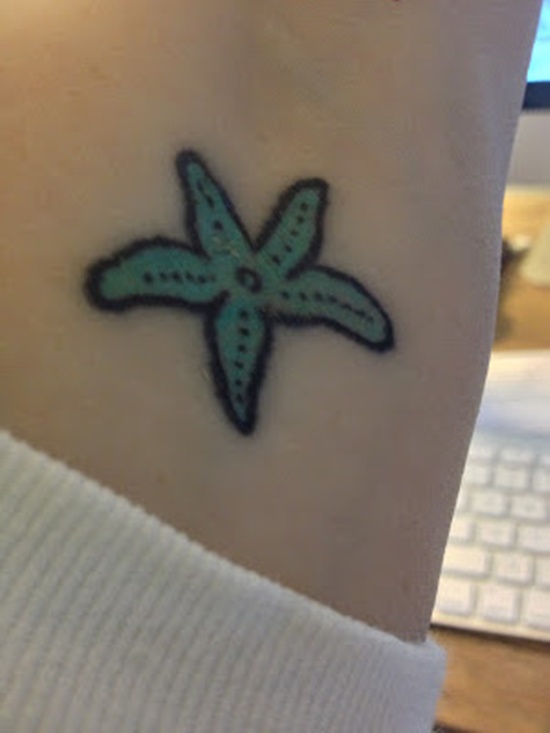
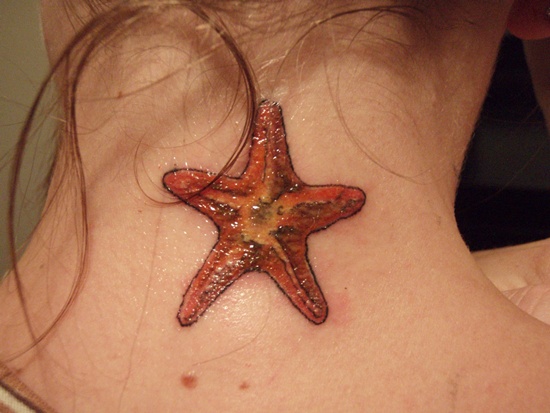
Fine-line minimal. A simple five-point outline. Clean, honest, and provided the shape is good it ages fine because there is little detail to lose.
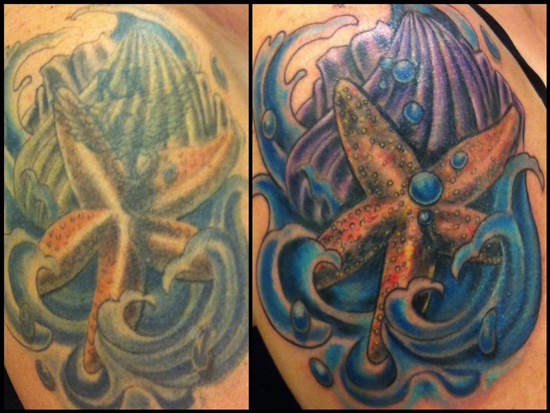
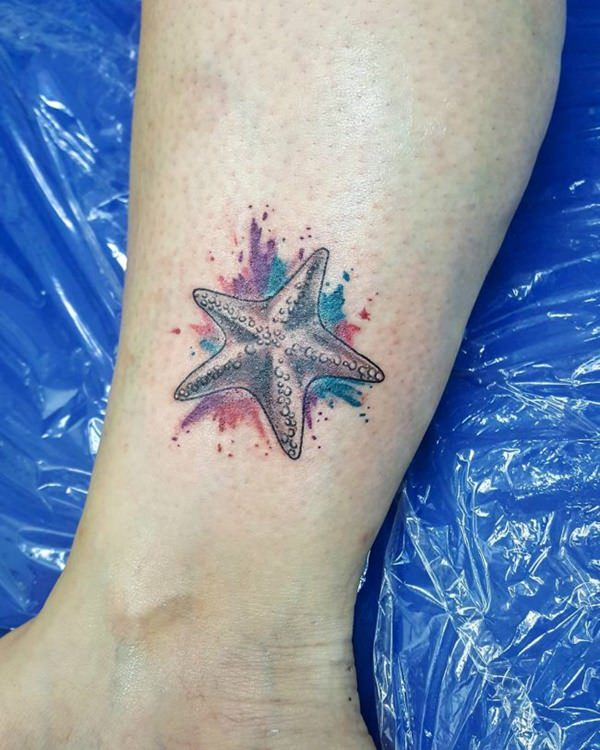
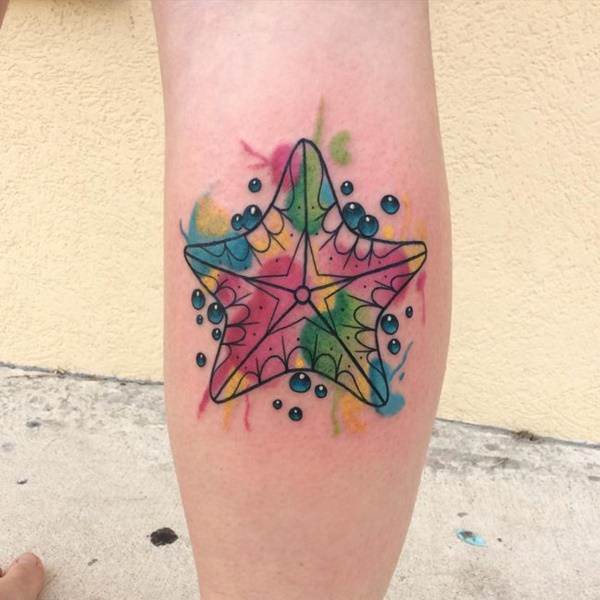
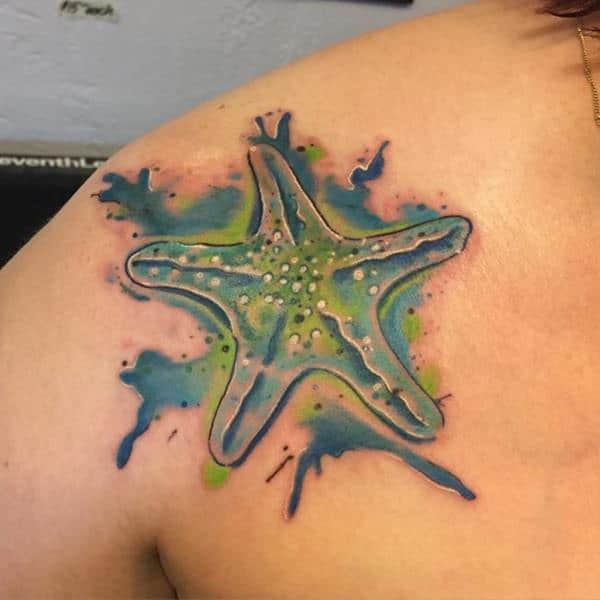
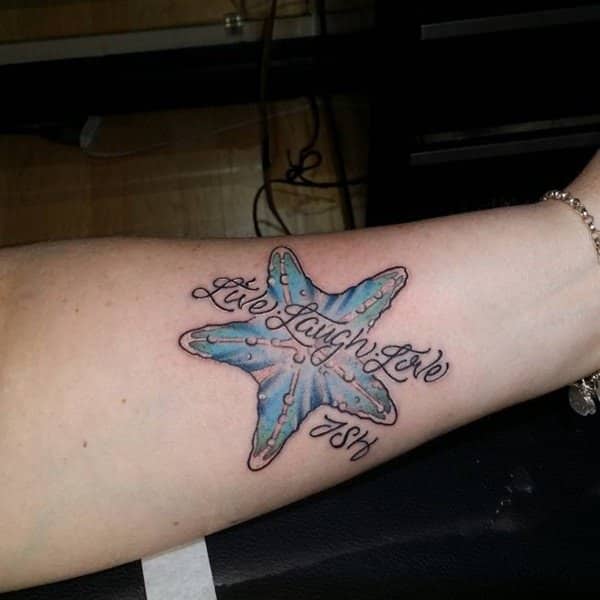
Watercolour. Popular for sea subjects and the weakest over time. Splashes with no black underneath fade to vague colour within a few years. Ask for a black-and-grey framework if you want the look.
How it will age
Two paths, and they age very differently.
Minimal versions age well by having nothing to lose. A bold five-point outline with a little shading will look essentially the same in twenty years.
Textured versions are where the interest is and where the risk sits. The bumps and ridges of a real sea star are exactly the kind of fine, repeated detail that merges as ink spreads. At two inches, that texture will be a grey tone within a decade.
So: if you want the texture, give it room - four inches upward. If you want it small, choose the minimal version deliberately rather than shrinking a detailed one.
Placement matters more than usual here because starfish so often go on feet, ankles and hands, which are the fastest-fading spots on the body - constant friction and constant sun. Behind the ear is another common choice and it gets more UV than people expect.
Sunscreen once healed. Expect a touch-up around year five on anything small or textured.
What to bring your artist
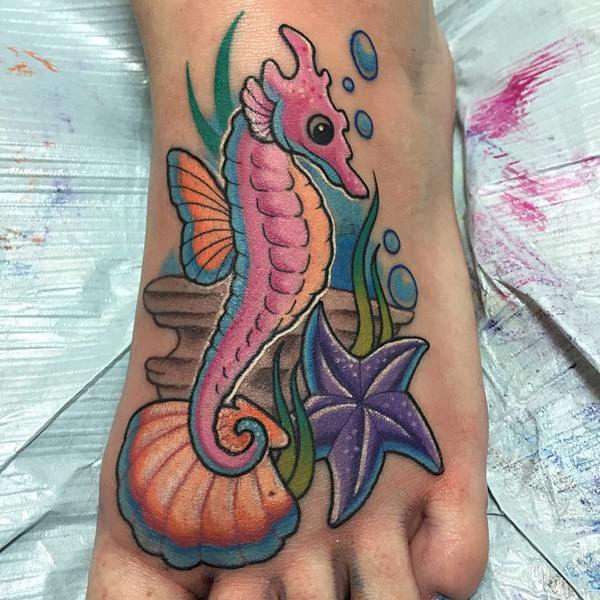
A decision between minimal and textured, because it changes everything. A sense of whether other elements join it - coral, shells, waves - or whether it stands alone. And the placement, since the pain figures above vary more for this motif than for most.
A good artist will push back on detailed texture at small sizes, and will have an honest view about hands and feet if longevity matters to you.
Aftercare, briefly
Your artist's instructions come first. Generally: leave the covering on as long as they said, wash gently twice a day with clean hands and fragrance-free soap, then a very thin layer of the recommended aftercare.
Feet and ankles heal slower than most placements and get knocked constantly. Open shoes if you can, and expect a fortnight of care rather than ten days. No soaking for two to three weeks, which for a sea-themed tattoo is worth saying plainly: no swimming, however tempting.