Steps How To Become A Tattoo Artist: Guide
There is no school for this, in the sense that no qualification entitles anyone to tattoo. The route is an apprenticeship, it is earned with drawings rather than paid for, and it takes years. Everything below is the long way round because there is no short one.
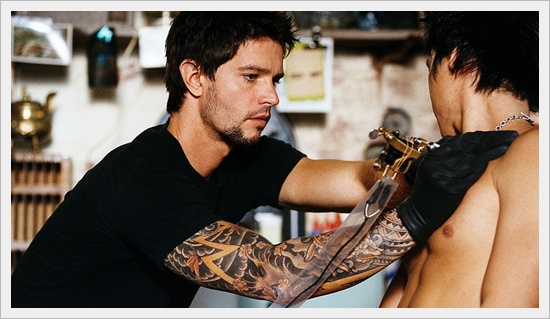
1. Learn to draw first
This is the step people skip, and it is the one that decides everything. A tattoo artist is an artist who works in a difficult medium; the machine is learned in months, drawing is learned in years.
Draw daily. Work from life, not from other tattoos. Learn anatomy, because you will spend a career fitting designs to shoulders, ribcages and forearms that curve. Learn line weight and how a design reads at arm's length. Learn colour theory even if you intend to work in black and grey.
Copying other artists' tattoos into a sketchbook teaches you very little, and a portfolio full of it will be recognised instantly.
2. Build a portfolio worth showing
Thirty to fifty finished pieces, presented cleanly. It should show:
- Range - portraits, lettering, animals, botanical, geometric, traditional.
- Finished work, not sketches. Fully rendered, with decisions made.
- Original work. Your ideas, your compositions.
- Designs that could be tattooed - bold enough to read, placed on a body form, sized sensibly.
This portfolio is your application. Nothing else you say matters as much.
3. Find an apprenticeship
Get to know shops as a client first. Get tattooed, be easy to be around, watch how the room works. Artists take on apprentices they can stand to spend three years next to, and a stranger with a folder is a harder ask than a familiar face.
Then ask in person, quietly, at a time that is not busy. Bring the portfolio. Expect to be turned down repeatedly - that is the normal experience, not a verdict on your work.
Two warnings worth taking seriously. Be wary of shops charging thousands up front for an apprenticeship; the traditional route is earned, and money changing hands that direction has produced a lot of disappointed people. And be wary of anything that promises to make you a tattoo artist in a weekend.
4. Serve the apprenticeship
One to three years, often unpaid. Early on the work is cleaning, sterilising, setting up and breaking down stations, answering the phone and drawing constantly. Months can pass before you touch skin.
What you are absorbing in that time is the part no course teaches: how the machine actually behaves, how deep the needle goes, how different skin takes ink, how to hold a stretch, how to talk someone through hour three, and how to run a sterile station without thinking about it.
When you do start, it is usually on synthetic skin, then on yourself, then on patient friends. Your first tattoos will be worse than your drawings. That is universal.
5. Get licensed
Requirements vary by country, state and city, and it is on you to check the local ones. Almost everywhere expects some combination of:
- Bloodborne pathogen and cross-contamination training, renewed periodically
- First aid or CPR certification
- A minimum documented apprenticeship or number of hours
- Registration of both the artist and the premises
- Health department inspection of the shop
Tattooing without the local licence risks the shop's registration as well as your own, which is why no reputable shop will let it happen.
6. Start working, and keep learning
The first years are walk-ins, flash and small custom work, on a low split. This is where speed, consistency and stamina are built.
Somewhere in there, find the thing you want to be known for. Artists with a recognisable style get requested by name and can price accordingly; generalists compete on availability and price. It rarely arrives by decision - it emerges from doing a lot of work and noticing what you keep returning to.
Guest spots and conventions are how you meet artists better than you, which is the fastest way to improve once you are past the basics.
What it is honestly like
Long days standing or hunched, real strain on the back, neck, shoulders and hands, and self-employed income that is only as steady as your calendar. Add years of low or no pay at the start.
The people who last love drawing enough that they would be doing it anyway. If that describes you, this is a good trade. If it does not, it is a hard one.