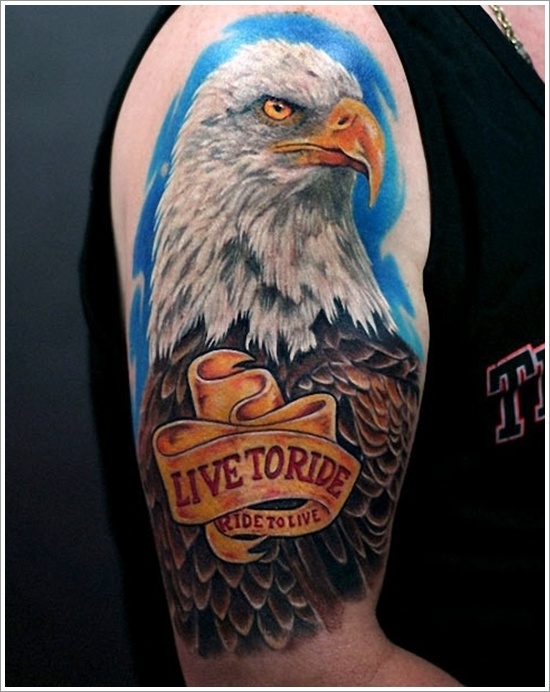
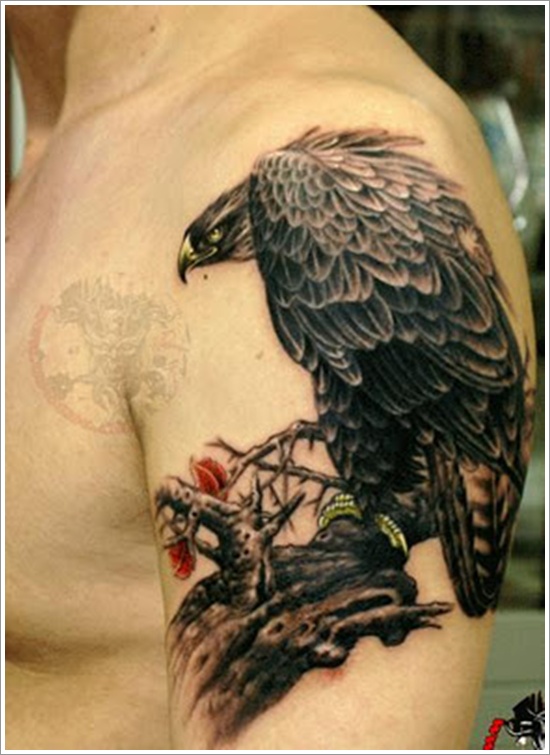
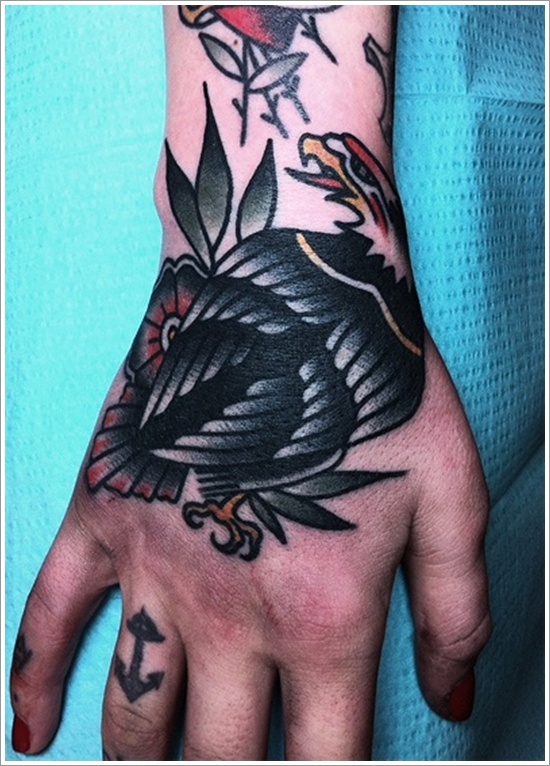
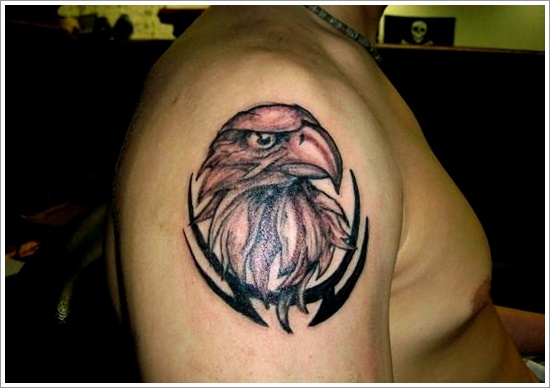
35 Attention Grabbing Eagle Tattoo Designs
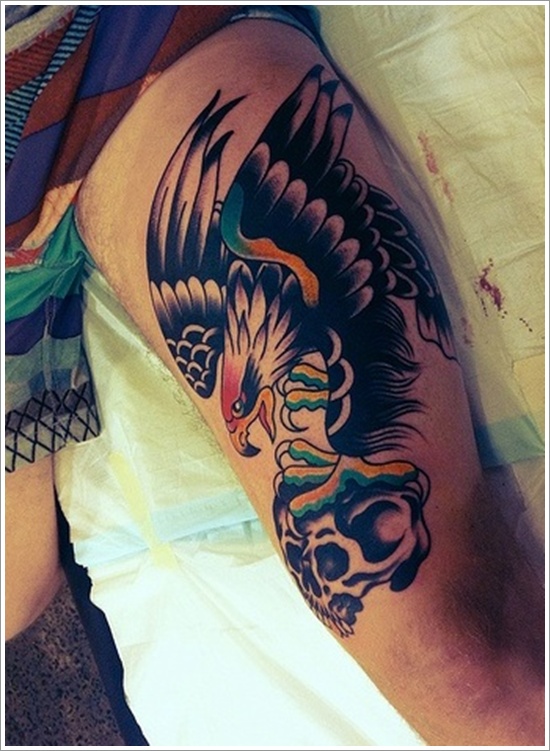
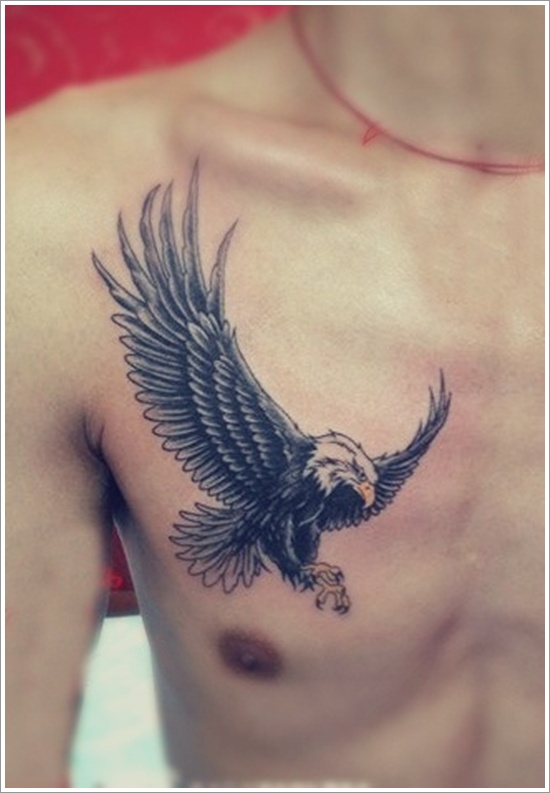
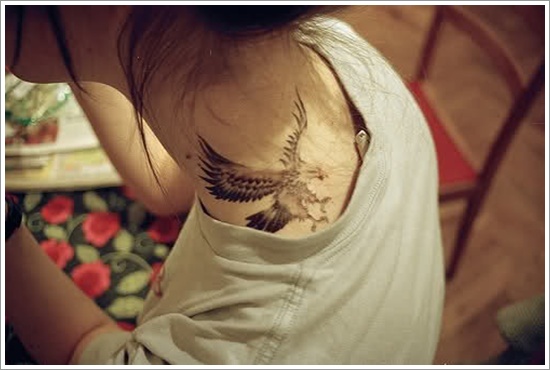
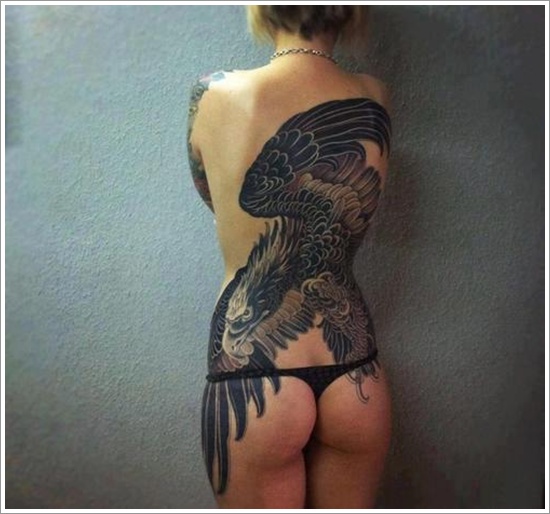
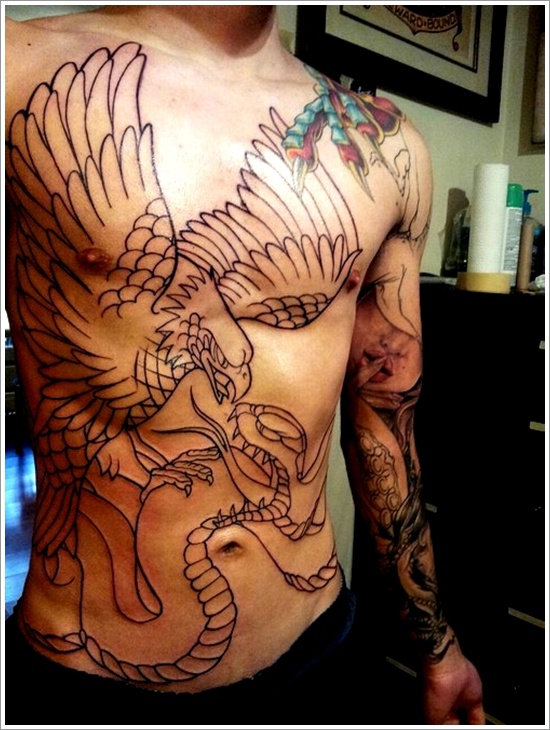
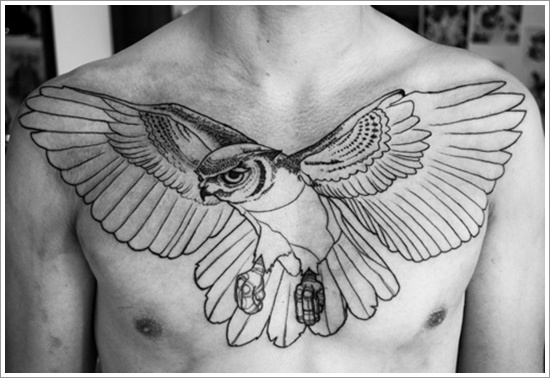
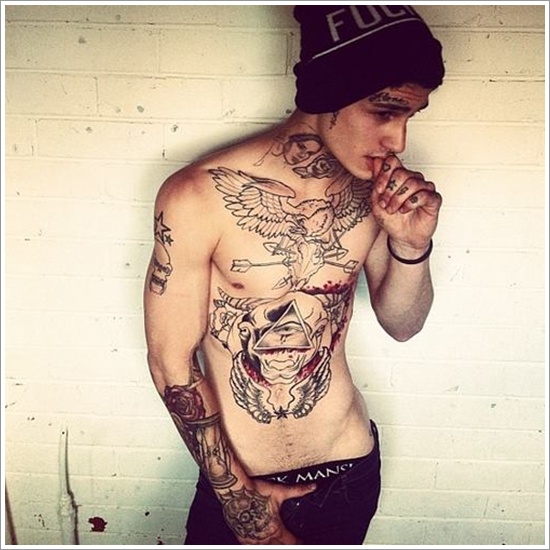
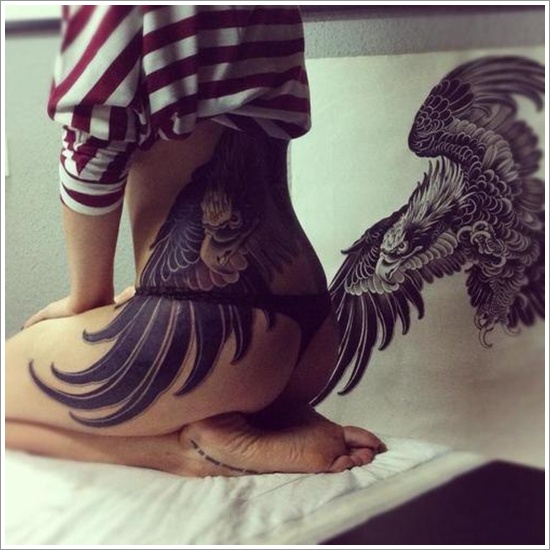
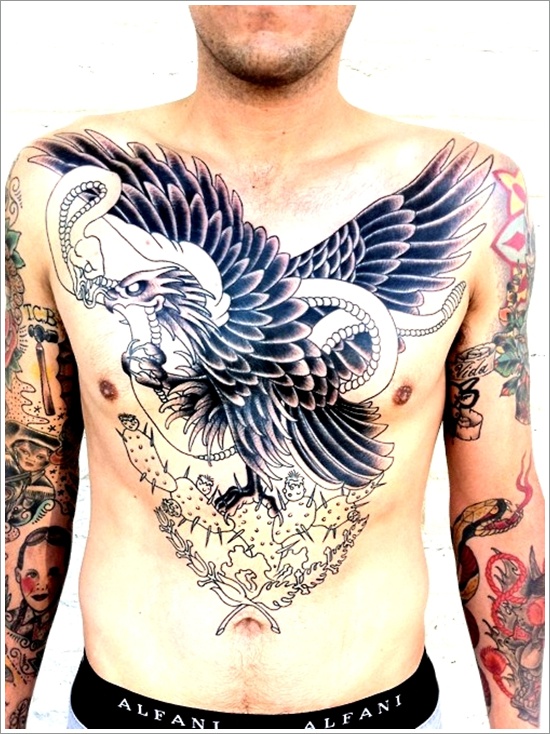
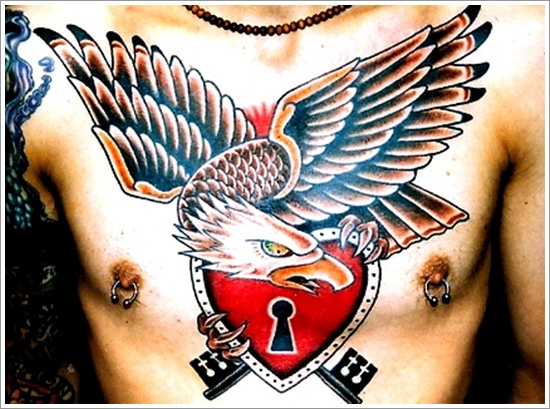
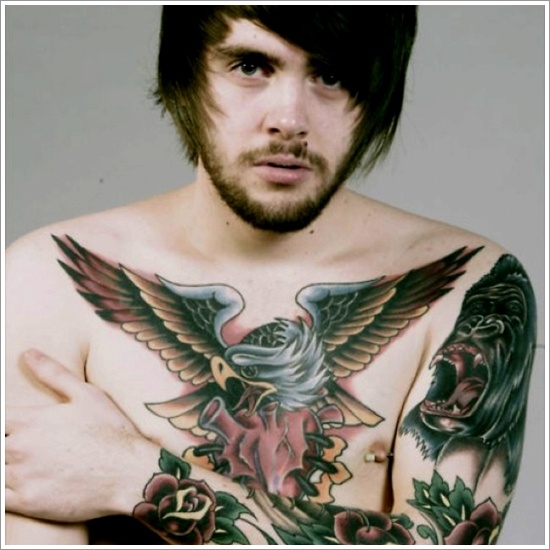
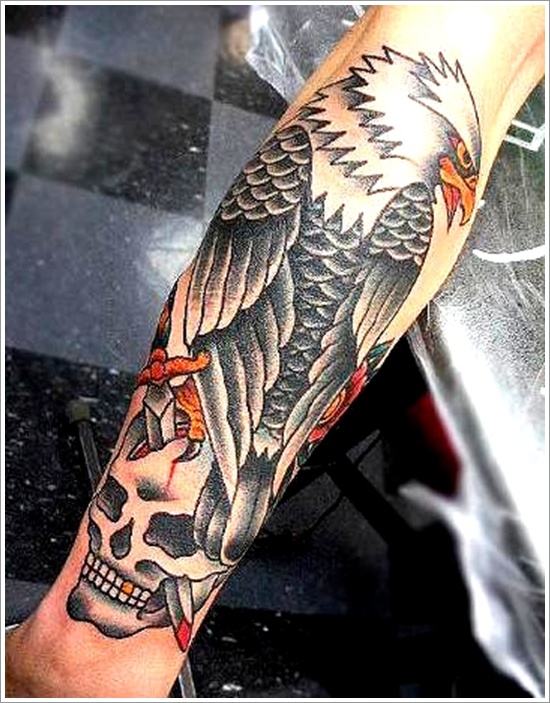
An eagle is a chest piece, a back piece or a large upper arm, and the reason is geometry. A bird with its wings spread is far wider than it is tall, so it needs a placement with width. Put the same design on a forearm and either the wings get folded, which loses the whole point, or the bird shrinks until the feathers stop reading.
It is also a motif that carries specific national and cultural meanings, and those are worth knowing, because an eagle is rarely read as just a bird.
What it signals, and to whom
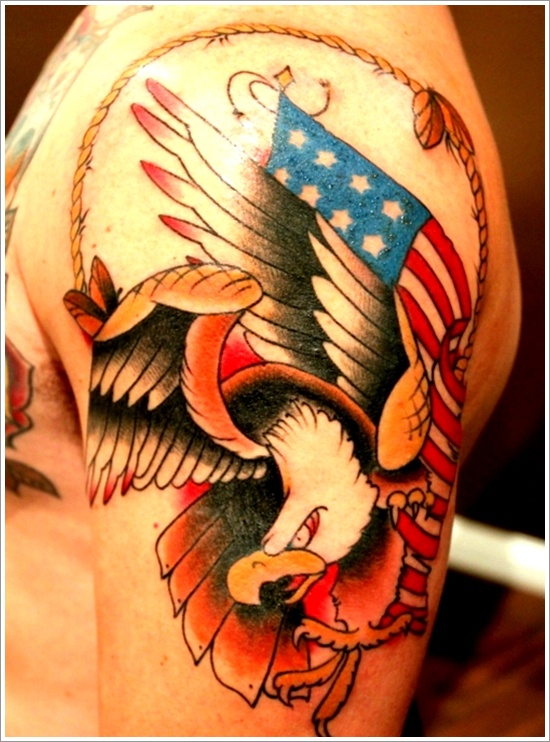
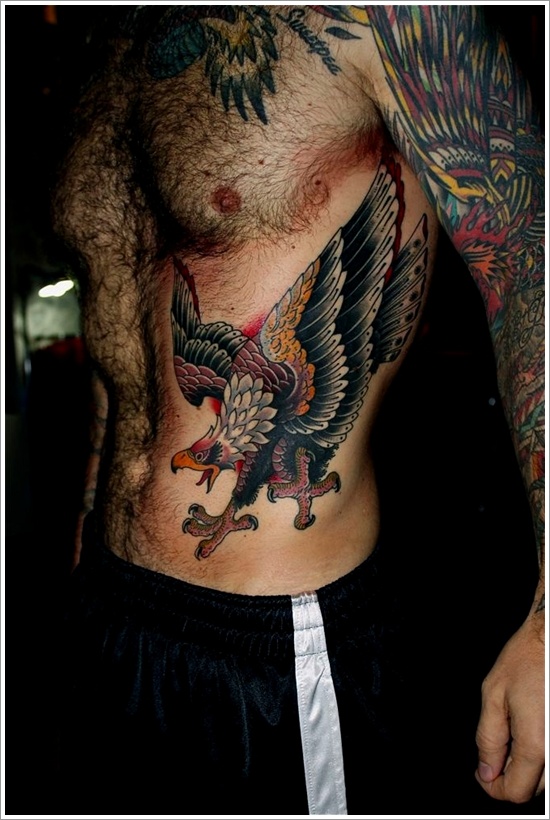
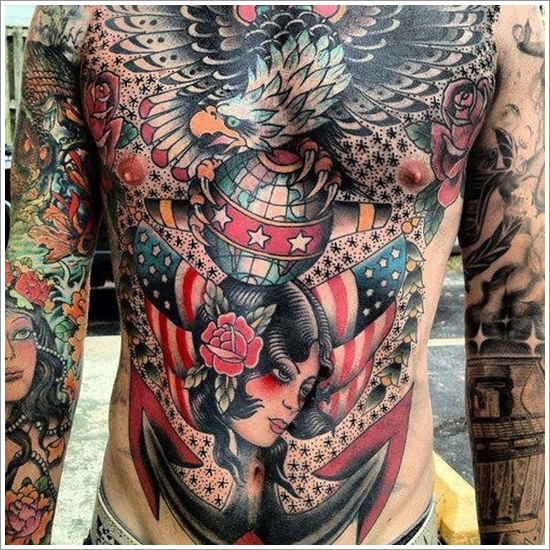
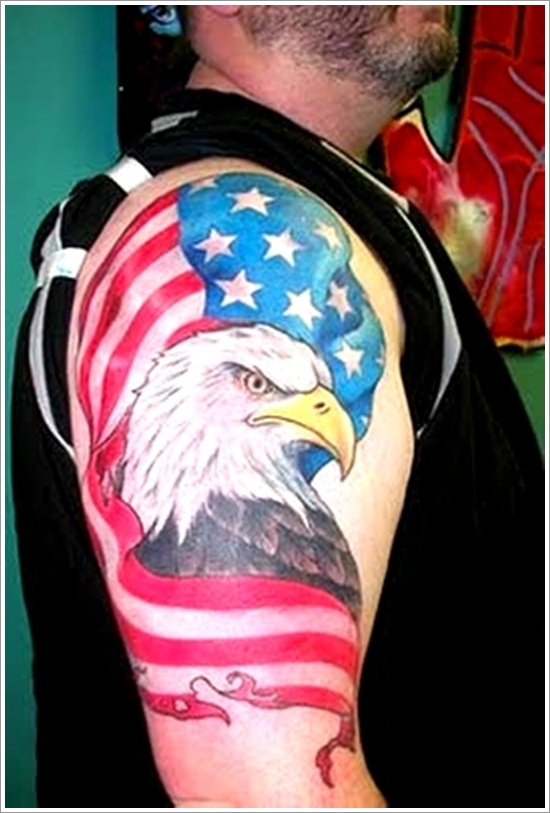
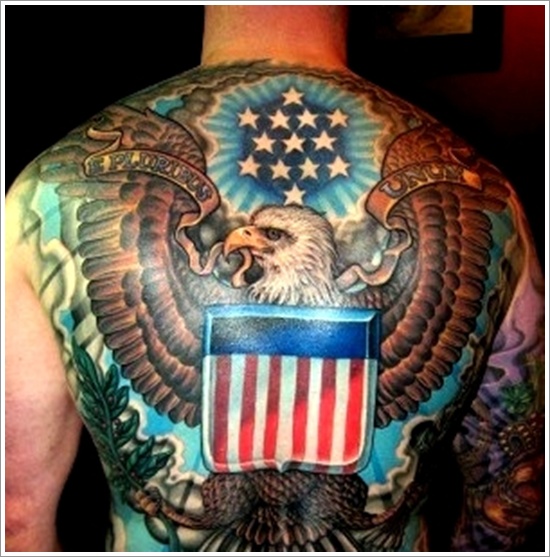
American. The bald eagle is the national bird, and combined with a flag, stars or a banner it reads as patriotism or military service - often specifically so. Traditional American tattooing has an eagle canon going back a century, much of it tied to the Navy and the Marine Corps. If you did not serve, be aware that some designs are read as claiming that you did.
Mexican. The golden eagle with a serpent on a cactus is the centre of the Mexican flag and comes from the Aztec founding of Tenochtitlan. It is a distinct design with a distinct meaning, not an interchangeable eagle.
German and Central European. The Reichsadler and its descendants. Be careful here: certain stylised eagle designs, particularly with specific wing positions and accompanying elements, are used by far-right groups and will be read that way whatever you intended. Ask an artist who knows the iconography.
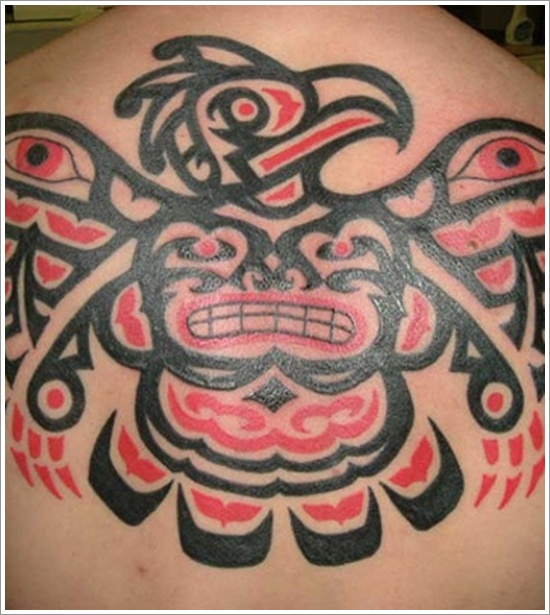
Native American. In many nations the eagle is genuinely sacred, and eagle feathers are earned rather than decorative - in the United States their possession is legally restricted for that reason. An eagle in a Native style, worn by someone with no connection to those nations, is one of the more commonly objected-to tattoos. Worth thinking about carefully.
Generally. Vision, independence, height, seeing the whole picture. Perfectly valid on its own without any of the above.
Placement, size and cost
| Design | Typical size | Sittings | Pain, 1-10 | Rough cost |
|---|---|---|---|---|
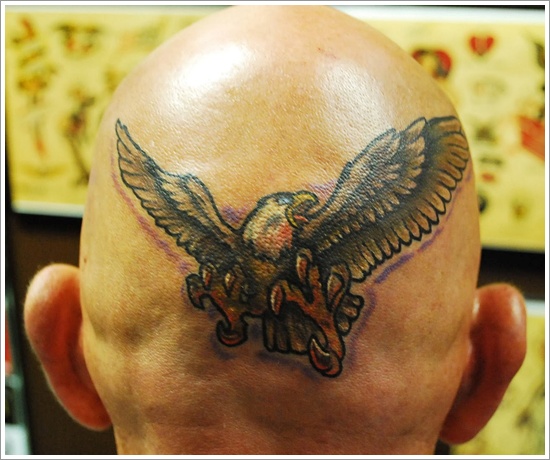
| Head only, forearm | 4-6 in | 1 | 5-6 | $300-$700 |
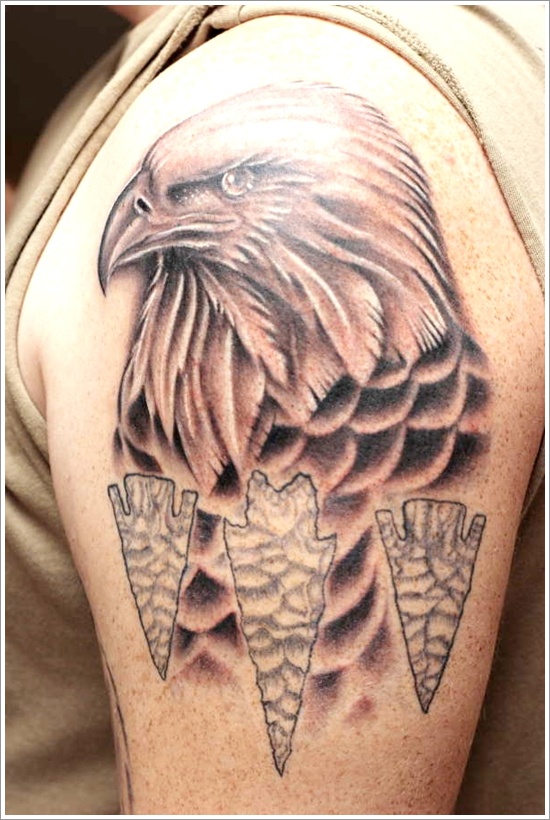
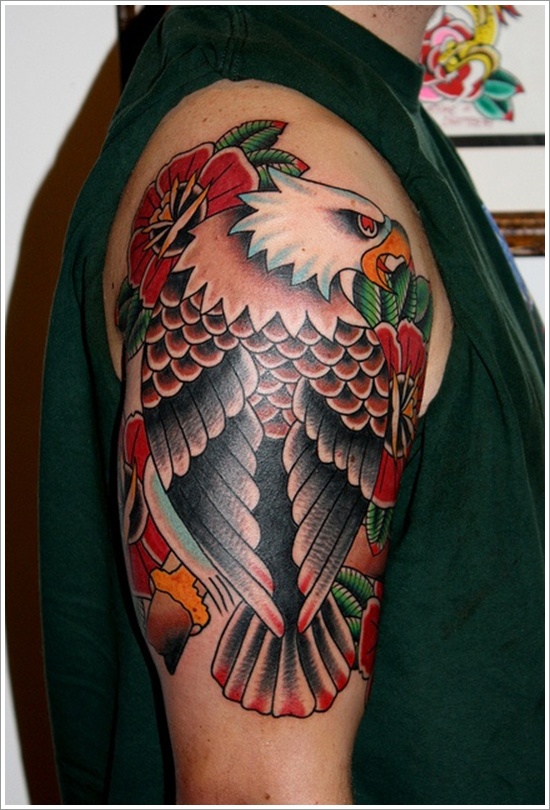
| Outer upper arm, wings folded | 6-8 in | 1-2 | 2-3 | $500-$1,200 |
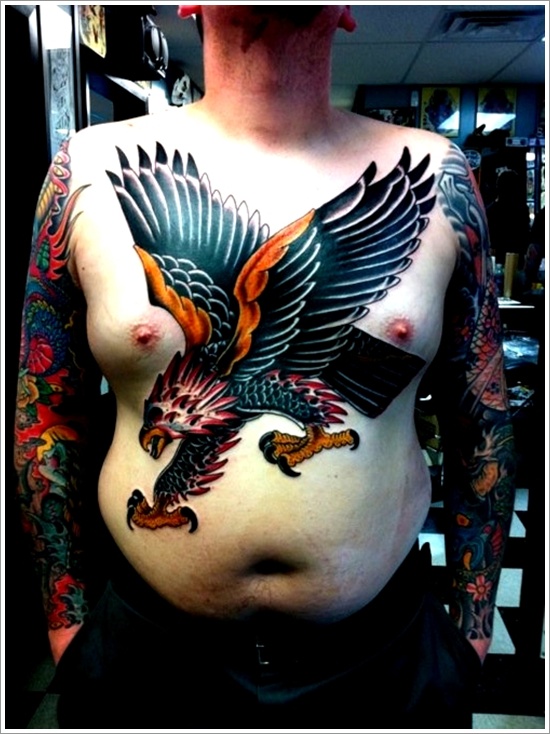
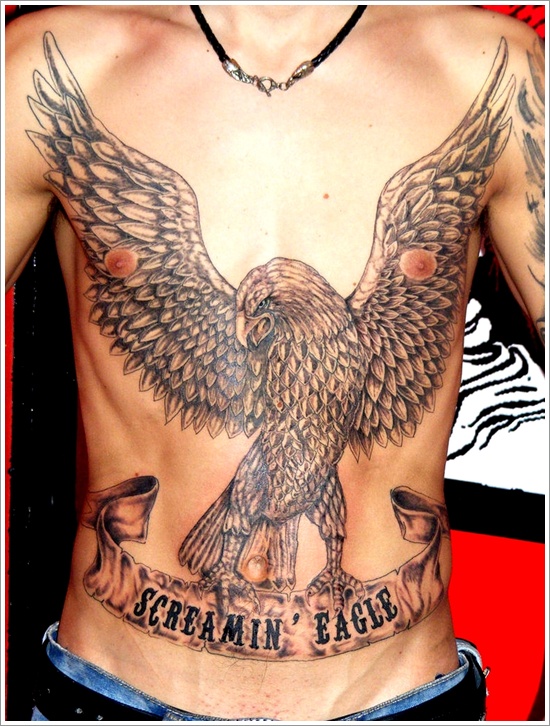
| Chest, wings spread | 10-14 in | 3-4 | 7-8 | $1,500-$3,500 |
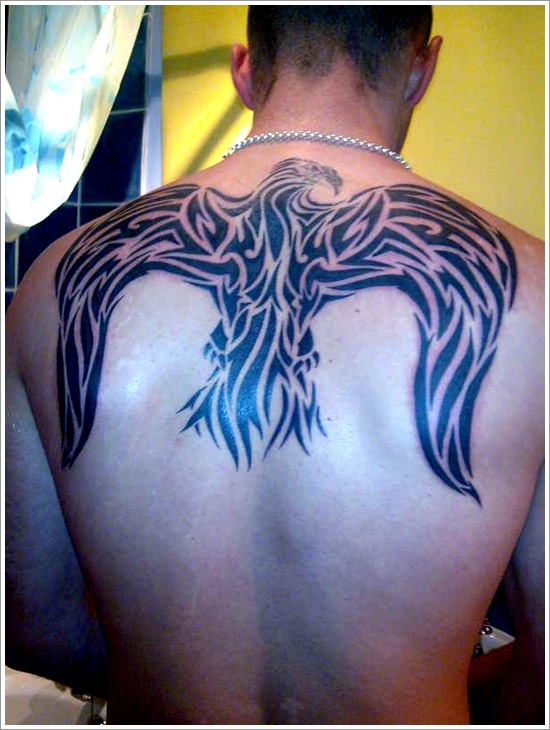
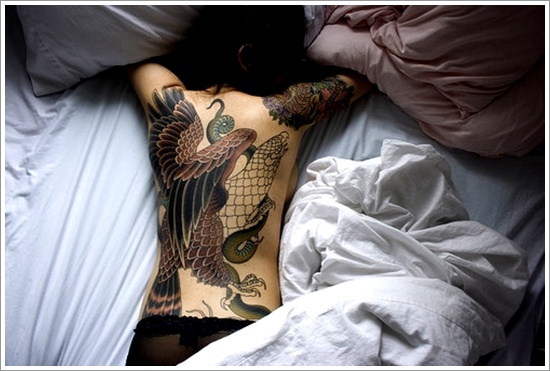
| Upper back, wings spread | 12-16 in | 3-5 | 4-5 | $1,800-$4,000 |
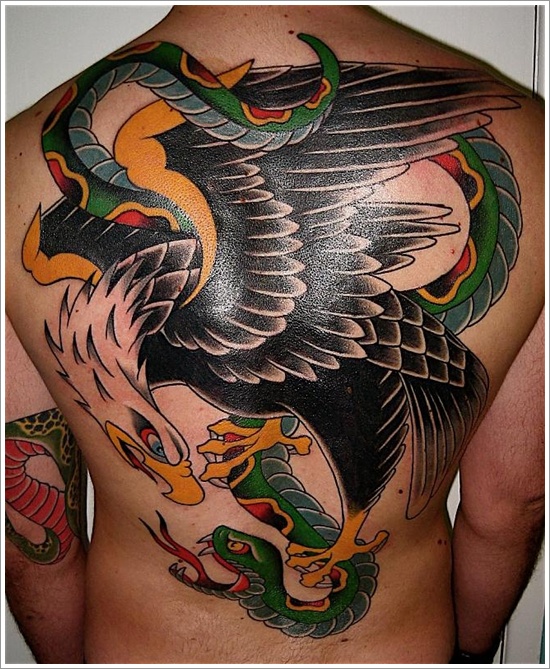
| Full back piece | - | 8-20 | 4-6 | $4,000-$12,000 |
| Half sleeve with eagle | - | 3-5 | 4-6 | $1,500-$4,000 |
Rates vary widely by city and artist demand. Feather rendering is where the hours go, in any style.
Styles that hold up
Traditional American. Bold black outline, limited palette, the eagle as an emblem. A hundred years of proof that it lasts, and it suits the subject better than almost anything else.
Black and grey realism. A real bird, with real feather structure and a real eye. The most impressive version when done by the right hand, and the most demanding.
Neo-traditional. Bold structure with more decorative rendering and richer colour. Excellent middle ground.
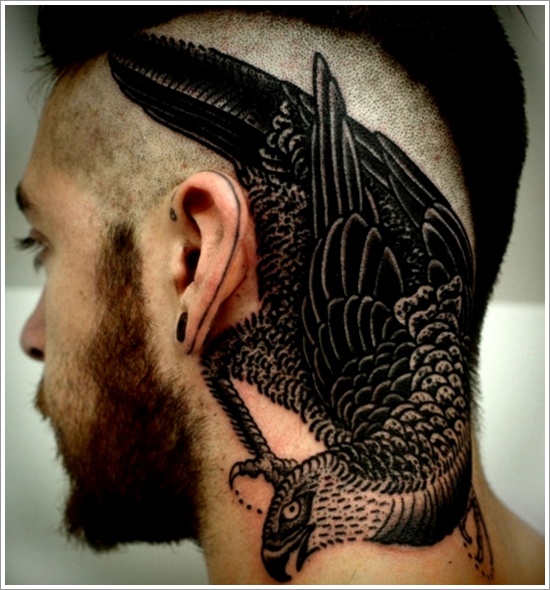
Blackwork and geometric. Silhouette-driven, minimal detail, very durable.
Japanese. Less common for eagles than for hawks, but the compositional rules of the style suit large birds extremely well.
Worth thinking twice about: photorealism at small sizes, and watercolour, which has no structure to hold a bird this detailed together.
How it will age
Feathers are fine, repeated, closely spaced detail - which is to say, exactly the kind of thing that merges as ink spreads over ten to fifteen years.
The distinction that matters is whether the feathers are drawn as individual barbs or as groups of tone. Individually rendered barbs look spectacular fresh and go first. Feathers built from tonal masses, with black separating the groups, keep their structure for decades.
Ask your artist for the second approach. Every experienced black-and-grey artist already prefers it, and it is the reason old traditional eagles still read perfectly.
The eye is the other detail worth protecting. A tiny, precisely rendered eye in a large bird is what gives it life, and it is small enough to be vulnerable. Some artists deliberately overbuild the eye for this reason.
Sunscreen once healed. On a large piece expect a black touch-up around year eight to ten - routine maintenance, not a fault.
What to bring your artist
A tradition, or an explicit decision that you want none. A posture: landing, soaring, perched, head only. And a placement with enough width for the wingspan you have in mind.
Say plainly if you want it read as patriotic or as military, because that changes the accompanying elements. If you do not want it read that way, say that too - it is easy to avoid the elements that trigger it.
A good artist will push back on cramming a spread-wing eagle into a narrow space, and a knowledgeable one will flag the iconography questions above before you do.
Aftercare, briefly
Follow your artist's instructions. In general: covering on as long as they said, then gentle washing twice a day with clean hands and fragrance-free soap, and a very thin layer of the recommended aftercare.
Chest and back pieces are large wounds and heal accordingly - more swelling, more weeping in the first day, heavier peeling, and a week of sleeping awkwardly. All normal. No soaking for two to three weeks, no sun, and no picking.