30 Lock And Key Tattoo Designs that will unlock your fantasies
A lock and key is one of the few tattoo motifs that means something different depending on whether you wear both halves or one. Together they are a closed system: something protected, and the thing that opens it. Split between two people they become a statement about those two people, which is a much bigger commitment than it looks on the flash sheet.
The design itself is old, decorative and forgiving. The decision worth thinking hard about is not the drawing - it is whether you want the pair on your own skin or shared with someone else's.

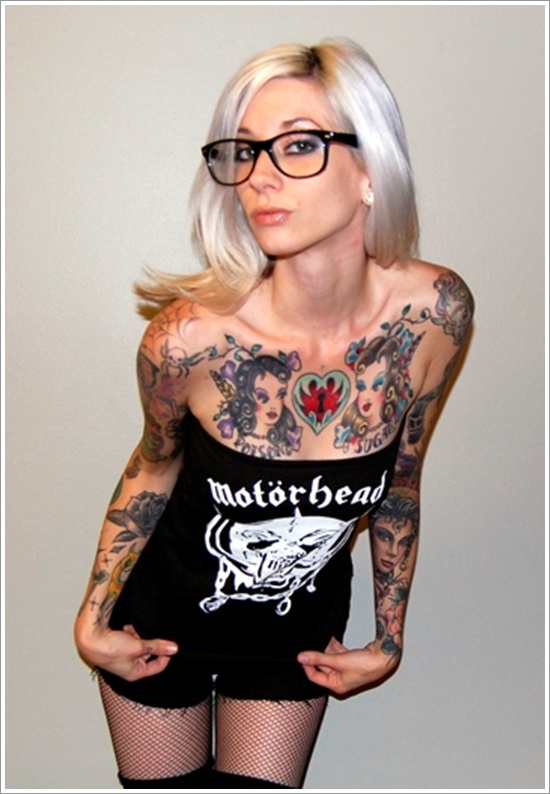
What it actually signifies
The honest range is wider than "love", which is how it usually gets sold.
Something guarded. A lock alone says there is a part of you not open to everyone. Worn without a key, it reads as self-possession rather than romance, and it is the version that ages best.
Something opened. An open padlock with the key still hanging is a common way to mark coming through something - a habit broken, a period of your life closed. It is a quieter and more personal reading than most people expect from this motif.
A matched pair. One person wears the lock, the other the key. Read the section below before doing this.
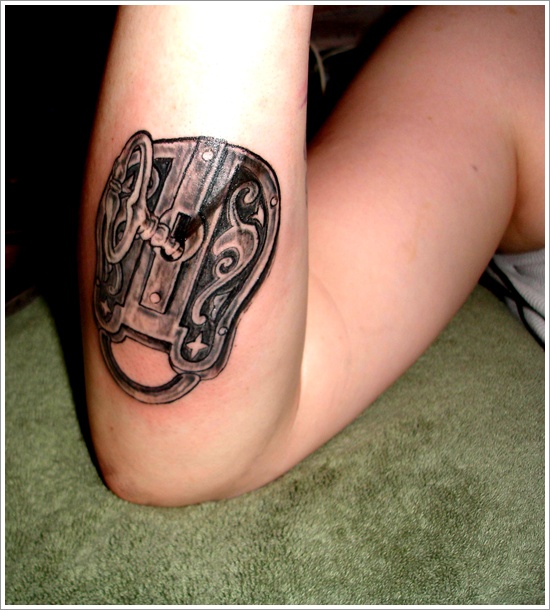
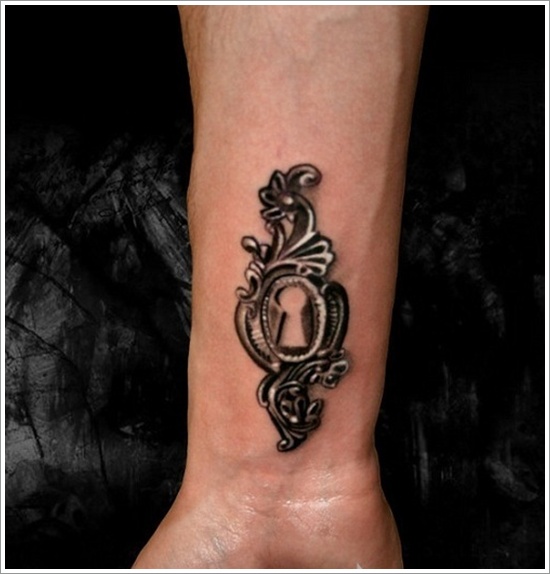
Ornament. Victorian keys, skeleton keys and antique padlocks are simply good drawing subjects: strong silhouette, decorative bow, plenty of scope for filigree. Wearing one because it looks good is a perfectly sound reason, and you do not owe anyone a deeper explanation.
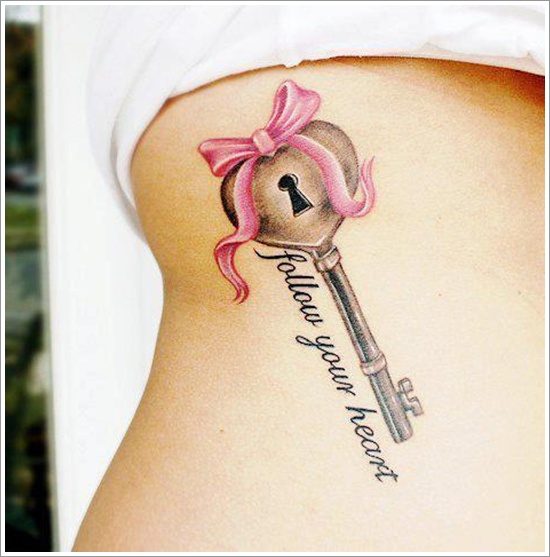
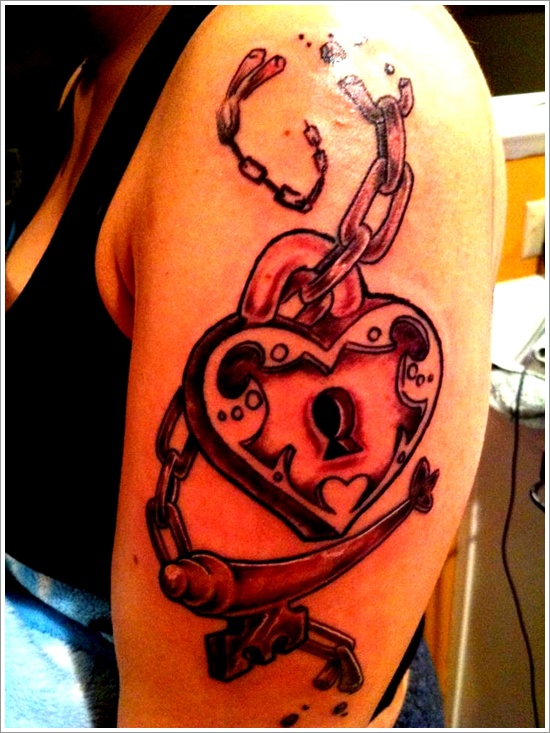
Where it has become a cliché: the heart-shaped padlock with a heart-topped key on a small chain, usually on the wrist. It is drawn so often that it reads as stock rather than yours. Ask your artist for the same idea in a different register - an actual antique lock, a real key with real wards - and it stops looking like clip art.
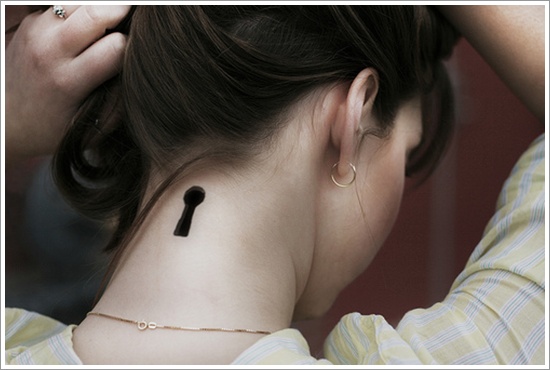
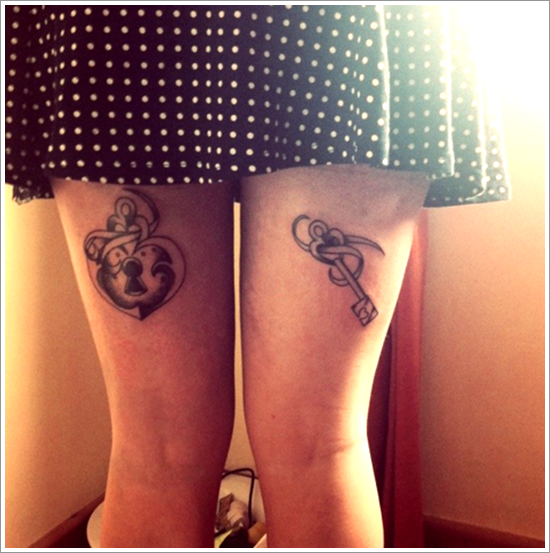
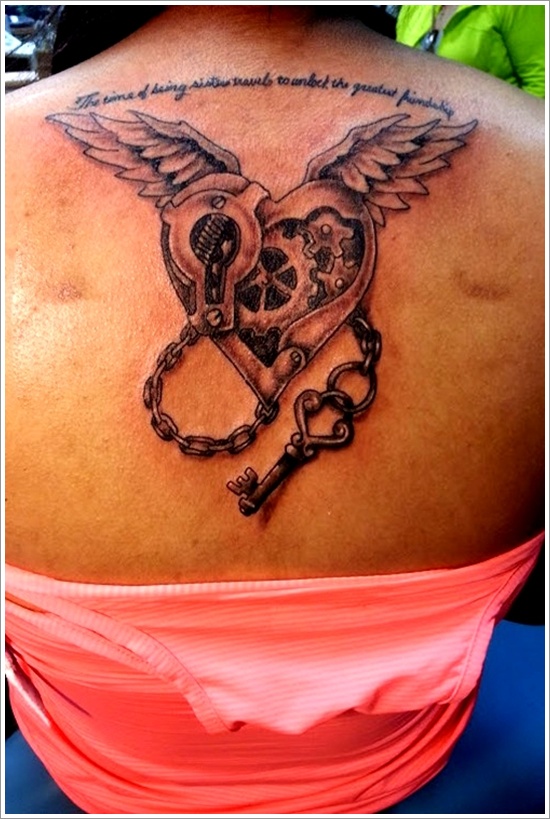
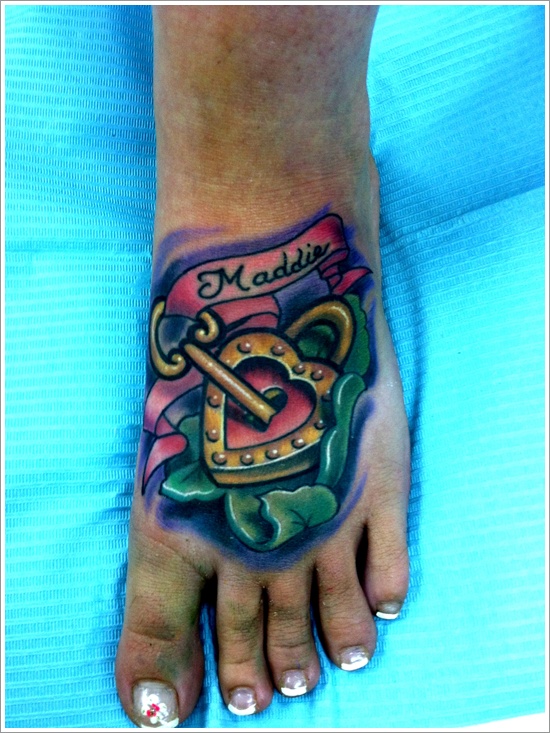
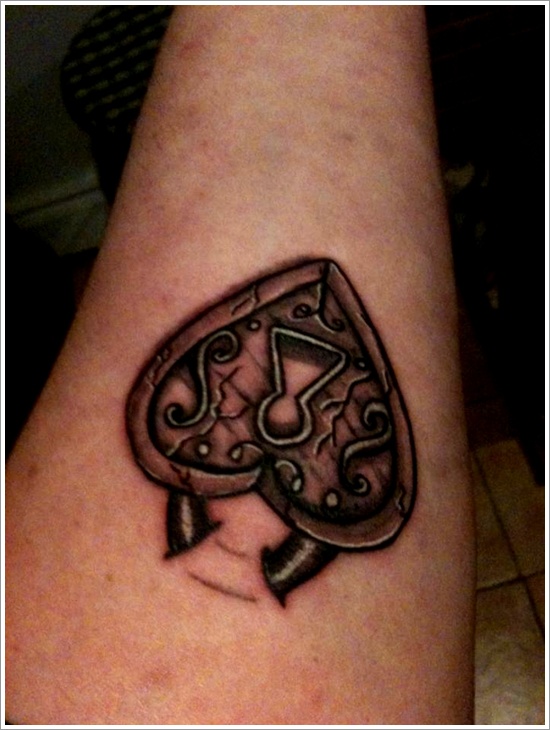
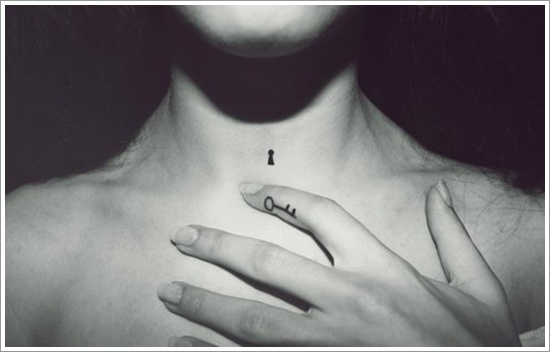
Matching pairs, honestly
Two people wearing halves of one design is the most-requested version, and the one artists have the most reservations about. A lock without its key still works as a tattoo. A key alone still works. That is the test worth applying before you book: would each half stand on its own if the other person were no longer in the picture?
If yes, it is a lovely idea. If the design only makes sense as a pair, you are tattooing a dependency, and it is worth being deliberate about that rather than romantic. The same logic applies to parent and child, siblings and friends, where the risk is lower and the idea often works better.
Placement, size and cost
The motif scales well, which is unusual. A key can be tiny and legible because its silhouette carries it; a lock benefits from size because the detail is inside the shape.
| Design | Typical size | Sittings | Pain, 1-10 | Rough cost |
|---|---|---|---|---|
| Small key, fine line | 1-2 in | 1 | 4-6 depending on placement | Shop minimum |
| Lock and key pair, wrist or ankle | 2-3 in | 1 | 6-7 | $150-$350 |
| Ornate padlock, forearm | 4-6 in | 1-2 | 3-4 | $400-$900 |
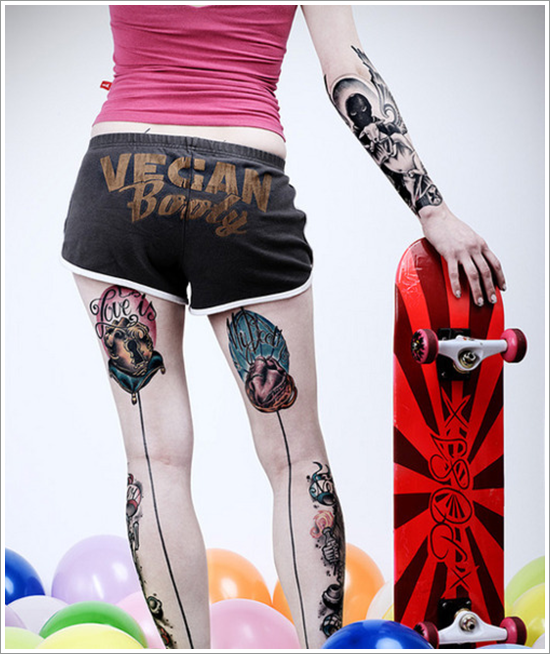
| Lock, key, florals and chain, thigh | 8-12 in | 2-3 | 3-5 | $900-$2,500 |
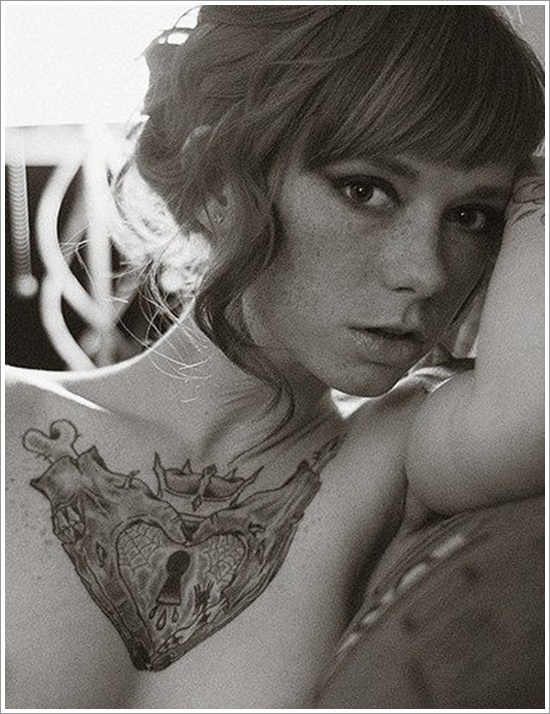
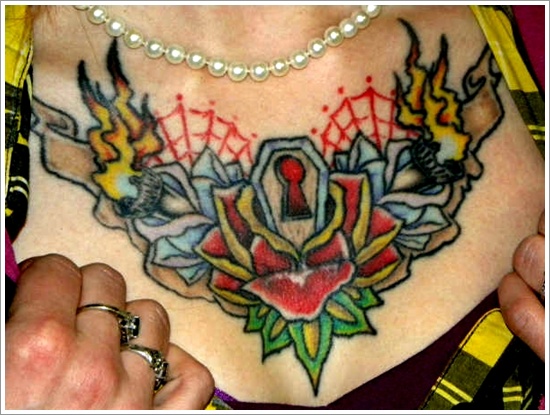
| Chest or sternum composition | 6-10 in | 2-3 | 8-9 | $800-$2,000 |
Rates vary widely by city and artist. Colour packing adds time; a black and grey version of the same design is usually faster and cheaper.
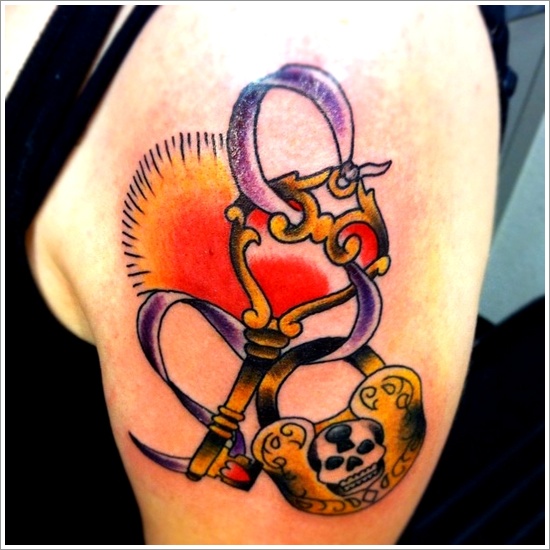
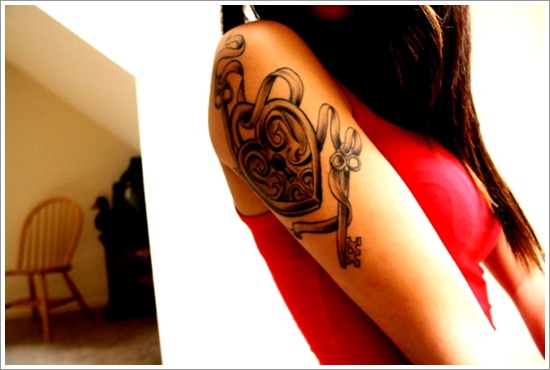
Styles that hold up
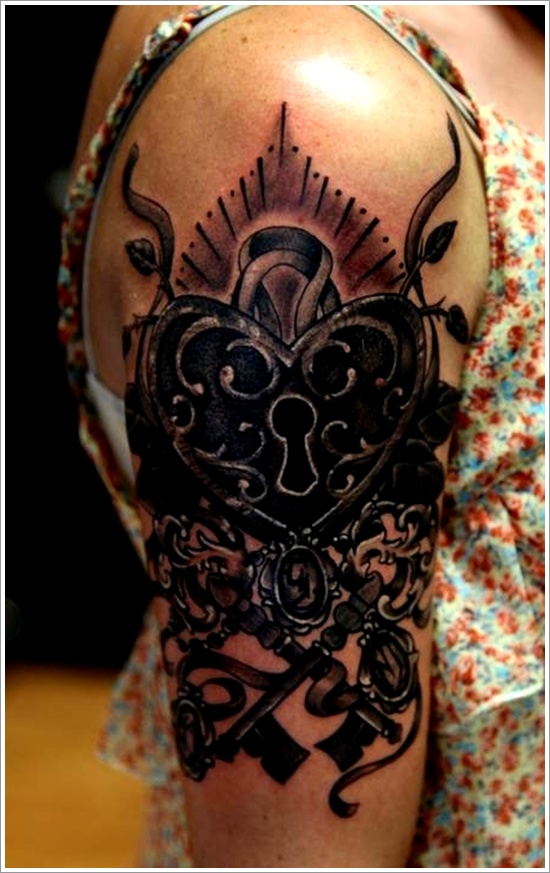
Black and grey with real rendering. Metal is the whole point of this motif, and shading is what makes it read as metal rather than as an outline of a lock. This is the version that still looks good in fifteen years.
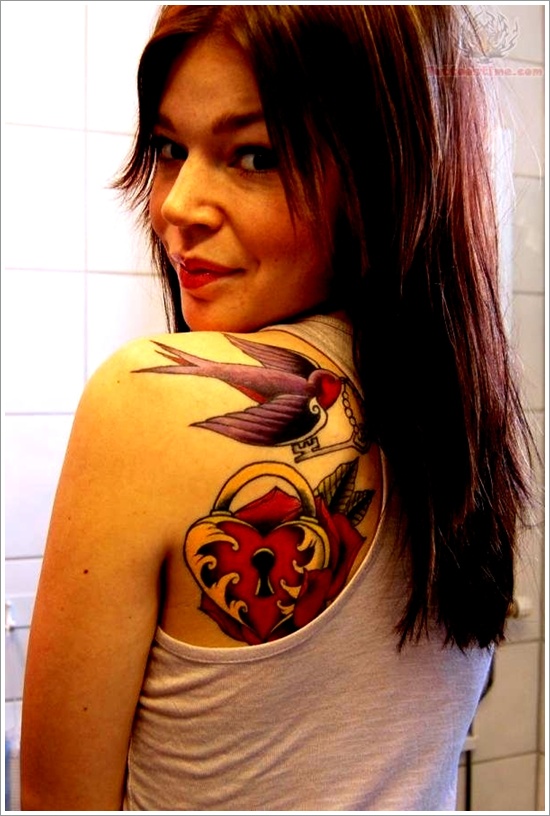
Neo-traditional. Bold outline, limited palette, decorative flourishes. It suits antique keys particularly well and it is built to age.
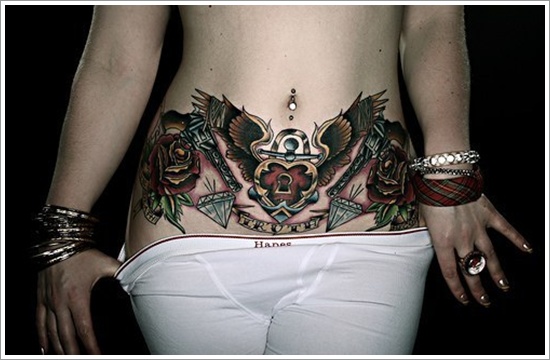
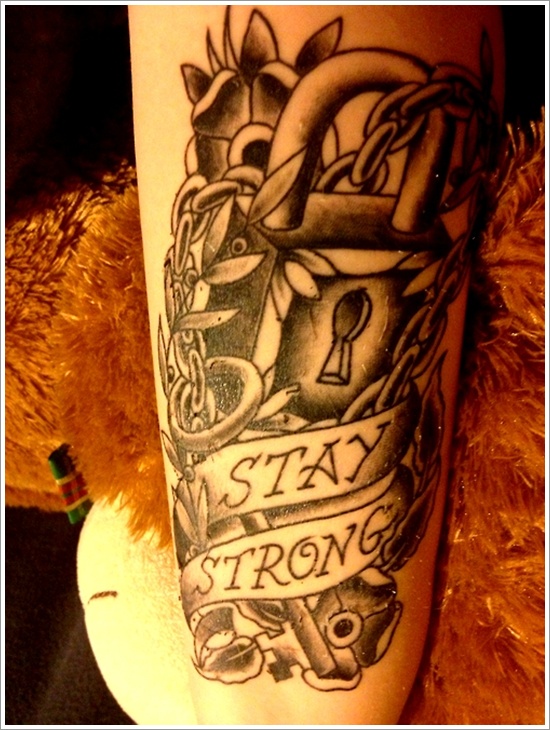
Traditional. Heavy black, simple shapes, classic colour. Nothing ages better, and the motif has been in the traditional canon for a century.
Fine line and micro. Popular and genuinely delicate, but see the ageing note. A tiny key with hairline wards will not stay crisp.
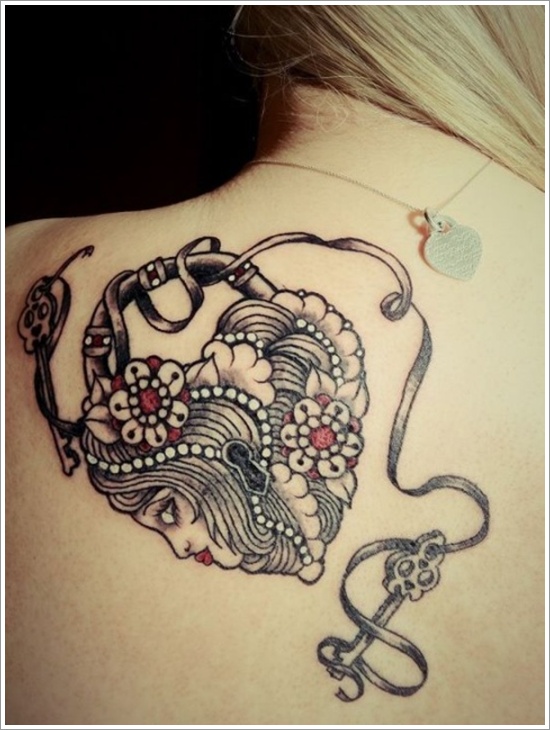
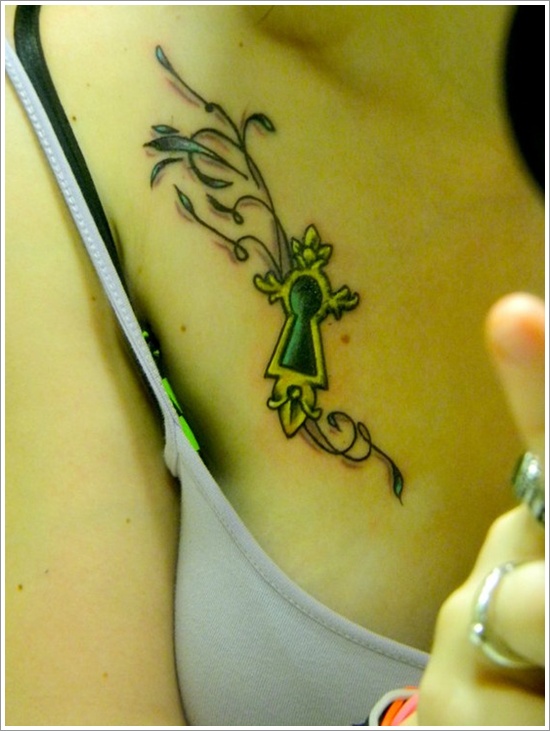
Illustrative with florals. Roses, peonies and foliage around the lock give the composition somewhere to breathe and hide the ageing of fine detail.
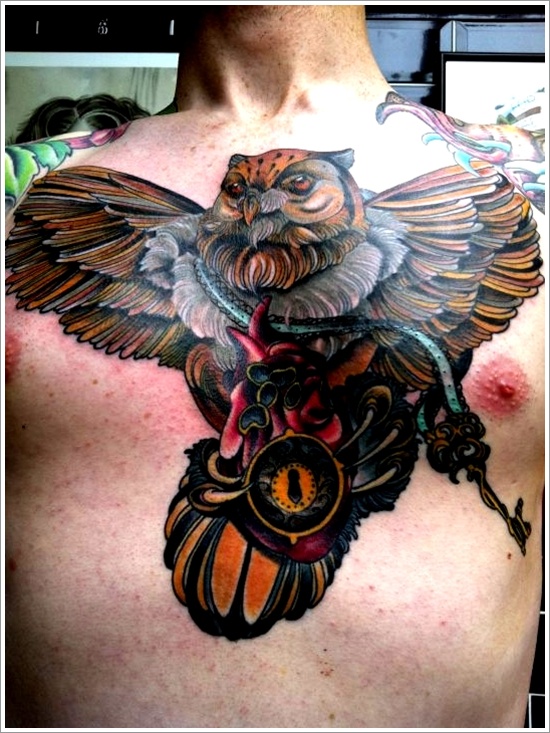
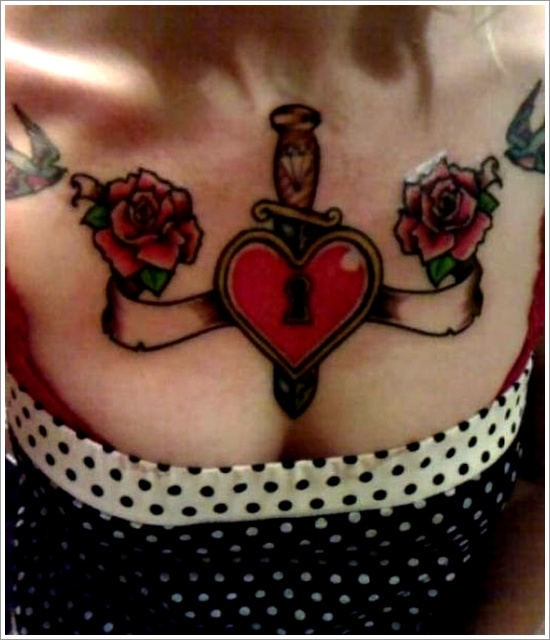
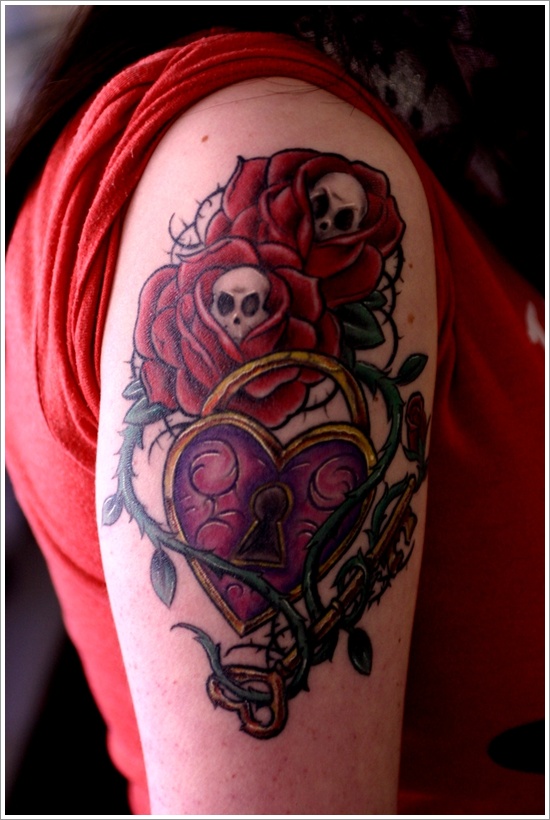
How it will age
Lock and key designs fail in one predictable way: the small internal detail. The wards on a key, the keyhole escutcheon, the tiny links of a chain, the filigree on a bow. Lines that close to each other blur together over ten to fifteen years and the design turns into a dark shape.
Two defences. Size it up, so there is skin between the lines. And ask for a design that still reads at arm's length as a silhouette, with the detail as a bonus rather than the point.
Solid black holds indefinitely. Pale greys lift. Colour fades fastest in yellows and light blues. UV is the main driver, so sunscreen once healed. Plan on a touch-up around year five for anything with fine work in it.
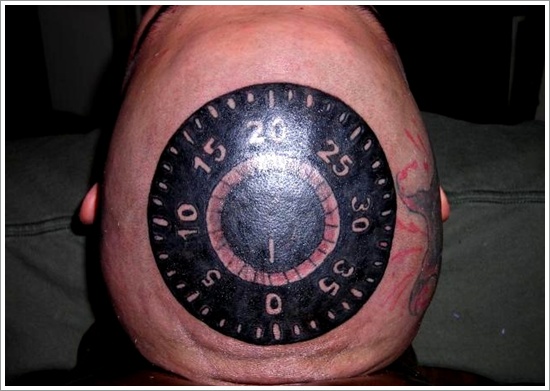
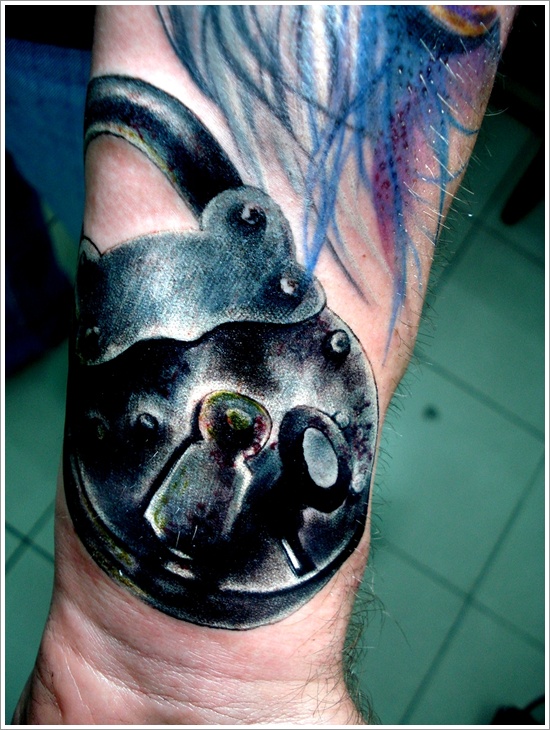
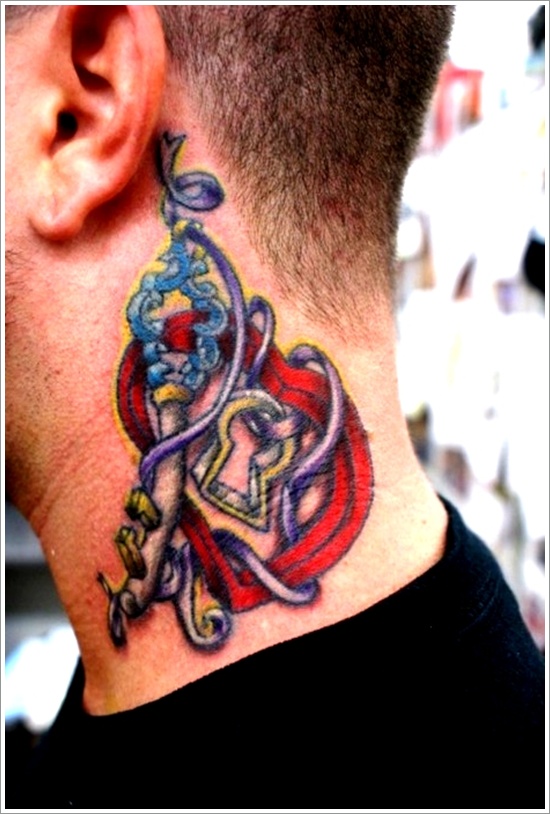
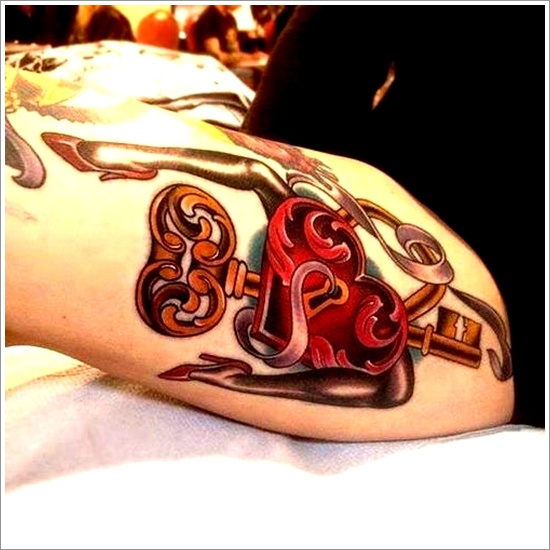
What to bring your artist
Bring a reference for the kind of lock and key you mean, not a finished tattoo. A Victorian skeleton key, a heavy iron padlock and a modern brass cylinder are entirely different objects and give completely different designs.
Say whether you want it read as romantic, protective or decorative, because it changes what the artist draws. Say if there is a second half on someone else, and bring a photograph of theirs so the pair actually matches in weight and style.
A good artist will push back on cramming a lock, a key, a chain, a rose, a clock and a banner into a two-inch space. Pick the two elements that matter.
Aftercare, briefly
Follow your artist's instructions first. In general: leave the covering as long as they said, wash gently twice a day with clean hands and fragrance-free soap, then a very thin layer of whatever they recommended.
If it is on a wrist, hand or ankle, expect it to take a little longer and to be knocked more. Loose sleeves, and keep it out of the sun completely while it heals.