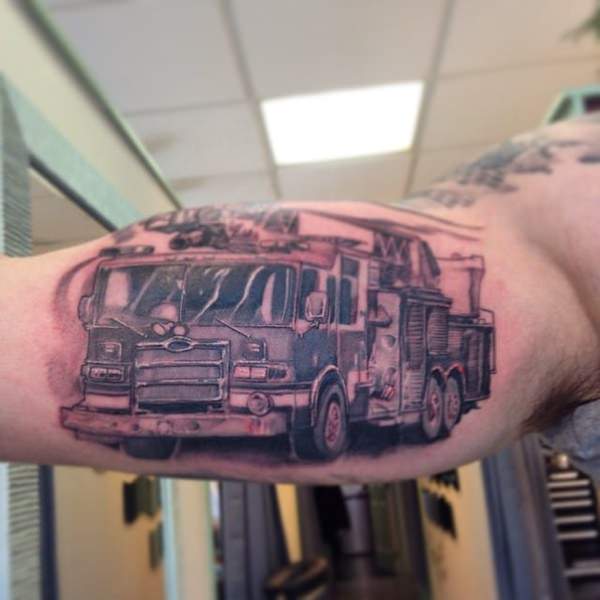
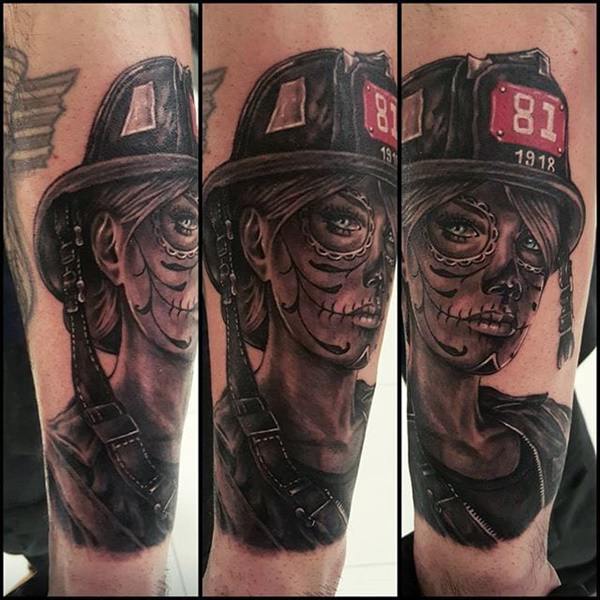
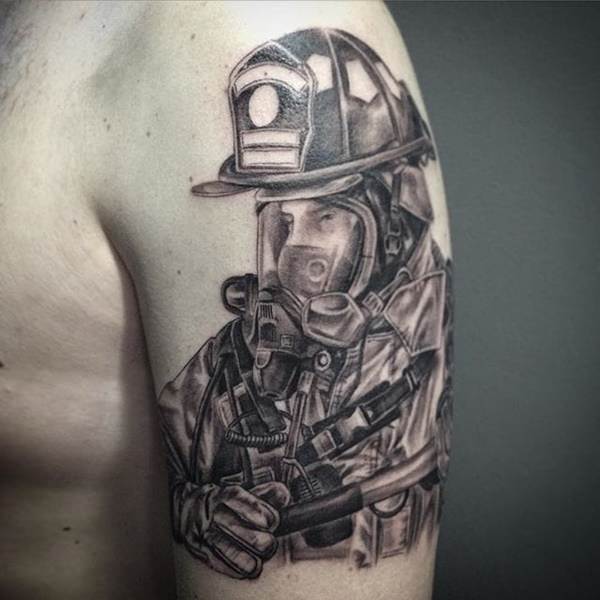
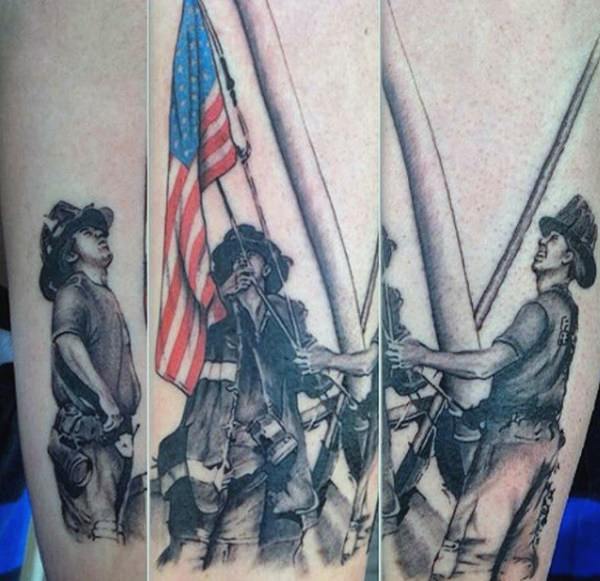
28 Best Firefighter Tattoo Designs to Show Your Love
Firefighter tattoos are a trade tradition rather than a style, and that changes how to approach them. The symbols are specific, they mean particular things inside the job, and getting them wrong is noticed by everyone who does it.
If you are in the service, most of this you already know and the useful part of this page is the ageing and placement advice. If you are getting one for someone else - a partner, a parent, a firefighter you lost - the section below is worth reading before you choose a design.
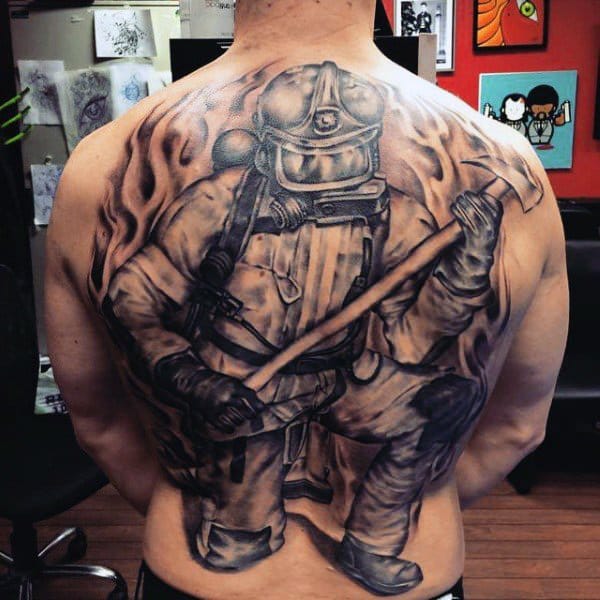
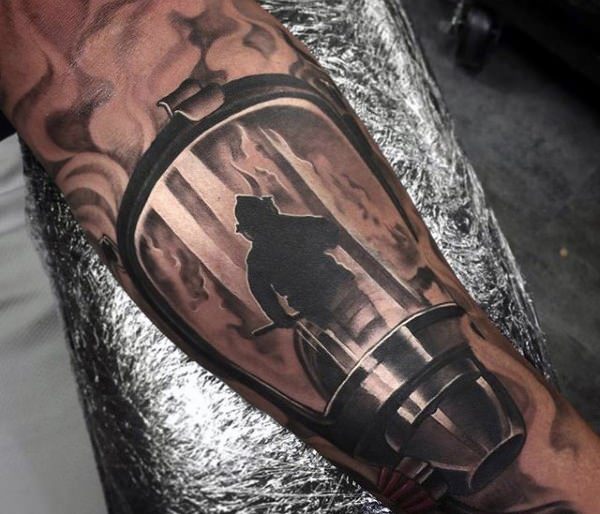
The symbols, and what they mean
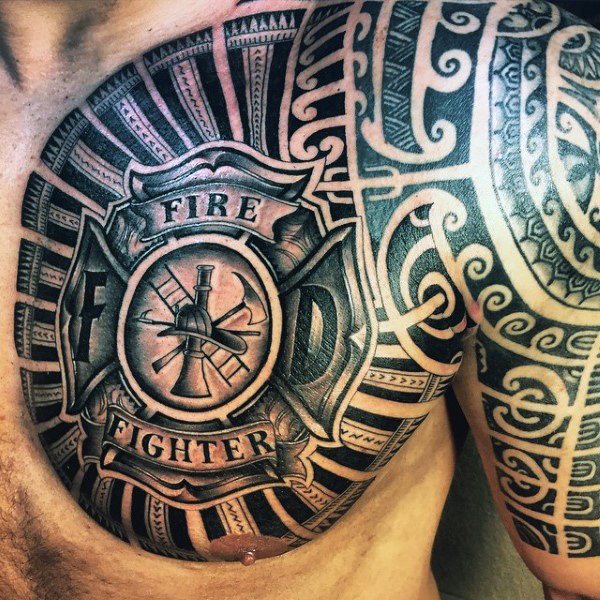
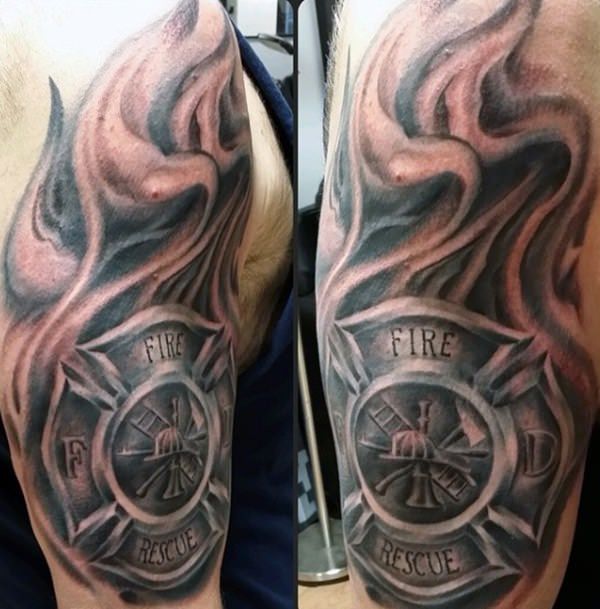
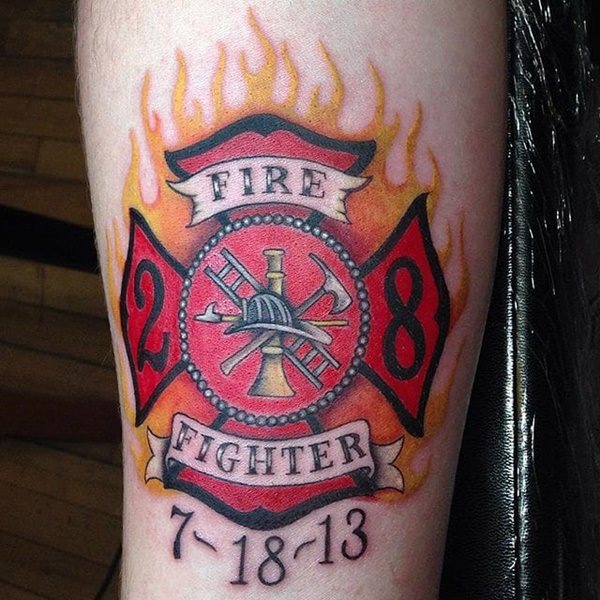
The Maltese cross. The central emblem of the fire service, and it has a real lineage: it comes from the Knights Hospitaller, who fought fires set against them with pitch and rescued their own from the flames. The eight points are traditionally read as eight obligations. It is the badge of the trade, and it is generally understood to belong to people who do the job.
The halligan and axe crossed. The irons. Working tools rather than decoration, and instantly readable to anyone in the service.
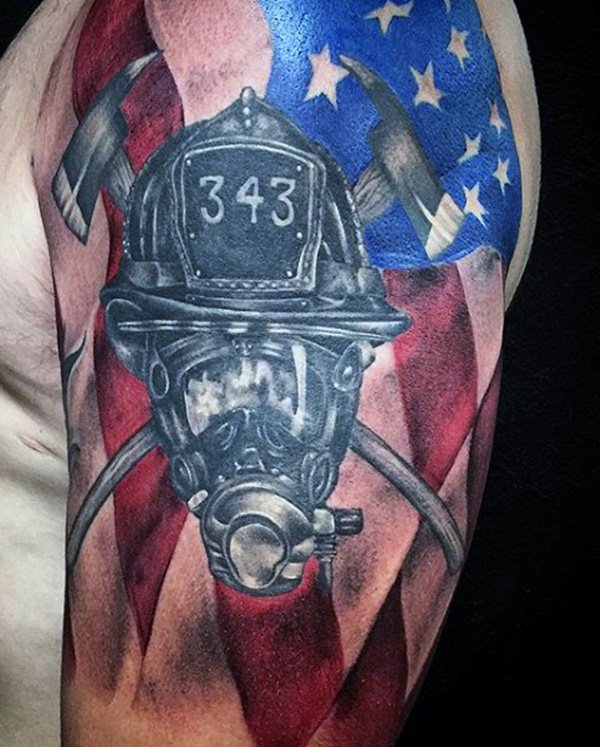
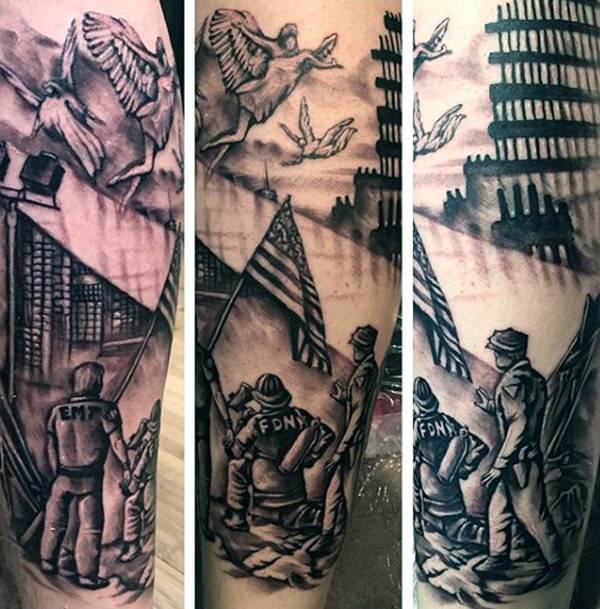
343. The number of FDNY firefighters killed on 11 September 2001. It is a specific memorial, and it is worn with that specific meaning. Do not use it decoratively.
The thin red line. A flag with a single red stripe, signifying the fire service. Worth knowing that variations of the thin-line flag have acquired political readings in the United States, which may or may not be what you intend.
Saint Florian. The patron saint of firefighters, usually depicted pouring water on a burning building. Common in both Catholic and secular versions.
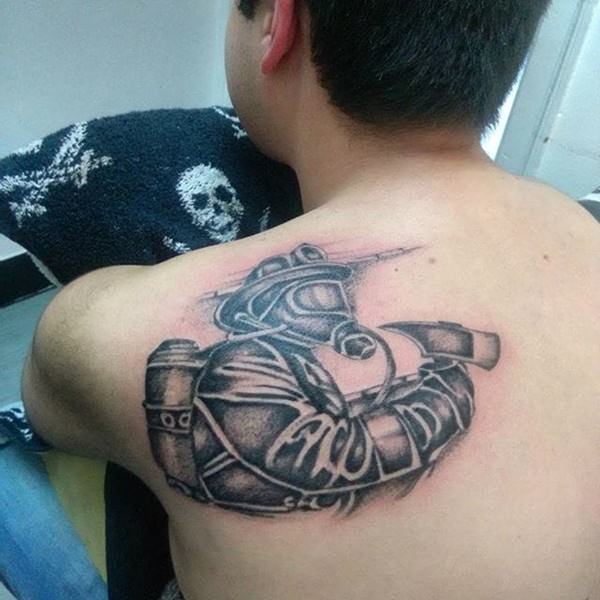
Memorial pieces. A helmet with a number, a station house, a name, a date, a set of boots. These are among the most meaningful tattoos anyone wears and they deserve a good artist rather than a quick one.
The dalmatian, the hydrant, the flames. Lighter, and fine for family members.
If you are not in the service, the safest and most respectful route is to make the tattoo clearly about your person: their number, their name, their dates, their helmet - rather than wearing the badge of a job you do not do. Nobody objects to that, and it is a better tattoo anyway.
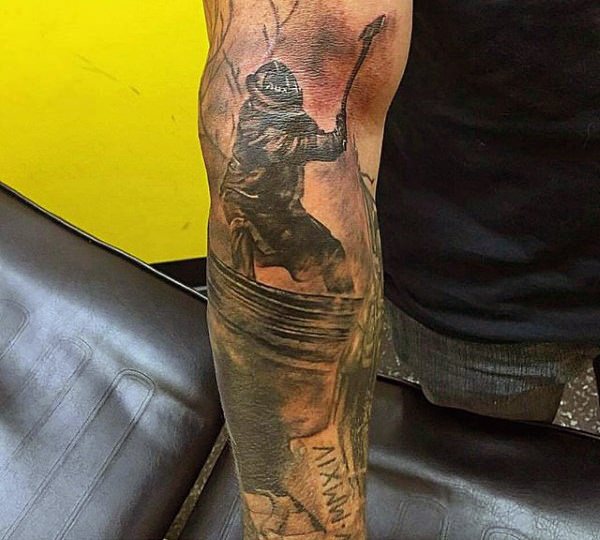
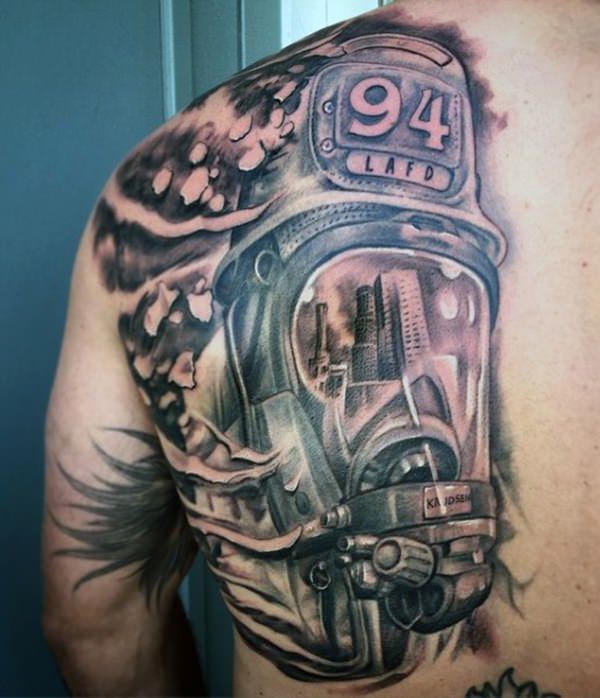
Placement, size and cost
| Design | Typical size | Sittings | Pain, 1-10 | Rough cost |
|---|---|---|---|---|
| Small cross or number, forearm | 2-4 in | 1 | 5-6 | Shop minimum to $300 |
| Maltese cross, outer arm | 4-6 in | 1 | 2-3 | $250-$600 |
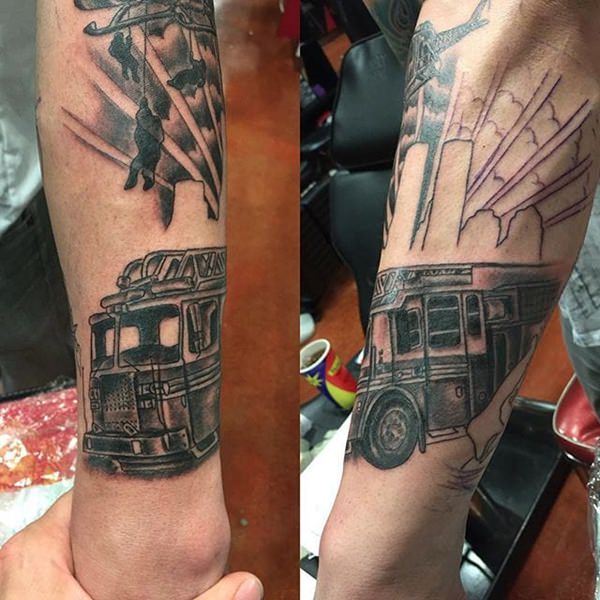
| Helmet and irons, forearm | 5-8 in | 1-2 | 5-6 | $400-$1,000 |
| Memorial panel, chest | 8-12 in | 2-3 | 7-8 | $1,000-$2,500 |
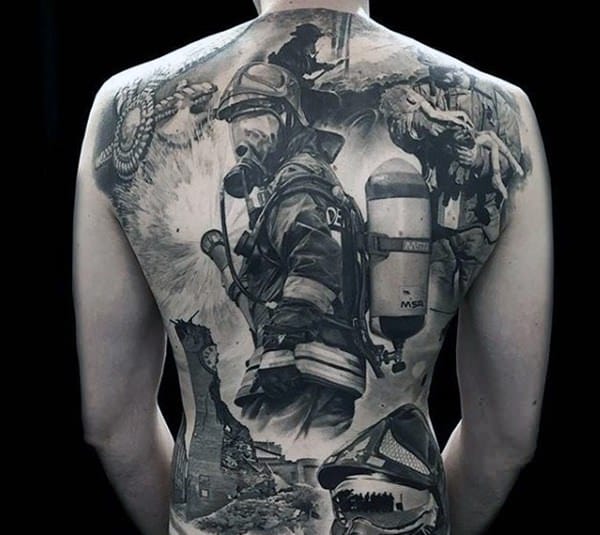
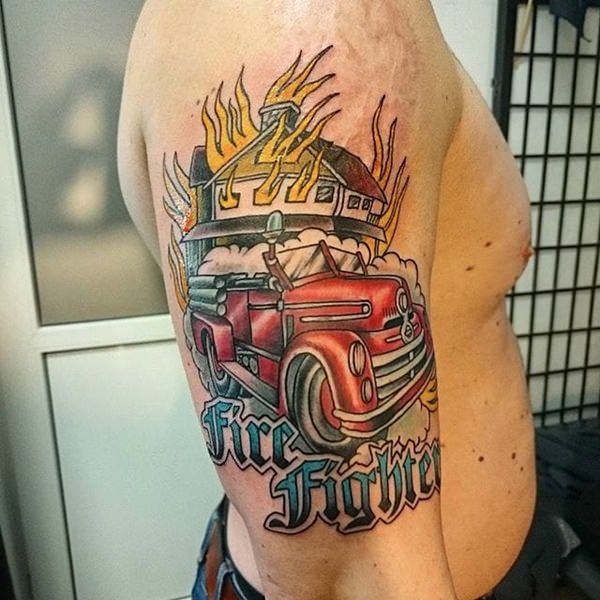
| Scene with engine or station, back | 10-16 in | 3-6 | 4-5 | $1,800-$5,000 |
| Half sleeve | - | 3-5 | 4-6 | $1,500-$4,000 |
Rates vary by city and artist. Note that many shops offer a discount to serving firefighters and other emergency services - it is worth asking, and nobody will be offended by the question.
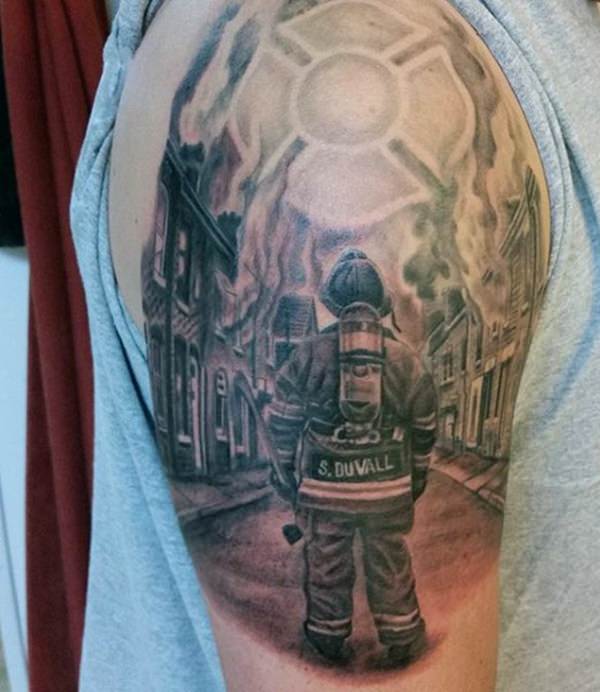
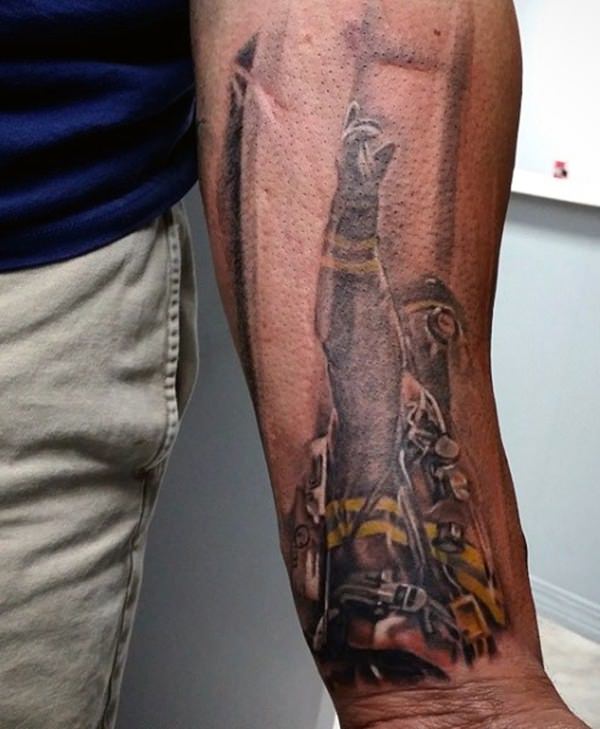
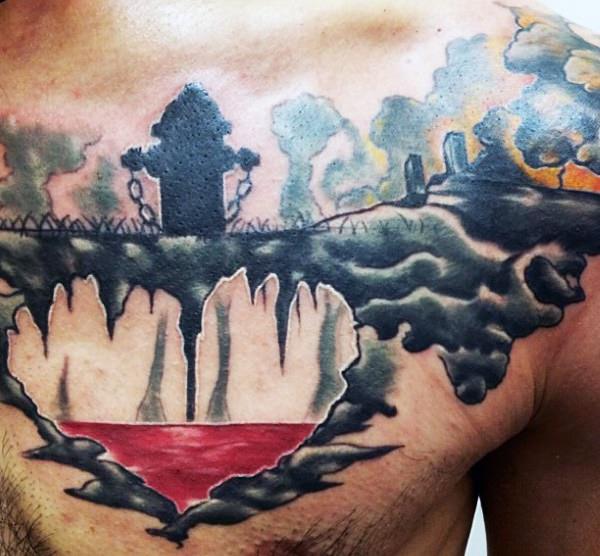
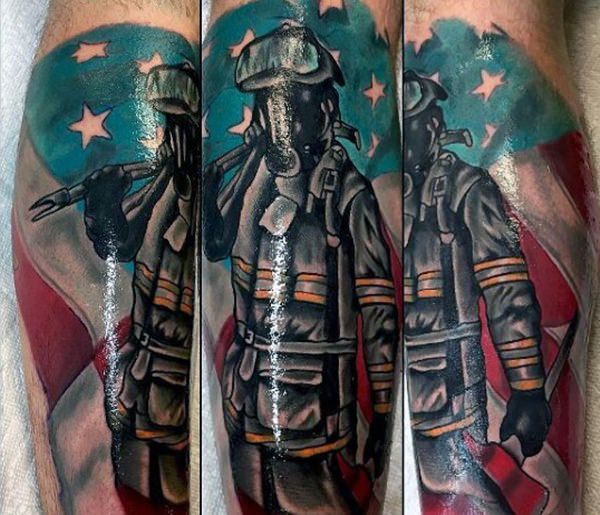
Styles that hold up
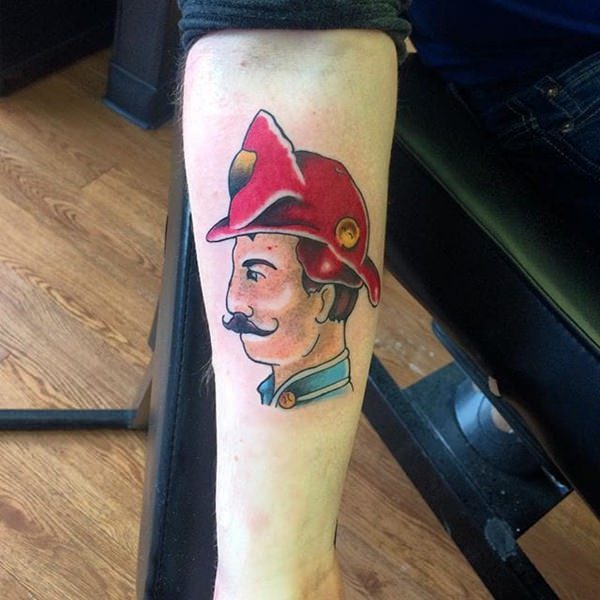
Traditional and neo-traditional. Bold outline, limited palette, emblem first. This is the natural home for trade tattoos and it ages better than anything else.
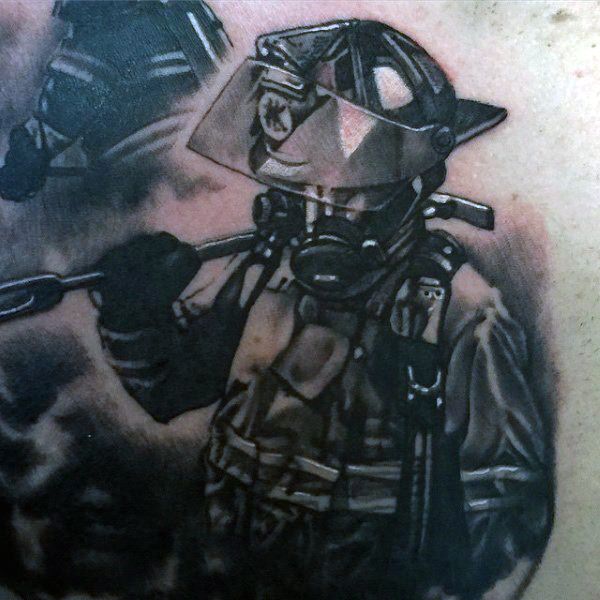
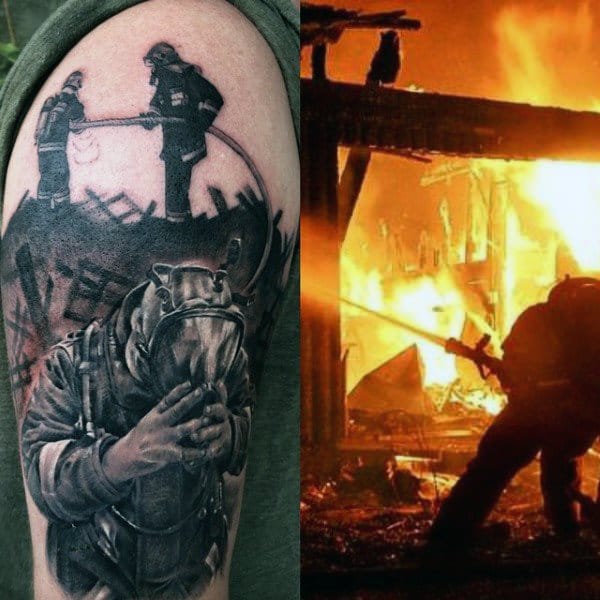
Black and grey realism. For portraits, helmets and memorial work. The right choice when the tattoo is about a specific person.
Blackwork. Solid, graphic, durable. Excellent for a cross or the irons.
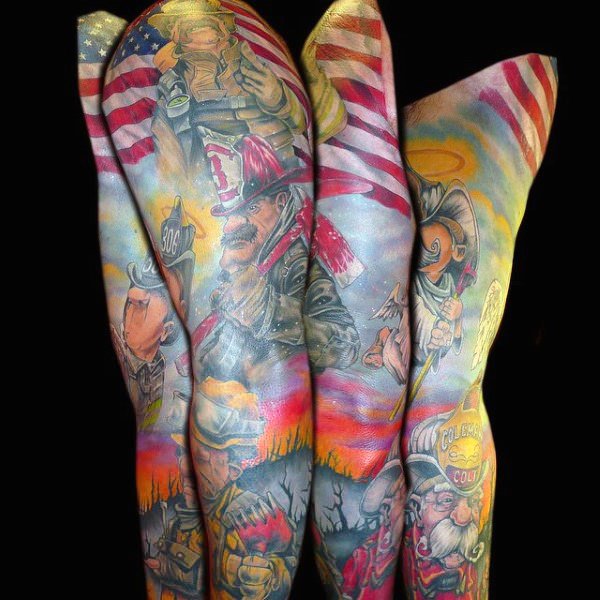
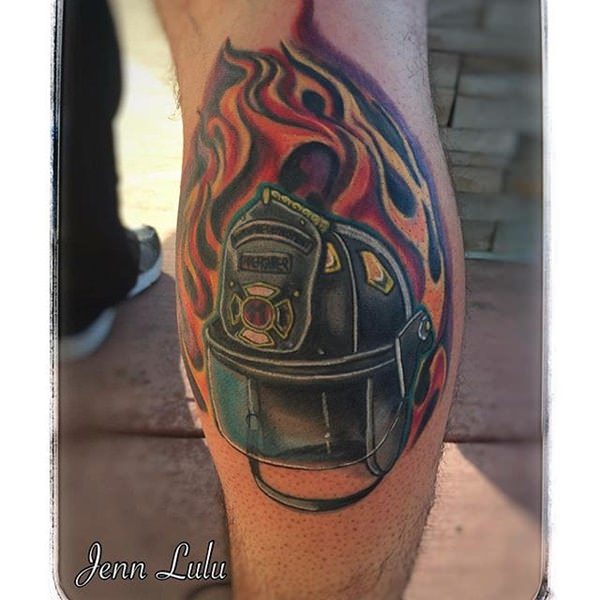
American traditional with flames. Flames are one of the oldest subjects in tattooing and there is a well-developed way of drawing them that reads at distance and lasts.
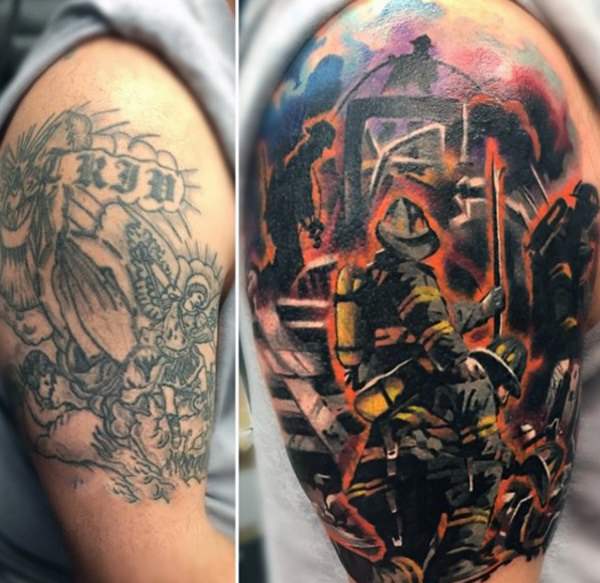
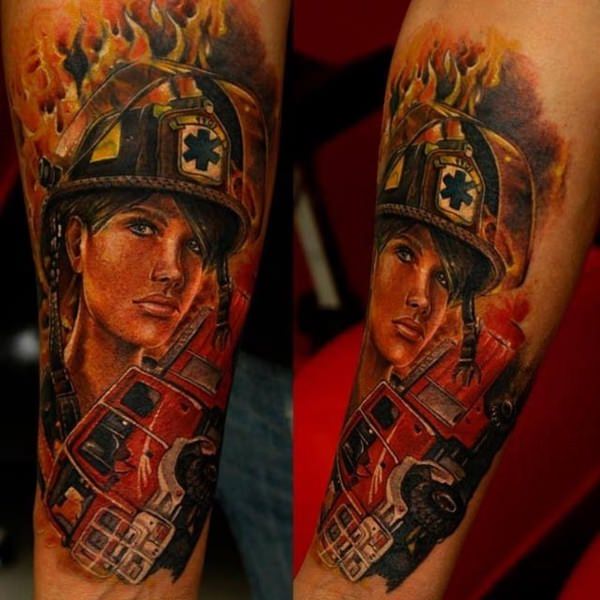
Worth thinking twice about: photorealistic fire, which relies on bright oranges and yellows and is one of the faster things to fade; and very fine lettering for a name or number, which is the part you least want to lose.
How it will age
Emblem-led designs age unusually well, because they are built from bold shapes and solid black - a Maltese cross in heavy black will look the same in thirty years.
Two things to protect.
Lettering. Numbers, names and dates are the most meaningful part of a memorial piece and the most vulnerable. Size them larger than feels necessary, choose a face with open counters, and proof the stencil twice before starting. A blurred rose is still a rose; a blurred number is gone.
Fire. Realistic flames depend on yellows and light oranges, which lift fastest of any pigment. A traditional treatment - heavy black outline, flat saturated colour - keeps its shape for decades where a photorealistic one softens within ten years.
Forearms and outer arms get more sun than almost anywhere on the body, which is where most of these tattoos go. Sunscreen once healed matters here more than usual. Expect a touch-up around year five on colour work.
What to bring your artist
The specific details, written down: the number, the name, the dates, the station. Reference photographs of the actual helmet or engine if the piece is about a particular person or house, since the details differ by department and anyone in the job will notice.
Say plainly whether you serve or whether this is for someone who does, because a good artist will steer the design accordingly.
Aftercare, briefly
Follow your artist's instructions. Generally: covering on as long as they said, then gentle washing twice a day with clean hands and fragrance-free soap, and a very thin layer of the recommended aftercare.
One thing specific to the job: turnout gear, heat and heavy sweating are hard on a healing tattoo, and so is a shower with harsh soap after a call. Time it so you have a few clear days if you can, and talk to your artist about how to protect it if you cannot.