A Tattoo Artist Salary: Can Ink=$ ?
Almost every published figure for what a tattoo artist earns is wrong in the same way: it reports revenue as though it were salary. Most artists are not employees. They rent a chair or split their takings with the shop, buy their own supplies, and pay their own tax with nothing withheld.
So the honest answer is a range, and the range is wide - because two artists with the same skill, in the same city, can earn very differently depending on how full their calendar is.
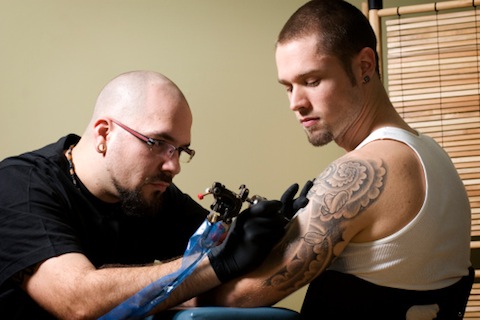
How the money actually reaches the artist
Commission split. The common arrangement. The shop takes a percentage of everything the artist bills - typically 40-50% for a newer artist, 30-40% once they are established and bringing their own clients. In exchange the shop provides the space, the licence, the autoclave, the front desk, the insurance and the walk-in traffic.
Chair rental. The artist pays a flat weekly or monthly rent and keeps everything they bill. Better once you are busy, punishing in a quiet month because the rent is due whether anyone sat in the chair or not.
Employee. Rare, mostly in larger street shops and franchises. An hourly wage or a lower split, in exchange for predictability.
Out of the artist's share comes needles, ink, tubes, cartridges, gloves, aftercare, machine maintenance, professional insurance, licence renewals, and in many places a conference or two to stay visible. Budget for a meaningful slice of gross going straight back out.
What the ranges look like
Treat these as a shape, not a scale. Location, demand and how many days a week someone actually tattoos matter more than years of experience.
| Stage | Typical position | Realistic gross |
|---|---|---|
| Apprentice | Unpaid or nominal, often paying the shop | $0 - minimal, 1-3 years |
| Newly licensed | Walk-ins, flash, small custom | $25,000 - $45,000 |
| Established | Own client base, mostly booked | $50,000 - $90,000 |
| In demand | Booked months out, travels for conventions | $100,000 - $200,000+ |
| Shop owner | Tattooing plus the business | Highly variable, and now a business |
The top row is real but small. It belongs to artists with a distinctive style, a following, and usually a decade or more behind them - and it is earned partly outside the chair, in guest spots, conventions, flash sales and prints.
The apprenticeship is the hard part
Almost nobody walks into this earning anything. A traditional apprenticeship runs one to three years, is frequently unpaid, and sometimes costs the apprentice money. The time goes on cleaning, setting up stations, drawing constantly, and watching - often for a long while before touching skin.
Two practical points. Shops that charge large sums up front for an apprenticeship are worth scrutinising carefully; the reputable route is usually earned with a portfolio rather than bought. And a portfolio of drawing
- not tattoos - is what gets you the interview. Artists take on apprentices who can already draw.
What actually raises the number
- A recognisable style. Artists who are known for one thing get sought out by name, and can charge accordingly. Generalists compete on price.
- A full calendar. Consistency beats rate. An artist at a modest hourly rate who is booked five days a week out-earns a higher rate with gaps.
- Where you work. Big-city rates are higher, and so is the shop's cut and the cost of living. It is not a straightforward win.
- Being findable. Instagram and a booking system that works are, for better or worse, a substantial part of the job now.
- Repeat clients. Large work - sleeves, backs - means the same person booking many sittings, which is far more stable than a stream of walk-ins.
Before you commit to the path
It is a self-employed trade with a long, poorly paid entry, real physical strain on the back, neck and hands, and income that is only as steady as your bookings. The people who make it work love the craft enough to draw every day for years before it pays.
If that is you, the money follows eventually. If it is the money that appealed first, this is a difficult way to earn it.